


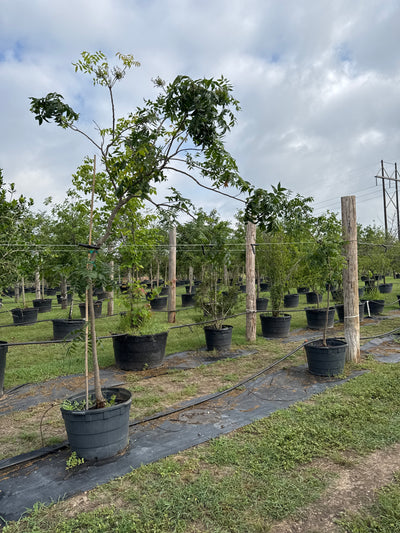


Muscadine Carlos Bronze

Muscadine Carlos Bronze
Location on Farm:
🌱 Planting Installation
Muscadine Carlos Bronze is a premier, self-fertile bronze muscadine grape cultivar developed by North Carolina State University. Widely considered the gold standard for commercial juice and white muscadine wine production, it is equally prized by home orchardists throughout the American South for its extraordinary productivity, rich sweetness, and native disease resistance. The Muscadine Carlos Bronze features perfect (hermaphroditic) flowers, meaning it sets heavy crops entirely on its own—while also serving as an ideal pollinator for female-only muscadine varieties like 'Fry' or 'Higgins'. It yields medium-sized, round grapes that ripen to a translucent golden-bronze color. The fruit features a crisp skin, sweet and aromatic pulp (16%–17% sugar content), and a smooth, classic muscadine flavor profile. It is highly prolific and mature, well-trellised vines can produce 35 to 60+ pounds of fruit annually. Overall, the Muscadine Carlos Bronze is celebrated for its disease resistance to Pierece's Disease and is high juice recovery and balanced acidity, making it the top bronze cultivar for juices, jellies, and fine muscadine wines.
| Scientific Name | Vitis rotundifolia 'Carlos' (Carlos Bronze Muscadine Grape) |
| Foliage: Deciduous |
Leaves: Heart-shaped (cordate) to rounded, 2.5–5 inches wide; coarsely toothed/serrated edges, glossy green upper surface, smooth underside Flowers: Small, inconspicuous greenish-yellow flowers borne in dense clusters along new growth shoots in late spring Fruit: Medium-sized, round berries (~1/2 to 3/4 inch); bronze to golden-amber skin at maturity; sweet, aromatic, translucent pulp (16%–17% sugar content); premier standard for white muscadine wine and juice Seeds: Contains 2–4 hard, teardrop-shaped seeds per berry Bark: Tight, smooth grayish-brown on young canes, becoming slightly rough and non-shredding on older trunks (unlike bunch grapes) |
| Life Span: Perennial | 30–50+ years |
| Mature Height | Trailing vine; trained along a trellis wire at 5–6 ft height; canes extend 15–20+ ft along cordon wires |
| Mature Width (Spread) | 15–20 ft spacing along trellis wire system |
| Growth Rate | Fast and vigorous (can grow 10–15 ft in a single season once established) |
| USDA Zone / Chill Hours | Zones 7–10 (Tolerates winter dips down to 0°F to 10°F / -12°C to -17°C); Requires 100–500 chill hours |
PLANT CARE & CHARACTERISTICS
Light Requirements: Full Sun (Requires 6–8+ hours of direct sunlight daily for maximum sugar build-up and fruit production).
Water Requirements: Moderate; needs consistent moisture during first 1–2 years and during summer fruit set; drought-tolerant once deep roots establish.
Drought Resistance: High once fully established.
Soil Type: Well-draining sandy loam or loamy soil; prefers slightly acidic soil with pH 5.5–6.5; highly intolerant of wet, waterlogged clay.
Deer Resistance: Moderate (Deer will browse soft new growth shoots and foliage; fencing or protection is recommended when young).
Pest / Disease Resistance: High natural immunity to Pierce's Disease (Xylella fastidiosa), Phylloxera, and Downy Mildew; susceptible to Black Rot (Guignardia bidwellii) and Japanese beetles.
Pollination: Self-fertile (Perfect flowers); produces high fruit yields on its own AND serves as an excellent pollinator for female-only muscadine varieties (e.g., Fry, Higgins).
Harvest: Early-to-Mid Season (Typically late August through September); fruit ripens evenly in clusters and harvests easily.
Yield: Extremely Prolific. Mature vines (Years 4–5+) yield 35–60+ lbs (3 to 5 gallons) of fruit per vine annually.
Storage / Shelf Life: Refrigerator storage (35°F–40°F) for 1 to 2 weeks; stores exceptionally well when processed into wine, jelly, juice, or frozen whole.
Trellis: Because muscadine vines are heavy, woody perennials that can grow 15 to 20+ feet in a single season, they cannot support their own weight. Without a trellis, the vine will crawl along the ground, leading to severe shading, poor air circulation, high disease susceptibility, and little to no fruit production.
Pruning: Required Annually. Pruning is essential for productivity. Perform heavy spur-pruning in late winter (January–February while dormant), cutting previous season's side shoots back to spurs with 2–4 buds along the main permanent cordons.


