


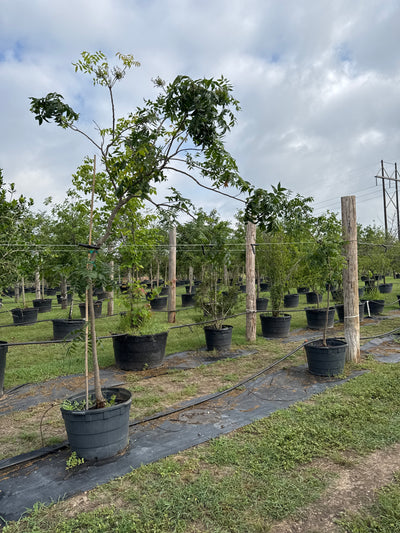


Peach Redglobe

Peach Redglobe
🌱 Planting Installation
The Redglobe Peach is a highly acclaimed, mid-season freestone cultivar developed by the USDA in Beltsville, Maryland. Widely prized by commercial growers and home orchardists alike, this fast-growing, deciduous tree matures to a height and spread of 12 to 15 feet standard (or 8 to 12 feet on semi-dwarf rootstocks) with an open, spreading canopy. Thriving in USDA Hardiness Zones 5 through 9, it requires 800 to 900 chill hours below 45°F to trigger even spring flowering and maximum fruit set. In early spring, before its long, lanceolate green leaves emerge, the branches are lined with fragrant, single pink blossoms that are completely self-fertile, meaning it yields heavy crops without requiring a second pollinator cultivar. By mid-to-late July, the tree produces abundant yields of large, round peaches featuring a firm, golden-yellow flesh covered in an eye-catching, 80% to 90% deep red blush. The sweet, melting flesh separates cleanly from its central stony pit (freestone), making it an exceptional choice for fresh eating, baking, freezing, and home canning.
| Scientific Name | Prunus persica 'Redglobe' |
| Foliage: Deciduous |
Leaves: Medium-to-dark green foliage creating a dense, rounded, spreading canopy. Lanceolate (spear-shaped) with finely serrated edges, 3–6 inches long, turning yellow-bronze in autumn Flowers: Showy, fragrant, single pink blossoms borne along 1-year-old wood in early spring before leaf emergence Fruit: Large, firm, round freestone peach; skin is yellow covered in a deep red blush (80–90% blush); flesh is firm, melting, yellow, sweet, and highly flavorful Seeds: Hard, pitted, wood-like central pit (stony endocarp) enclosing a single seed; separates cleanly from ripe flesh (freestone) Bark: Smooth and dark reddish-brown on young branches; develops horizontal lenticels and fissured gray-brown bark with age |
| Life Span: Perennial | 15–20+ years (typical commercial/home orchard productive lifespan) |
| Mature Height | Standard: 12–15 ft; Dwarf/Semi-Dwarf: 8–12 ft |
| Mature Width (Spread) | 12–15 ft (spreading open-center form) |
| Growth Rate | Fast |
| USDA Zone/Chill Hours | Zone 5–9; Requires 800–900 chill hours below 45°F (7.2°C) |
PLANT CARE & CHARACTERISTICS
Light Requirements: Full Sun (Requires 8+ hours of direct sunlight daily for high fruit set and deep red blush development).
Water Requirements: Moderate; needs consistent moisture (approx. 1 inch per week), especially during fruit development and dry summer spells.
Drought Resistance: Moderate once established, but drought during fruit fill reduces size and yield.
Soil Type: Deep, well-draining sandy loam or loamy soil enriched with organic matter; highly sensitive to wet feet; pH 6.0–7.0.
Deer Resistance: Low (Deer frequently graze tender spring leaves, young twigs, and fruit).
Pest/Disease Resistance: Good field resistance to Bacterial Spot; susceptible to Peach Leaf Curl, Brown Rot, and Peach Tree Borer if untreated.
Pollination: Self-fertile (Self-fruitful); sets full crops without a second pollinator cultivar (though cross-pollination can increase yields).
Harvest: Mid-season (typically mid-to-late July in most regions)
Yield Timeline by Tree Age
Years 1–2: No yield (flowers should be removed in early years to encourage trunk, canopy, and root establishment).
Year 3 (First Harvest): 20 – 40 lbs (light crop).
Year 4: 50 – 80 lbs (increasing crop capacity).
Years 5–15+ (Peak Maturity): 120 – 150+ lbs annually under proper pruning, thinning, and irrigation.
Peak Maturity Yield
| Tree Size | Average Annual Yield (Lbs) |
Number of Peaches (Approx.) |
| Standard (12–15 ft) | 120 – 150+ lbs | ~250 to 350 large peaches |
| Semi-Dwarf (10–12 ft) | 80 – 120 lbs | ~180 to 250 large peaches |
| Dwarf (8–10 ft) | 40 – 75 lbs | ~90 to 150 large peaches |
Factors Influencing Redglobe Yields
1. Heavy Fruit Thinning (Crucial for Size): Redglobe sets a very dense crop. To achieve its characteristic large fruit size (2.75" to 3"+ in diameter), you must thin young fruitlets when they are golf-ball sized, leaving only one peach every 6 to 8 inches along the branch. Unthinned trees will produce hundreds of tiny, low-quality peaches that can break branches.
2. Chill Hours Requirement: Redglobe requires 800 to 900 chill hours (temperatures between 32°F and 45°F). If planted in a region with insufficient winter chilling, flower buds may open unevenly or drop, drastically reducing yield.
3. Pruning Habit: Peaches bear fruit strictly on 1-year-old wood. Annual dormant pruning in an open-center (vase) shape ensures sunlight penetrates the canopy to keep new fruiting shoots productive year after year.
4. Water & Nutrition: Supplemental irrigation during the final 4 to 6 weeks of fruit fill ("final swell") significantly increases individual fruit weight and total tree tonnage.
STORAGE/SHELF LIFE
| Storage | Shelf Life | Key Details |
| Room Temperature Countertop (68°F – 75°F) | 3 to 5 days | Best for ripening firm, freshly picked fruit. Keep in a single layer out of direct sunlight. |
| Refrigerated (32°F – 36°F) |
2 to 3 weeks | Slows down ripening significantly. Do not store in the "kill zone" (38°F–48°F) to prevent mealy flesh. |
| Frozen (Sliced or Puréed) 0°F | 8 to 12 months | Excellent freestone variety for freezing; flesh retains firmness and color well when packed with sugar/ascorbic acid. |
| Canned / Preserved | 12 to 18 months | Holds its structural integrity and sweet flavor exceptionally well during thermal canning processing. |
How to Maximize Redglobe Storage Quality
1. Avoid the "Kill Zone" (36°F to 50°F): Storing peaches at temperatures between 38°F and 48°F causes internal breakdown (mealy texture, browning around the pit, and loss of flavor). Either keep them cold at 32°F–35°F or leave them at room temperature to ripen.
2. Ripening Protocol: If peaches are harvested firm-ripe, leave them on the counter at room temperature for 1 to 3 days until they yield slightly to gentle pressure near the stem. Once fully soft and fragrant, transfer them to the refrigerator to hold for another 3 to 5 days.
3. Humidity Control: In cold storage, high humidity (85–90%) is necessary to prevent the fruit skin from shriveling due to moisture loss.
4. Handling: Store in a single layer or in shallow trays. Despite its firmness, pressing or stacking peaches can induce internal bruising that shortens overall shelf life.
PRUNING
Pruning and fruit thinning are the two most important maintenance tasks for a Redglobe peach tree. Because Redglobe sets an exceptionally heavy crop and bears fruit strictly on 1-year-old reddish growth, aggressive annual pruning and thinning are essential to prevent branch breakage and achieve large, high-quality fruit.
Part 1: Annual Pruning (Late Winter / Early Spring)
Prune late in the dormant season (February to early March, just as buds begin to swell). The goal is an Open-Center (Vase) Shape with 3 to 5 main scaffold branches, allowing maximum light penetration to the interior.
1. Remove Water Sprouts and Suckers: Base of trunk and lower main scaffolds. Cut away all root suckers growing from the rootstock base and straight-up vertical shoots (water sprouts) along the interior scaffold branches.
2. Clear the Open Center: Center of the tree canopy. Cut out inward-growing branches, rubbing/crossing limbs, and dead or diseased wood. The center of the tree should remain open like a bowl to maximize sunlight and airflow.
3. Select and Thin Fruiting Shoots: Focus on 1-year-old reddish growth. Select pencil-thick, 12- to 18-inch-long reddish shoots for fruit production. Remove weak, spindly twigs (thinner than a pencil) and overly thick, rank shoots. Space fruiting shoots roughly 6 to 8 inches apart along the main scaffolds.
4. Head Back Fruiting Branches: Remove 1/4 to 1/3 of shoot length. Shorten the remaining 1-year-old fruiting branches by 25–30%. This reduces the potential fruit load right at the start and prevents the branches from weeping or snapping under weight.
Part 2: Fruit Thinning (Late Spring)
Pruning alone will not prevent overcropping. Redglobe trees naturally set thousands of small peaches, and failure to thin results in golf-ball-sized fruit and split limbs.
1. Timing: Thin when the peaches are roughly the size of a marble to a golf ball (about 4 to 6 weeks after bloom, usually around mid-to-late May).
2. Spacing Rule: Hand-strip young fruitlets until remaining peaches are spaced 6 to 8 inches apart along each branch.
3. Selection Criteria:
- Remove double peaches (twins), damaged, or misshapen fruitlets first.
- Keep the largest, healthiest single peach on the sturdy middle section of the shoot.
- Avoid leaving fruit at the very tips of slender branches, as leverage will cause the branch to bend or break as the peach grows.
Pruning Summary
| Action | Timing | Primary Objective |
| Dormant Pruning | Late Winter (Bud swell) |
Remove 40–50% of total canopy to force new fruiting wood and maintain an open vase shape. |
| Fruit Thinning | Late Spring (Golf-ball size) |
Reduce crop load by 60–80% so energy goes into fewer, much larger (3"+) freestone peaches. |
| Summer Pruning | Post-Harvest (Late Summer) |
Remove aggressive vertical water sprouts blocking sunlight from next year's replacement fruiting wood. |


