


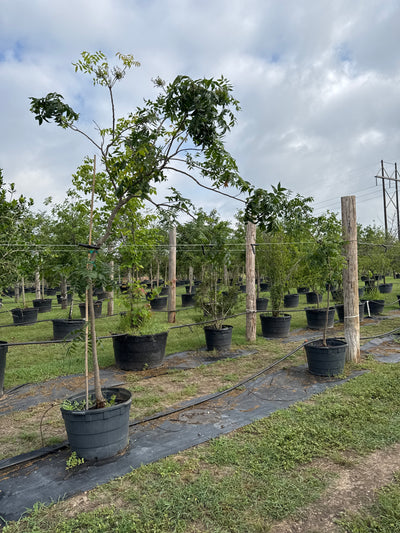


Peach Harvester


Peach Harvester
🌱 Planting Installation
The Harvester Peach tree is a deciduous fruit tree that belongs to the Rosaceae family. The Harvester Peach is widely considered the "gold standard" for home orchards, particularly in the Southern United States. Developed by Louisiana State University, it was bred specifically to bridge the gap between high fruit quality and rugged tree durability. It produces medium to large-sized peaches with yellow skin blushed with red and juicy, sweet flesh. The standout feature of the Harvester is that it is a true freestone peach. Unlike "clingstone" varieties where the fruit sticks to the pit, the Harvester’s melting yellow flesh pulls away cleanly from the center, making it a dream for fresh eating, canning, and baking.
| Scientific Name | Prunus persica 'Harvester' |
|
Foliage: Deciduous |
Leaves: Lance-shaped, serrated, and a vibrant dark green. They provide a lush, dense canopy throughout the summer. Flowers: Showy, fragrant pink blossoms that appear in early spring. Fruit: Medium to large, freestone peaches. They have a classic yellow skin blushed with bright red. The flesh is firm, yellow, and acidic-sweet. Seeds: A single large, pitted stone (endocarp) at the center. Unlike "clingstone" peaches, the Harvester's "freestone" pit separates easily from the flesh when ripe. This makes it much easier to slice and store without mangling the fruit, which significantly reduces the risk of oxidation (browning) during storage. Bark: Smooth and reddish-brown when young, becoming grey-brown and slightly fissured or "scaly" as the tree ages. |
| Life Span: Perennial | The average life span is 15 to 20 years. |
| Mature Height | 12-15 feet (Standard); 8-10 feet (Dwarf) |
| Mature Width (Spread) | 12-15 feet |
| Growth Rate | Fast (Expect 12-24 inches of growth per year) |
|
USDA Zone/Chill Hours |
Zone 5-9; Requires 750 chill hours (below 45 degrees F) which ensures it blooms late enough to avoid most spring frosts but early enough to beat the most intense August heat. |
PLANT CARE & CHARACTERISTICS
Light Requirements: Full Sun. (At least 6-8 hours daily)
Water Requirements: Moderate. Requires regular deep watering during fruit production. Regular irrigation, especially during dry periods and when fruit is developing, is also important for optimal tree health and fruit quality.
Drought Resistance: Moderate once established, but fruit quality will suffer significantly without consistent moisture during the "swell" period.
Soil Type: Well-drained, loamy soil with good fertility and a pH level between 6.0 and 7.0. Adequate air circulation around the tree is important for minimizing the risk of fungal diseases such as peach leaf curl and brown rot.
Deer Resistance: Low. Deer love the foliage and the fruit. Protection (fencing or repellents) is usually necessary in high-deer areas.
Pest/Disease Resistance: High resistance to Bacterial Spot, which is a major plus for humid climates. However, like most peaches, it remains susceptible to Brown Rot, aphids, and Peach Tree borers. Regular monitoring and appropriate pest and disease management practices can help mitigate these issues. Additionally, selecting disease-resistant cultivars such as Harvester can help minimize the risk of problems.
Pollination: Self-fertile. (You only need one tree to get fruit, though a second tree often increases yield).
Harvest: Typically mid-to-late June through early July (varies slightly by specific location), making it an "early-to-mid" season cropper. Ripens about 3 weeks before the famous 'Elberta' peach. The fruit usually ripen over a 10-14 day period, allowing for a concentrated harvest rather than a slow trickle.
3 Signs Your 'Harvester Peach' is Ready to Pick
1. The Color Test: Look at the "ground color" (the part of the skin not covered in red blush). When it transitions from lime green to a deep golden yellow, it’s ready.
2. The Touch Test: Give the peach a gentle squeeze near the stem. If it has a slight "give" or softness (like a ripe avocado), it’s mature.
3. The Twist Test: Ripe Harvester peaches should come off the branch with a very slight upward twist. If you have to yank it, it needs another day or two.
YIELD
| Tree Age | Yield (lbs) | Notes |
| Year 1: Establishment | 0 lbs | Focus on "Vase" shaping and root growth. |
| Year 2: First Fruits | 5 – 15 lbs | A small "taster" crop. Thin fruit to 8" apart. |
| Year 3: Productive | 30 – 60 lbs | Significant jump in size and sugar content. |
| Year 4: Sub-Mature | 80 – 150 lbs | Tree canopy begins to reach full spread. |
| Year 5+: Full Maturity | 150 – 250+ lbs | Peak production; requires heavy structural pruning. |
STORAGE/SHELF LIFE
| STORAGE METHOD | SHELF LIFE | NOTES |
| Countertop (Room Temp) |
3 – 5 Days |
Ripening firm fruit. Keep out of direct sunlight and avoid stacking more than two layers high. |
| Refrigerator (33°F - 38°F) |
1 – 2 Weeks |
Best for fresh eating. The Harvester's firm flesh holds up better in cold storage than most other Southern varieties. |
| Freezer (Sliced/Pitted) |
10 – 12 Months |
Excellent for baking and smoothies. The firm flesh prevents it from turning into "mush" when thawed. |
| Canned/ Preserved |
1 – 2 Years |
Because it is a freestone (the pit pops out easily), it is the most efficient variety for bulk canning. |
Optimizing the Harvester Peach Harvest
1. Avoid the "Mealy Zone": To prevent a "woolly" or dry texture, try to avoid storing peaches between 36°F and 50°F for long periods. Either keep them on the counter to ripen or move them to the coldest part of your refrigerator (near 33°F) once they reach peak softness.
2. The Ripening Process: Peaches produce ethylene gas as they ripen. If you have a Harvester that is a bit too firm, place it in a brown paper bag on the counter. This traps the gas and speeds up the softening process by 24–48 hours.
PRUNING
The Harvester Peach is a vigorous, high-yield variety that requires a disciplined pruning schedule to maintain its structural integrity. Because it can produce over 200 lbs of fruit at maturity, the goal of pruning is to create a "scaffold" strong enough to support that weight without the branches snapping. Like most peaches, the Harvester fruits only on one-year-old reddish wood. If you don't prune, the fruiting wood moves further and further away from the trunk, eventually making the fruit impossible to reach and prone to breaking the tree.
1. The "Open Center" Vase Shape: For a mid-season producer like the Harvester, sunlight penetration is critical for sugar development and preventing fungal rot.
- The Frame: Identify 3 to 5 main "scaffold" branches growing outward at a 45-degree angle.
- The "Donut" Rule: The center of the tree should be kept completely clear of branches. You should be able to stand in the middle of the tree and look straight up at the sky.
- Height Management: For your 15 Gallon trees, keep the height capped at 8–10 feet. This allows for "pedestrian" harvesting without needing a ladder.
2. Identifying and Cutting Fruiting Wood: Look for the growth that happened last summer—it will have a reddish-purple tint compared to the grey bark of older wood.
- The Ideal Shoot: Look for shoots about 12–18 inches long and the thickness of a pencil.
- The "Heading" Cut: Cut these fruiting shoots back by about one-third. Always cut just above an outward-facing bud. This forces new growth to move away from the center of the tree.
3. The "Two-Finger" Thinning Rule: Harvester peaches are notorious for "over-setting" fruit. Because the fruit is firm and heavy, an un-thinned branch will almost certainly break by late June.
- Spacing: Once the peaches are the size of a nickel, thin them so there is at least 6 to 8 inches (about a hand-span) between each fruit.
- Twin Peaches: If you see "doubles" (two peaches growing from the same spot), always remove the smaller one.
Specific Maintenance Tips
- Sanitation: Peach trees are susceptible to bacterial canker. Clean your loppers and shears with rubbing alcohol or a 10% bleach solution between trees, especially if moving from an older tree to a newer 5 Gallon or 15 Gallon specimen.
- Angle Your Cuts: Always make cuts at a 45-degree angle. This prevents water from pooling on the cut surface, which can lead to rot in the humid Southern climate where Harvester thrives.
- Late-Season Suckers: If you see vigorous green shoots growing straight up from the main trunk or the base of the tree in July, prune them out immediately. These are "energy thieves" that shade the fruit and provide no benefit to the tree.
PRUNING OVERVIEW
| Pruning Type | Timing | Primary Goal |
| Dormant Pruning |
Late Winter (Jan/Feb) |
The Main Cut. Remove 40–50% of the previous year's growth to stimulate new fruiting wood for next year. |
| Thinning | Mid-Spring (April/May) |
Remove 60–75% of young green fruit to ensure remaining peaches grow to full size. |
| Summer Pruning |
Early Summer (June/July) | Remove "water sprouts" (vertical shoots) to allow sunlight to reach the interior fruit. |


