


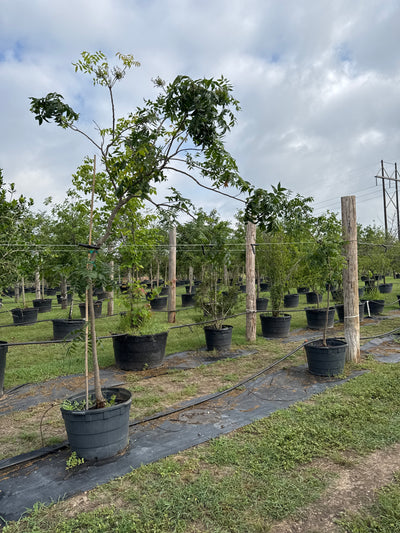


Yucca Spanish Dagger


Yucca Spanish Dagger
🌱 Planting Installation
The Spanish Dagger (Yucca gloriosa) is a striking, evergreen succulent shrub prized for its dramatic, architectural silhouette and rugged resilience. Native to coastal regions of the southeastern United States, it is incredibly tough—laughing off intense heat, severe drought, salty sea breezes, and poor, sandy soils, while remaining hardy down to USDA Zone 7. The foliage features dense, bold rosettes of stiff, sword-like leaves that are dark blue-green and tipped with dangerously sharp, rigid spines. While it starts as a low-growing clump, it matures into a multi-branched, small tree form over time, reaching 6 to 10 feet tall. As it grows, older leaves die and hang downward, creating a shaggy "skirt" around its fibrous trunk unless pruned away for a cleaner, palm-like look. In late summer or autumn, it sends up a massive, spectacular central spike packed with hundreds of nodding, bell-shaped, creamy-white flowers that open at night and emit a sweet fragrance. Essentially, it is the ultimate "tough-as-nails" structural accent plant, perfect for adding instant desert or coastal drama to a landscape, provided it is planted safely away from walkways.
| Scientific Name | Yucca gloriosa |
|
Foliage: Evergreen |
Leaves: Spine-tipped, stiff, and sword-like. Dark green to blue-green in color, growing in dense rosette clusters. Mature leaves can be slightly concave and typically lack the prominent peeling filaments found on some other yucca species. Flowers: Bell-shaped, creamy white to ivory blossoms, sometimes tinged with purple or green at the base. They hang downward on a massive, erect terminal panicle that rises well above the foliage, typically blooming in late summer to autumn. Fruit: An oblong, leathery, and indehiscent (does not split open naturally when ripe) berry-like capsule, turning brown or blackish as it matures. Seeds: Small, flat, dull-black seeds produced within the fruit chambers. Bark: On older specimens that develop trunks, the bark is rough, fibrous, and grayish-brown, often covered by a "skirt" of reflexed, dead dried leaves unless pruned. |
| Life Span: Perennial | Can live for 30 to 50+ years in optimal conditions. |
| Mature Height | Typically 6 to 10 feet (can occasionally reach up to 15 feet in old age when trunk-forming). |
| Mature Width (Spread) | 4 to 6 feet (can spread wider over time if it produces offsets/pups at the base). |
| Growth Rate | Slow to moderate |
| USDA Zone | Zone 7 through 11 (highly drought-tolerant and cold-hardy down to roughly 0°F / -17°C). |
PLANT CARE & CHARACTERISTICS
Light Requirements: Full Sun (6+ hours of direct sunlight daily). It can tolerate very light, dappled shade, but full sun is essential for a dense rosette shape and robust flowering.
Water Requirements: Low. Highly water-efficient once established. In most regions, natural rainfall is sufficient. Supplemental watering is only needed during extreme, prolonged summer droughts.
Drought Resistance: Excellent / Extremely High. It features thick, fleshy roots and specialized foliage designed to store moisture and survive long periods of negligible rainfall.
Soil Type: Sandy, gritty, or rocky soils that drain rapidly. It easily tolerates poor, lean, or alkaline soils, as well as salty coastal conditions, but it cannot tolerate heavy, waterlogged clay which triggers root rot.
Deer Resistance: High. Deer typically avoid it entirely due to the incredibly sharp, rigid spines at the tips of the leaves and the tough, fibrous texture of the foliage.
Pest/Disease Resistance: High overall, but vulnerable to high humidity and poor drainage. Generally minor pest issues, but watch out for the Yucca Weevil (which can bore into the stems) and occasional scale insects or mealybugs. Subject to fungal or bacterial leaf spots in humid climates, and highly susceptible to root rot if overwatered or planted in poorly draining soil.
POLLINATION
1. Primary Pollinator: The Yucca Moth (specifically from the genus Tegeticula).
- The Mutual Dependency: Neither species can survive without the other. The Spanish Dagger cannot produce seeds without the moth, and the yucca moth's larvae cannot feed on anything other than developing yucca seeds.
2. The Pollination Mechanism: Unlike bees or butterflies that pollinate passively while collecting nectar, the female yucca moth acts deliberately.
- She uses specialized, tentacle-like mouthparts to scrape sticky pollen from the anthers of a flower and rolls it into a ball under her chin.
- She flies to a flower on a different plant, bores a tiny hole into the flower's ovary, and lays her eggs.
- She then climbs up to the stigma and intentionally packs the ball of pollen into the stigmatic cavity, ensuring the flower is fertilized so it will grow a fruit to feed her future larvae.
3. Flowers Adaptations: The flowers are nocturnal and fragrant, releasing a sweet scent at night to attract the moths. Their creamy-white color makes them highly visible in the moonlight. Additionally, the anatomy of the flower makes self-pollination or passive pollination by wind/other insects nearly impossible.
4. Quality Control/Host Defense: The Spanish Dagger has a built-in defense mechanism against over-exploitation. If a moth lays too many eggs in a single flower's ovary, the plant will abort and drop the entire flower. This kills the larvae inside but protects the plant from losing all its seeds. This pressure forces moths to lay only a few eggs per blossom, leaving plenty of seeds to mature for plant reproduction.
5. Geographic Limitations: If Yucca gloriosa is planted as an ornamental outside of regions where native yucca moths live, the flowers will bloom beautifully but will fail to produce fruit or seeds unless they are hand-pollinated.
PRUNING
The Spanish Dagger (Yucca gloriosa) is a remarkably low-maintenance plant that doesn't actually require pruning to survive. However, because it grows sharp, rigid leaves and can develop a tall, multi-trunk tree form over time, periodic pruning is essential for safety, aesthetics, and space management.
1. Removing Dead Leaves (The "Skirt"): As the plant grows, older leaves at the bottom of the rosette naturally turn brown, die, and hang flat against the trunk.
- Leave it: If you want a rugged, natural, desert look, you can leave this "skirt" intact. It protects the trunk from sun and cold.
- Remove it: If you prefer a clean, structural, palm-tree-like trunk, use sharp bypass pruners to cut these dead leaves off right at the base of the stem. Do this any time of year.
2. Cutting Back Flower Stocks: Once the spectacular summer/autumn blooms fade, the massive terminal flower stalk will turn dry, woody, and brown.
- When?: Wait until the stalk is completely dried out (late autumn or winter).
- How?: Cut the stalk down as close to the center of the leafy rosette as possible using a sharp pruning saw or loppers. Be careful not to damage the surrounding green leaves.
3. Managing Offset ("Pups"): Over time, the plant will produce clonal offsets or "pups" clustered around the base of the main trunk, which can cause it to become an overgrown, wide thicket.
- When?: Spring or early summer.
- How?: Use a sharp spade or knife to slice the pup away from the parent trunk, ensuring you get a bit of its root system if you want to replant it elsewhere.
- Propagation Bonus: If you do decide to cut off a tall trunk or remove base pups, don't throw them away! Let the cut ends dry out in the shade for a few days to form a callus, then stick them directly into well-draining, sandy soil. They root incredibly easily, giving you brand-new plants for free
4. ⚠️ Crucial Warning: Protect Yourself First! The leaf tips of the Spanish Dagger are incredibly stiff and needle-sharp. Before you approach the plant to prune:
- Wear heavy-duty leather gardening gloves.
- Wear safety goggles/glasses to protect your eyes from accidental punctures while leaning into the canopy.
- Wear thick long sleeves and pants.
- Tip: If you are doing major work around the plant, you can snip the very tips off the sharpest leaves in your immediate work zone using hand pruners to "disarm" them before you begin.


