


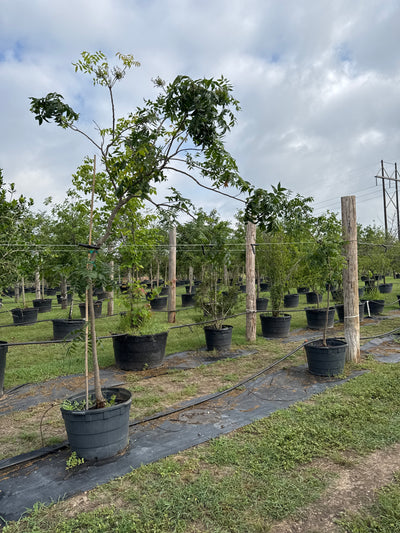


Blackberry Brazos Thorned

Blackberry Brazos Thorned
🌱 Planting Installation
| Scientific Name | Rubus 'Brazos' (often designated broadly as Rubus fruticosus 'Brazos' or Rubus hybrid) |
| Foliage: Deciduous to semi-evergreen |
Leaves: Deciduous to semi-evergreen (depending on winter severity). The leaves are compound, typically displaying 3 to 5 oval, rich green leaflets with sharply serrated margins and a slightly wrinkled texture. Notably, the undersides of the leaf midribs and petioles are armed with prominent, sharp thorns. Flowers: Showy, five-petaled white to soft pinkish-white blossoms blooming in early spring. They are borne in heavy clusters on the terminal ends of the fruiting wood and are highly attractive to honeybees and native pollinators. Fruit: Very large, glossy, deep black aggregate fruits composed of numerous juicy drupelets. The berries are round-to-oblong, firm, and offer a bold, complex, and pleasantly tart-sweet blackberry flavor. They are exceptional for fresh eating, cobblers, jams, and wine. Seeds: Each individual drupelet contains a single small, woody, and noticeably hard seed. While the seeds are prominent, they do not detract from the high juice volume of the large berry. Canes: The plant does not produce traditional tree bark. Instead, it develops stout, deeply ridged, and erect canes (stems). In their first year, canes are a bright, smooth green; in their second year, they mature into a woody, reddish-brown hue. The canes are heavily armed with formidable, curved, and very sharp thorns. |
| Life Span: Perennial | While individual canes are strictly biennial (living for only 2 years), the perennial root crown is incredibly long-lived and will continuously throw up fresh canes for 15 to 20+ years. |
| Mature Height | 4 to 6 feet tall. It is classified as an erect to semi-erect variety, meaning it develops strong, rigid canes that can stand upright on their own, though a simple trellis helps support heavy fruit loads. |
| Mature Width (Spread) | 3 to 4 feet wide per individual plant crown. However, it will naturally spread outwards over time via underground root suckers to form a dense berry patch if left unchecked. |
| Growth Rate | Extremely Fast & Vigorous. New primocanes can easily erupt from the crown and race to their full 6-foot height in a single spring afternoon-to-summer cycle. |
| USDA Zone | Zones 7 through 9. It handles intense southern humidity, baking summer heat, and fluctuating coastal winter weather with ease. |
| Chill Hours | Requires 200 to 300 chill hours (hours spent between 32°F and 45°F). This low chilling requirement allows it to wake up early and thrive in deep southern and Gulf Coast microclimates where northern blackberry varieties fail to leaf out. |
PLANT CARE & CHARACTERISTICS
Light Requirements: Full Sun. It requires at least 6 to 8 hours of direct, unfiltered sunlight daily. Full sun is essential to maximize cane vigor, promote heavy spring flowering, and ensure the berries develop high sugar levels for optimal sweetness.
Water Requirements: Moderate. It needs regular, deep watering (about 1 to 1.5 inches per week) during its first growing season and whenever the fruit is actively sizing and ripening in late spring/early summer. Consistent moisture prevents the large berries from drying out or becoming seedy.
Drought Resistance: High (Once Established). 'Brazos' has a deep, robust perennial root system that makes it highly drought-tolerant compared to other berry crops. Once established, it can easily survive dry spells, though fruit size and overall yields will decrease if the plant is severely water-stressed during berry development.
Soil Type: Highly Adaptable. It performs best in fertile, sandy-loam soils with a slightly acidic pH (5.5 to 6.5). However, it is famous for its adaptability and can tolerate heavier, poorer soils than many other blackberry cultivars, provided the soil has reasonable drainage. It does not tolerate waterlogged, swampy areas.
Deer Resistance: High. While deer may occasionally browse the tender new tips of young primocanes in early spring, the mature canes are heavily armed with very sharp, formidable thorns that act as a highly effective natural deterrent.
Pest/Disease Resistance: Excellent Overall Southern Adaptability.
- Double Blossom / Rosette Disease: Highly susceptible. This is its primary vulnerability in the humid South, requiring clean sanitizing pruning (removing spent floricanes immediately after harvest).
- Orange Rust: Highly resistant.
- Anthracnose & Leaf Spot: Shows moderate to high resistance, handling southern humidity and coastal conditions exceptionally well.
POLLINATION
1. Pollination Requirement: Self-Fertile (Self-Pollinating). You do not need to plant a second variety or even a second blackberry plant. A single 'Brazos' crown will successfully pollinate its own blossoms and set a full, heavy crop of berries.
2. Primary Pollinators: Honeybees, Bumblebees, and Native Bees. While wind can play a minor role, active insect pollination is highly critical to achieving perfectly formed, plump berries.
3. Bloom Timing: Early Spring (March to April). It produces showy white-to-pinkish flowers that open gradually over several weeks. This staggered bloom window protects the overall harvest from being entirely wiped out by a single late-spring freeze.
4. Pollen Quality: Excellent. 'Brazos' produces highly viable, abundant pollen that is attractive to bees, making it a reliable pollen source for nearby fruit trees waking up at the same time
5. Aggregate Fruit: A blackberry is not a single fruit; it is an aggregate fruit made up of dozens of tiny, individual juice-filled pods called drupelets.
- Each individual flower has a ring of many male stamens (which produce pollen) surrounding a central cluster of many female pistils (each leading to a potential drupelet).
- For a berry to be perfectly plump, round, and symmetrical, almost every single pistil must receive pollen.
- If bee activity is low during bloom—or if cold, rainy spring weather keeps the bees in their hives—only a few pistils will get pollinated. This results in "crumbly berry syndrome," where the harvested fruit is small, misshapen, or falls apart into tiny individual beads when picked.
HARVEST
Harvest Window: Late Spring to Early Summer (Typically May to June). It is one of the earliest ripening varieties in the South, often peaking weeks before thornless cultivars.
Years to First Harvest: 1 to 2 years. You will get a small "teaser" crop of berries the year after planting, with full, heavy production starting by year two or three.
How to Tell When "Brazos' Blackberries are Ready to Pick
Because 'Brazos' is a tart-sweet variety, picking it at the exact right moment is the difference between a sweet, juicy treat and a firm, sour surprise. Blackberries do not continue to sweeten once they are pulled from the plant.
1. The Color Shift (Glossy vs. Dull): A blackberry turns black before it is actually fully ripe. If the berry is still highly glossy and shiny black, it is still in its tart stage. Wait until the skin transitions to a warm, dull, matte-black finish.
2. The "Easy-Release" Test: Gently grasp the berry and give it a slight horizontal tug. If it is fully ripe, it will slip away from the stem effortlessly, leaving the white center (the receptacle) behind on the vine. If you have to pull hard or if the berry tears, it isn't ready.
3. The Texture: The berry should feel plump and offer a slight, soft "give" when squeezed very gently between your fingers.
YIELD
Very High. A single, well-maintained 'Brazos' plant crown can easily yield 10 to 15+ lbs (8 to 12 quarts) of berries annually once fully established.
STORAGE/SHELF LIFE
| Storage Method | Average Shelf Life | Notes |
|
Room |
12 to 24 Hours |
Optimal Conditions: Keep in a cool, shaded spot (under 70°F) in a single, well-ventilated layer. Best Uses: Immediate fresh eating, baking, or processing into jams/pies on harvest day. |
| Standard Refrigeration |
3 to 5 Days |
Optimal Conditions: 32°F to 36°F (high-humidity zone, but kept completely dry). Best Uses: Fresh snacking, fruit salads, and short-term staging before preserving. |
| Freezer (Long-Term) |
10 to 12 Months |
Optimal Conditions: 0°F or lower; pre-frozen in a single layer on a sheet pan before bagging. Best Uses: Winter cobblers, smoothies, blackberry sauces, and baking. |
| Dehydrated Freeze-Dried |
1 to 5+ Years |
Optimal Conditions: Airtight container (vacuum-sealed with an oxygen absorber) in a dark, cool pantry. Best Uses: Trail mixes, oatmeal toppings, or powdered baking ingredients. |
Step-by-Step Storage Management
1. The Golden Rule: Keep Them Dry. Moisture is the absolute enemy of fresh blackberries. They act like tiny sponges, and their complex aggregate structure easily traps water, which triggers rapid mold growth (gray mold/Botrytis) within hours.
- Never wash 'Brazos' blackberries before storing them. Only wash them under a gentle stream of cold water immediately before you put them in your mouth or toss them into a recipe.
- If you harvest them on a humid morning and notice condensation on the berries, spread them out on paper towels in a cool room to air-dry completely before putting them in the fridge.
2. The Refrigerator Protocol
- Choose the Right Container: Store them in shallow, ventilated containers (like the slotted plastic clamshells they come in at the grocery store). Never pile them more than 2 or 3 layers deep; the weight of the top berries will crush the delicate ones at the bottom, releasing juice and inviting mold.
- Line with Paper Towels: Place a dry paper towel at the bottom of the container to absorb any microscopic condensation or weeping juices.
- Keep Cold: Place them in the coldest part of your refrigerator—usually near the back of a middle shelf, rather than in a crisper drawer (which can sometimes trap too much stagnant humidity).
3. The IQF (Individually Quick Frozen) Method: Because 'Brazos' is a heavy producer, you will likely end up with more berries than you can eat fresh. Freezing them individually prevents them from turning into a solid, unmanageable block of purple ice.
- Wash and thoroughly dry: Crucial first step. Gently rinse the berries in cold water. Spread them out on a clean kitchen towel and let them air-dry completely. Any surface water will form ice crystals and make the berries mushy when thawed.
- Flash freeze on a baking sheet: Keep them separate. Line a baking sheet with parchment paper. Arrange the dry blackberries in a single layer, ensuring they are not touching each other. Place the sheet flat in the freezer for 2 to 4 hours until the berries are rock-hard.
- Transfer to airtight storage: Prevents freezer burn. Slide the frozen, individual berries into a heavy-duty freezer bag or vacuum-seal bag. Label with the date. Because they were frozen individually, you can now scoop out exactly what you need for a recipe without thawing the whole batch.
PRUNING
Pruning the 'Brazos' Thorned Blackberry is the single most important chore to keep your berry patch manageable, highly productive, and disease-free. Because blackberries have a perennial root system but biennial canes (meaning individual stems only live for two years), you must prune them annually. Left unpruned, 'Brazos' will quickly become an impenetrable, tangled thicket of wicked, curving thorns that is nearly impossible to harvest.
Summer Clean-Up (Right after Harvest - June/July)
As soon as the summer harvest wraps up, it is time to remove the canes that just finished bearing fruit. Blackberries grow two types of canes:
- Floricanes: Two-year-old, woody canes that flowered and carried this summer's crop. Now that they are finished, they will naturally die back.
- Primocanes: Fresh, fleshy green canes that grew this spring. They will not produce fruit this year—they must overwinter and become next year's fruiting wood.
1. Identify the spent canes: Look for woody stems. Locate the canes that just finished bearing fruit. They will have dried berry stems attached, look woody or grayish-brown, and the leaves will begin to yellow.
2. Cut them to the ground: Remove flush with the crown. Using sharp loppers, cut these spent floricanes completely off at the soil line. Do not leave stubs, as they can harbor pests and diseases like cane blight.
3. Destroy or discard the old wood: Prevent disease spread.Carefully drag the thorny, dead canes out of the patch and burn them or bin them. Do not compost them, as 'Brazos' is highly susceptible to Double Blossom / Rosette disease, and old wood is where the fungus overwinter-spores.
Late Winter Shaping & Tipping (Jan/Feb - Dormant Season)
During winter dormancy, you will shape the fresh, green primocanes that grew over the summer (which are now officially overwintered floricanes ready to fruit this coming spring).
1. Tip the Canes: If you didn't do this in summer, cut the tops of the main canes back to a height of 3.5 to 4 feet. This "tipping" stops upward growth and forces the cane to push out vigorous, highly productive lateral (side) branches.
2. Trim the Lateral Side-Branches: Cut the long, wild side-branches back to 12 to 18 inches in length. This concentrates the plant's energy, resulting in much larger, plumper, and sweeter berries that are kept off the ground.
3. Thin the Crown: Inspect the base of the plant. If the crown is overcrowded, remove the weakest, thinnest canes. Aim to keep only the 4 to 6 strongest, thickest canes per plant.
The Golden Rules of Pruning 'Brazos'
Armor Up Without Exception: 'Brazos' features formidable, backward-curved thorns. Do not attempt to prune this variety in short sleeves or standard knit gardening gloves. Wear heavy canvas or leather gauntlet-style rose-pruning gloves, thick safety glasses, and a heavy denim or canvas jacket.
Trellising is Highly Recommended: Because 'Brazos' is an extremely vigorous, semi-erect grower, training the canes to a simple two-wire T-trellis (wires running at 2.5 feet and 4.5 feet high) makes annual pruning and harvesting infinitely easier on your body.


