


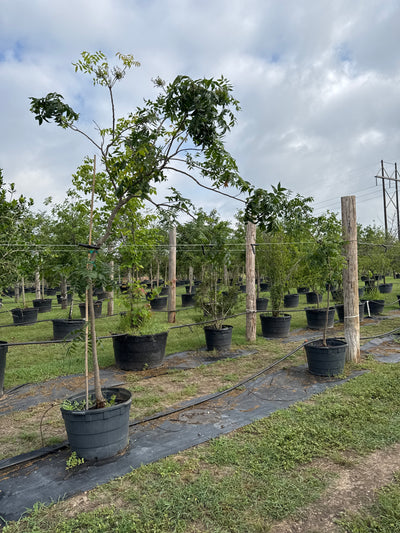

Blackberry Triple Crown Thornless


Blackberry Triple Crown Thornless
🌱 Planting Installation
The 'Triple Crown' blackberry (Rubus 'Triple Crown') is a famous thornless variety released jointly by the USDA and Oregon State University in 1996. It takes its name from its three standout characteristics: exceptional yields, magnificent vigor, and outstanding flavor. The Triple Crown is a fast-growing, semi-erect bush with 100% thornless, smooth stems. Because its canes grow long and arching (often reaching 10 to 15 feet), it performs best when trained along a sturdy two- or three-wire trellis. It is a traditional floricane-fruiting variety (bearing on two-year-old wood). It produces one heavy, concentrated harvest in mid-to-late summer (typically July through August) that lasts over a generous 4-to-5-week window. The Triple Crown is renowned for producing massive, rounded, glossy-black berries with an exceptionally sweet, balanced flavor and very low acidity. The fruit holds its firm, juicy texture well without sunscald. The Triple Crown typically thrives in USDA Zones 5 through 9, and requires roughly 600 to 800 winter chill hours. Overall, it is a workhorse variety for home orchards, capable of producing 15 to 30+ lbs of fresh fruit per mature crown each season under proper pruning.
| Scientific Name | Rubus 'Triple Crown' (Rubus hybrid) |
| Foliage: Deciduous |
Leaves: Deciduous compound leaves typically composed of 3 to 5 leaflets with finely serrated (toothed) edges. The foliage is a rich dark green with smooth petioles that are completely thornless. Flowers: Showy, medium-to-large, five-petaled white flowers that bloom in mid-to-late spring. They are rich in nectar and highly attractive to honeybees and native pollinators. Fruit: Notably large, glossy black, rounded aggregate berries. They are widely praised for their exceptional, balanced sweet flavor with a hint of acidity and a pleasantly firm, juicy texture that resists sunburn. Seeds: Contains small, soft, edible seeds within each drupelet. The seeds are small enough that they are barely noticeable during fresh eating, making this variety a favorite for jams and eating off the vine. Canes: 100% Thornless. The canes are semi-erect, smooth, and robust. They start green and fleshy in their first year (primocanes), maturing to a sturdy, woody brown in their second year (floricanes). |
| Life Span: Perennial | Individual canes live for 2 years (biennial fruiting cycle), but the perennial root system will continuously push up new canes for 15 to 20+ years. |
| Mature Height | 5 to 8 feet tall. Because it has a semi-erect habit, its long trailing canes will arch heavily if not supported by a trellis. |
| Mature Width (Spread) | 3 to 5 feet wide at the base, with trailing branches extending 6 to 10 feet along trellis wires. |
| Growth Rate | Fast to Very Fast. Produces long, highly vigorous canes each growing season. |
| USDA Zone | Zones 5 through 9 (performs exceptionally well across the Pacific Northwest, Midwest, and Upper South). |
| Chill Hours | Moderate to High (600 to 800 hours). It requires a solid winter chill period to break dormancy and set a heavy spring bloom load. |
PLANT CARE & CHARACTERISTICS
Light Requirements: Full Sun. Prefers 6 to 8+ hours of direct sunlight daily. Full sun is essential for maximizing fruit sugars, ensuring heavy floral set, and preventing the sprawling canes from becoming sparse or leggy.
Water Requirements: Moderate. Requires approximately 1 to 1.5 inches of water per week during the active growing season. Consistent moisture is especially critical from bloom through fruit harvest (mid-to-late summer) to prevent fruit sizing from stalling.
Drought Resistance: Moderate. More tolerant of brief dry spells than primocane-fruiting varieties once established due to a strong, deep perennial root system. However, prolonged drought during fruit set will lead to smaller, seedy, or dropped berries.
Soil Type: Well-Drained, Fertile Loam. Prefers rich, organic-matter-heavy soils with a pH of 6.0 to 6.8. It does not tolerate waterlogged or heavy clay soils, which promote root rots—raised beds are recommended for poor-draining areas.
Deer Resistance: Low to Moderate. Being 100% thornless, it lacks the prickly natural defenses of wild or thorned cultivars. Deer will happily browse tender new primocane foliage and lateral shoots in spring if foraging pressure is high.
Pest/Disease Resistance: Good Overall Hardiness.
- Red Berry Mite: Can occasionally affect late-summer fruit ripening (causing berries to stay hard and red); controlled with late-winter sulfur sprays.
- Can Blight / Anthracnose: Good natural resilience, but proper pruning and trellising for airflow are still recommended.
- Double Blossom / Rosette: Highly resistant compared to older southern varieties.
Trellising Tip for 'Triple Crown': A sturdy two-wire or three-wire I-Trellis (wires set at 3 ft, 4.5 ft, and 6 ft) is ideal. Because 'Triple Crown' produces such heavy fruit loads (15 to 30+ lbs per plant), tying the lateral branches securely to the wires in late winter keeps your harvest off the ground and easy to reach.
POLLINATION
1. Pollination Requirement: 100% Self-Fertile (Self-Pollinating). You do not need to plant a second variety to cross-pollinate. A single 'Triple Crown' bush will produce a full, heavy harvest all on its own.
2. Primary Pollinators: Honeybees, Bumblebees, and Native Pollinators. Bumblebees are especially effective for 'Triple Crown' because their "buzz pollination" vibration helps loosen pollen within the large white blossoms.
3. Bloom Timing: Late Spring to Early Summer (Typically May to June). It blooms slightly later than early-season varieties like 'Brazos' or 'Prime-Ark® Freedom', which helps its flower buds safely avoid late spring frosts in cooler climates.
4. Pollen Quality & Viability: Excellent. It produces abundant, highly viable pollen, resulting in exceptionally uniform drupelet development (fewer "seedy" or misshapen berries).
HARVEST
1. Harvest Window: Mid-to-Late Summer (Typically July through August). It ripens later than early varieties like 'Brazos' or 'Prime-Ark® Freedom', making it ideal for extending your berry season.
2. Harvest Duration: 4 to 5 Weeks. Instead of dropping all its fruit at once, 'Triple Crown' ripens gradually over a generous month-long window, giving you a steady supply of fresh berries.
3. Years to First Harvest: Year 2. As a traditional floricane-fruiting variety, it grows green primocanes in Year 1 and produces its fruit on those overwintered canes during its second summer.
How to Tell When 'Triple Crown' Berries Are Peak-Ripe
Because 'Triple Crown' berries turn black before they reach peak sweetness, picking by color alone can leave you with tart fruit. Look for these three signs:
1. The Dull Finish: Young berries are shiny and jet-black. Wait until the skin shifts from a high-gloss shine to a soft, dull matte-black.
2. The Plump Drupelets: The individual small spheres (drupelets) making up the berry should look swollen, smooth, and full of juice.
3. The Light Touch Test: A fully ripe 'Triple Crown' berry will release into your hand with almost no resistance. If you have to tug or pull on the stem, leave it on the trellis for another 24 to 48 hours to let the sugars fully peak.
YIELD
Exceptionally High. A single mature plant crown can produce 15 to 30+ lbs of fruit per year under good trellis management—making it one of the highest-yielding cultivars available.
STORAGE/SHELF LIFE
| Storage Method | Average Shelf Life | Notes |
| Room Temperature (Countertop) |
12 to 24 Hours |
Optimal Conditions: Cool, shaded area (under 70°F) arranged in a single, well-ventilated layer. Best Uses: Immediate fresh eating or processing into desserts on harvest day. |
| Standard Refrigeration |
4 to 7 Days |
Optimal Conditions: 32°F to 36°F in a high-humidity drawer, stored completely dry. Best Uses: Fresh snacking, fruit salads, or staging before baking. |
| Freezer (Long-Term) |
10 to 12 Months |
Optimal Conditions: 0°F or lower; pre-frozen in a single layer before placing in bags. Best Uses: Smoothies, baking, fruit sauces, and jams throughout the winter. |
| Dehydrated Freeze-Dried |
1 to 5+ Years |
Optimal Conditions: Vacuum-sealed in an airtight container with an oxygen absorber in a dark, cool space. Best Uses: Trail mix, cereal/oatmeal toppings, or baking powders. |
Best Practices for Fresh Storage
1. Keep Moisture Off the Fruit: Freshly picked 'Triple Crown' berries are firm, but their aggregate structure easily traps surface moisture, which rapidly triggers mold (Botrytis).
- Never wash berries before refrigerating. Wait to rinse them under a gentle, cold stream of water until right before eating or baking.
- If harvesting on a humid morning, let the berries sit on paper towels in a cool room for 15–20 minutes to evaporate any natural dew before putting them in the fridge.2.
2. Refrigeration Technique
- Avoid Deep Piling: Use shallow, ventilated containers (like clamshells or shallow glass dishes lined with paper towels). Because these berries are large and heavy, stacking them more than two layers deep will crush the bottom fruit, releasing juice and shortening shelf life.
- Coldest Placement: Store the container on a middle or back shelf where temperatures stay consistently low, rather than in the refrigerator door.
3. Long-Term Freezing: The Flash-Freeze Method. Because a single 'Triple Crown' plant can yield 15 to 30+ lbs of fruit over its 4-to-5-week harvest window, flash-freezing is the best way to preserve your extra harvest.
- Rinse and air-dry thoroughly: Prevents ice buildup.Gently wash the berries in cold water. Lay them out on a clean kitchen towel in a single layer and let them air-dry completely. Any trapped surface water turns into large ice crystals, leading to mushy fruit when thawed.
- Flash freeze on a baking sheet: Keeps berries separated. Line a baking sheet with parchment paper and arrange the dry berries in a single layer, making sure they don't touch. Freeze for 2 to 4 hours until frozen solid.
- Pack in airtight storage: Protects against freezer burn.Transfer the frozen individual berries into a heavy-duty freezer bag or vacuum-seal bag. Label with the harvest date. You can now easily scoop out exact portions without thawing the entire bag.
PRUNING
Because 'Triple Crown' is a semi-erect, thornless, floricane-fruiting blackberry, its pruning strategy is slightly different from stiffly erect cultivars like 'Ouachita' or primocane-fruiting varieties like 'Prime-Ark® Freedom'. Its canes grow extremely fast, long, and trailing—often reaching 10 to 15 feet if left unmanaged. Pruning is essential to control this rampant growth, force heavy branching, and keep the massive harvest contained on a trellis.
'Triple Crown' produces berries on two-year-old wood (floricanes), while growing new, green canes (primocanes) for next year's harvest.
Phase 1: Summer Pruning (Active Growth & Immediate Post-Harvest)
1. Tip the New Primocanes (Early to Mid-Summer): As the fresh, green, thornless canes shoot up from the base of the plant during late spring and summer, you must top them.
- When to tip: When the main canes reach 4.5 to 5 feet tall (roughly chest height along your trellis).
- How to tip: Snip or pinch off the top 2 to 3 inches of the growing tip.
- Why it matters: Because 'Triple Crown' naturally trails, tipping stops vertical growth and forces the plant to send out long, vigorous lateral (side) branches along your trellis wires. This lateral growth is where next summer's heavy crop will form.
2. Remove Spent Floricanes (Late Summer - Immediately After Harvest): Once you finish picking berries in August, the old, woody floricanes will begin to yellow, brown, and die naturally.
- Cut these dead floricanes flush to the ground.
- Pull them off the trellis, remove them from the patch, and destroy or discard them to prevent fungal diseases from spreading to the new green growth.
Phase 2: Late Winter Pruning (Dormancy - January/February)
During late winter while the plant is completely dormant, you will structure the lateral branches you forced during the summer and secure them to your trellis.
1. Select and thin main canes: Keep the strongest 4 to 8 stems. Inspect the plant crown. Prune away any thin, weak, damaged, or disease-spotted canes at ground level. Leave 4 to 8 of the thickest, healthiest canes per plant.
2. Head back the lateral branches: Cut side branches to 12-18 inches.Trim all the long side-branches back to 12 to 18 inches long. This concentrates the vine's energy into producing huge, dense clusters of berries rather than long, spindly shoots that bow to the ground under fruit weight.
3. Clean up low growth: Clear the bottom 18 inches. Cut away any small lateral branches growing on the bottom 18 inches of the main canes. Keeping the lower canopy clear prevents soil splash, keeps fruit clean, and maximizes airflow around the base of the plant.
4. Fan and secure to the trellis: Tie lateral branches to wires. Fan the remaining canes along your trellis wires (using garden twine or plant clips) in a soft "V" shape or horizontal pattern to ensure every branch receives maximum sunlight.


