


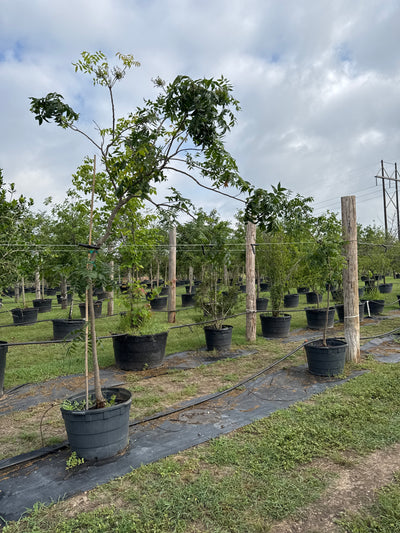


Blackberry Ouachita


Blackberry Ouachita
🌱 Planting Installation
The 'Ouachita' Blackberry (pronounced WASH-it-tah) is widely considered the "gold standard" of the University of Arkansas thornless series. Released in 2003, it was bred specifically to combine the best traits of its predecessors: the upright habit of the 'Arapaho' and the high productivity of the 'Navaho'. The 'Ouachita' blackberry produces large, glossy blackberries that are exceptionally sweet and flavorful. The fruit has a firm texture and is typically harvested in mid- to late summer. 'Ouachita' blackberries are known for their high yields and resistance to diseases such as double blossom and orange rust. The canes of 'Ouachita' blackberries are thornless, making them easy to harvest and manage. The plant has a semi-erect growth habit, with canes that may require support as they grow and produce fruit.
| Scientific Name | Rubus fruticosus 'Ouachita' |
| Foliage: Deciduous |
Leaves: Deep green, compound leaves with 3–5 leaflets. They have a classic serrated edge and a slightly textured, healthy appearance. Flowers: Large, attractive white flowers that bloom in mid-spring. They are a favorite for honeybees. Fruit: Medium-to-large, very firm, and glossy black. They are famous for their exceptional sweetness and lack of bitterness. Because they are so firm, they have a longer shelf life than most homegrown berries. Seeds: Small and less "crunchy" than wild varieties, making them excellent for fresh eating or jams. Canes: Thornless and Erect. The canes are very sturdy and upright. They start as a vibrant green and mature into a woody, light-brown bark. While technically "erect," a simple trellis is still recommended to manage the heavy fruit load. The canes are less likely to flop over than the 'Natchez'. |
| Life Span: Perennial | The underground root crown is a true perennial (living for 10 to 15 years), but every cane growing above the ground is biennial—meaning an individual stem lives for only two years before dying. |
| Mature Height | 4-6 feet (usually topped at 4 feet for a better yield) |
| Mature Width (Spread) | 3-4 feet (spreads via crown expansion and suckers) |
| Growth Rate | Fast-growing; Can produce significant crops by the second or third year. |
| USDA Zone/Chill Hours | Zone 6-9; (Very heat tolerant); requires 400-500 chill hours |
PLANT CARE & CHARACTERISTICS
Light Requirements: Full Sun. They thrive in full sun exposure, which is essential for promoting vigorous growth, flowering, and fruiting. Adequate sunlight also helps reduce the risk of fungal diseases by promoting air circulation and drying out foliage.
Water Requirements: Moderate; 1-1.5 inches per week during growing season.
Drought Tolerance: Moderate. It handles southern heat better than most, but consistent water is required for the berries to stay plump.
Soil Type: Well-drained soil with good fertility and a slightly acidic to neutral pH level (around 6.0 to 7.0). 'Ouachita' blackberries are relatively adaptable to different soil types, including loamy, sandy, or clay soils, as long as they are well-drained and have good moisture retention.
Deer Resistance: Moderate-Low. Deer will browse the tender spring foliage, though they usually prefer fruit tree leaves if given the choice.
Pest/Disease Resistance: Excellent. It is highly resistant to Double Blossom (Rosette) and Orange Rust. It is generally a very "clean" plant with few disease issues.
Pollination: Self-pollinating. You do not need a second variety for pollination.
Growth Pattern & Trellising: Even though 'Ouachita' is classified as an erect variety with very stiff, self-supporting canes, a heavy crop of large berries can cause even the strongest stems to lean or bow under the weight. Using a simple, two-wire "I-Trellis" or "T-Trellis" (with wires run at roughly 3 feet and 5 feet high) is highly recommended. You don't need to tie the canes tightly; simply let them grow up between the parallel wires to keep them perfectly upright, organized, and incredibly easy to pick.
Harvest: 'Ouachita' blackberry harvest typically runs from mid-June through July, with some harvests extending into August in certain climates (after 'Natchez' and 'Arapaho'). It provides a consistent, long harvest window.
3 Signs Your 'Ouachita' Berries are Ready to Harvest
'Ouachita' berries are known for being exceptionally sweet, but they need to "cure" on the vine to lose their initial tartness.
1. The "Shine to Matte" Transition: Like its cousins, 'Ouachita' turns black before it is sweet. Pick the berries when the high-gloss shine turns into a duller, "velvety" black.
2. The "Fullness" of the Berry: Look at the individual drupelets (the bumps). They should look plump and "stretched." If the berry looks "tight," it’s still accumulating juice and sugar.
3. The Resistance Test: Touch the berry and apply the slightest pressure. A ripe 'Ouachita' will detach from the vine with absolutely zero effort. If the vine moves when you pull the berry, let it stay for another 24 hours.
YIELD
| Year 1 (Planting Year) | The plant focus is on root structure and pushing up its first "primocanes" (new green canes). You should not expect a harvest this year. Focus on trellis training and watering. |
| Year 2 (First Harvest) |
You will get your first "taster" crop. The canes from the first year mature into floricanes. 'Ouachita' is remarkably precocious and can surprise growers by yielding an impressive 3 to 4 pounds of berries even in its very first fruiting season. |
| Years 3 to 10+ (Peak Maturity) | The root crown is fully developed and pushing up multiple strong, erect canes simultaneously. With proper annual pruning, the bush hits its full, stable stride of production. A single mature 'Ouachita' plant an produce 15-20 pounds of fruit per season! |
STORAGE/SHELF LIFE
| Storage Method | Shelf Life | Best For |
| Room Temperature (Countertop) | 12 to 24 Hours | Immediate eating or processing. Quality drops rapidly in ambient heat. |
| Optimal Refrigeration (31°F to 34°F) | 7 to 10 Days | Fresh eating, baking, or short-term holding. |
| Standard Home Fridge (38°F to 40°F) | 4 to 6 Days | Everyday household use. |
| Freezer (0°F or lower) | 10 to 12 Months | Long-term storage for smoothies, jams, baking, or sauces. |
PRUNING
'Ouachita' produces fruit on two-year-old wood (floricanes) while growing new green wood (primocanes) for the following year.
Phase 1: Summer Pruning (Immediate Post-Harvest & Active Growth).This phase is split into two rapid summer tasks.
1. Remove Spent Floricanes (Right after Harvest - July): Once the summer harvest winds down, the canes that just carried your delicious berries will naturally begin to turn brown and die.
- Cut these old, woody floricanes completely down to the ground.
- Drag them out of the patch and discard or burn them to keep the area clean and reduce pest pressure.
2. "Tip" the Fresh Green Primocanes (Throughout the Summer): This is the most critical step for an erect variety like 'Ouachita'. When the new, green, thornless primocanes shoot up and reach 3.5 to 4 feet tall, pinch or cut the top 2 to 3 inches off the tip.
- Why this is vital: Left untipped, 'Ouachita' will grow into a single, tall, 8-foot whip with very few berries. Tipping stops upward growth and immediately forces the cane to push out vigorous lateral (side) branches, dramatically increasing your future fruiting area.
- Because primocanes grow at different rates, you will want to walk your patch every couple of weeks in summer to tip them as they reach the correct height.
Phase 2: Late Winter Pruning (Late Dormancy - January/February). During the winter when the plant is dormant, you will clean up and detail the lateral branches you forced during the summer.
1. Identify the healthy canes. Thin the crown. Inspect the base of each plant. Remove any weak, thin, or damaged canes. Keep only the 4 to 6 strongest, thickest canes per plant crown to allow maximum light and air penetration.
2. Shorten the side branches. Cut to 12-18 inches. Trim all the lateral side-branches back to 12 to 18 inches in length. This removes weak tips, concentrates the plant's resources into producing larger, sweeter berries, and keeps the heavy fruit clusters from sagging onto the soil.
3. Clean up the base. Clear low growth. Prune away any small lateral branches that are growing within the bottom 18 inches of the main canes. This keeps your fruit clean and away from soil-borne pathogens.


