


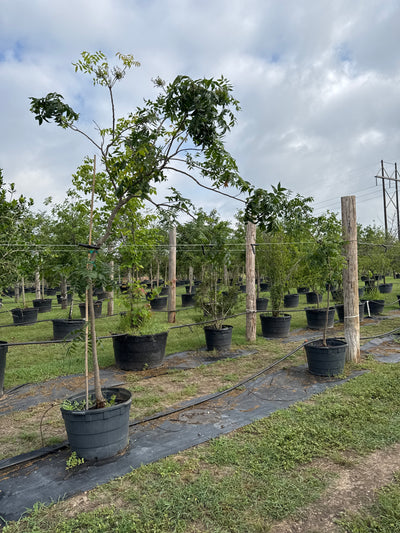


Sweet Bay Magnolia Discounted

Sweet Bay Magnolia Discounted
Location on Farm:
🌱 Planting Installation
Sweet Bay Magnolia, also known as Swamp Magnolia, is an elegant native tree or large shrub prized for its glossy foliage, graceful habit, and sweetly fragrant summer blossoms. Native to the eastern and southern coastal plains of the United States, it grows as a multi-stemmed shrub or single-trunk tree, reaching 10 to 20 feet in northern regions and up to 50 feet in the deep South. Its simple, oblong leaves feature a lustrous dark green upper surface contrasted by a striking, frosted silvery-white underside that glimmers whenever the wind blows. Depending on the climate, the tree behaves as evergreen in warm southern zones and deciduous in colder northern ranges.
From late spring into early summer, Sweet Bay Magnolia produces cup-shaped, creamy-white blossoms two to three inches wide that release a soft, intoxicating lemon-vanilla fragrance. As the flowers fade, cone-like red fruit heads mature in autumn, splitting open to reveal bright scarlet seeds that hang on slender threads—providing an important food source for songbirds and small mammals.
| Scientific Name | Magnolia virginiana (Sweet Bay Magnolia / Swamp Magnolia) |
| Foliage: Semi-evergreen |
Slender, multi-stemmed or single-trunk small tree to large shrub with an upright, open, columnar to rounded canopy. Leaves: Simple, alternate, oblong-lanceolate leaves (3–6 in long); lustrous dark green above with striking, frosted silvery-white undersides; semi-evergreen to evergreen in the South, deciduous in the North. Flowers: Solitary, cup-shaped, creamy-white blossoms (2–3 in wide) with 9–12 petals; highly fragrant with a soft lemon-vanilla scent; blooms late spring through early summer. Fruit: Cone-like aggregate dark red to brown fruit heads (2 in long) maturing in late summer. Seeds: Bright scarlet-red seeds that dangle from the cone-like fruit on slender threads when fully ripe. Bark: Smooth, dark gray to light gray-brown, tight bark that remains mostly smooth as the tree matures. |
| Life Span: Perennial | Long-lived; 50–100+ years |
| Mature Height | 10–20 ft in northern ranges; 30–50+ ft in the South |
| Mature Width (Spread) | 10–20 ft |
| Growth Rate | Moderate (12–24 inches per year) |
| USDA Zone / Chill Hours | USDA Zones 5a–10b (Cold-hardy down to -20°F); No specific chill hour requirement |
PLANT CARE & CHARACTERISTICS
Light Requirements: Full Sun to Partial Shade (Requires 4–6+ hours of sunlight daily; tolerates dappled shade).
Water Requirements: High; thrives in wet, swampy soils; demands consistent moisture.
Drought Resistance: Low (Susceptible to leaf drop and stress in dry soils without irrigation).
Soil Type: Prefers moist, wet, acidic, organic-rich clay, loam, or sandy soils; pH 4.5–6.5; highly tolerant of poorly drained, waterlogged, or boggy soils.
Deer Resistance: Moderate.
Pest / Disease Resistance: High resistance to major diseases and pests; occasional scale insects, leaf spot, or spider mites in stressed conditions; susceptible to chlorosis in alkaline soils.
Pollination: Insect-pollinated; primarily pollinated by beetles, bees, and native pollinators attracted by the fragrant floral scent.
Pruning: Minimal required. Prune in late winter or early spring while dormant to shape, remove deadwood, or train into a single-trunk tree.


