


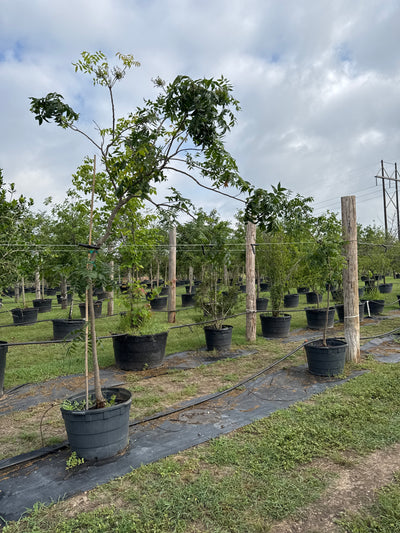


Pear Pineapple

Pear Pineapple
🌱 Planting Installation
The 'Pineapple' Pear is a classic, highly dependable southern heirloom pear. Botanically, it is classified under Pyrus communis, though it is heavily recognized by orchardists as a hybrid cross between the European pear (Pyrus communis) and the Asian sand pear (Pyrus pyrifolia). This parentage gives it the crisp, crunchy texture of an Asian pear combined with exceptional resistance to Fire Blight and an ultra-low chilling requirement perfect for warm-winter regions. The Pineapple Pear is a large, robust, and fast-growing tree that typically matures into a dense, upright-oval canopy about 20 to 25 feet tall. In early spring, it acts as a stunning ornamental feature, completely blanketing its bare winter branches in showy, snow-white blossom clusters. It produces large, heavy, teardrop-to-oval fruits. As they ripen in late summer, the skin turns a rich golden-yellow, often marked with prominent tan spots and a soft reddish blush where kissed by the sun. True to its name, the firm, crisp white flesh delivers a unique, tangy-sweet flavor profile and an intense aroma that distinctly mimics fresh pineapple. This cultivar is legendary for its extreme toughness and heavy, reliable annual yields. Because it requires an ultra-low winter chilling period (only 150 to 200 chill hours), it is perfectly adapted to the hot, humid summers of the Deep South, coastal regions, and warm-winter zones.
| Scientific Name | Pyrus communis 'Pineapple' (often classified as a hybrid cross: Pyrus communis × Pyrus pyrifolia) |
|
Foliage: Deciduous |
Leaves: Deciduous, alternate, and oval-to-ovate shaped with finely serrated margins and pointed tips. The foliage is a glossy, deep forest green throughout the spring and summer, transforming into striking shades of vibrant yellow, bronze, and rich red in late autumn. Flowers: Showy, highly ornamental clusters of brilliant pure white, five-petaled blossoms featuring small, reddish-pink anthers. They bloom early in the spring, completely coating the bare branches before the leaves emerge, and release a light, pleasant fragrance. Fruit: Large, heavy, tear-drop or round-oblong pomes. The skin turns a striking golden-yellow, often marked with a light red or russet blush and prominent brown lenticels (spots). The creamy-white flesh is incredibly crisp, firm, and juicy, delivering a unique, tangy-sweet tropical flavor profile that distinctly mimics fresh pineapple. Seeds: Contains a few small, pointed, dark brown-to-black seeds nestled inside a tough, fibrous central core. Bark: In youth, the bark is smooth and grayish-brown with light speckling. As the tree matures, it develops a rugged, attractively textured dark gray bark that breaks into shallow fissures and small, scaly plates. |
| Life Span: Perennial | Can easily live and remain highly productive for 50 to 75+ years under proper care. |
| Mature Height | 20 to 25 feet tall at full maturity (can be easily kept to 12 to 15 feet with routine dormant pruning). |
| Mature Width (Spread) | 15 to 20 feet wide, naturally exhibiting a dense, upright-spreading, and strongly oval canopy silhouette. |
| Growth Rate | Fast. It is a highly vigorous grower in its youth and is renowned for bearing its first heavy crops at a very young age (often just 2 to 3 years after planting). |
| USDA Zone | Zones 5 through 9 (some coastal northern nurseries record success into Zone 4a). It handles intense southern humidity and summer heat exceptionally well. |
| Chill Hours | 150 to 200 chill hours (hours spent between 32°F and 45°F). This ultra-low requirement makes it one of the absolute best pear choices for deep southern states, coastal Texas, and central Florida, yet it breaks dormancy late enough to escape typical late-spring frost snaps. |
PLANT CARE & CHARACTERISTICS
Light Requirements: Full Sun. It requires at least 6 to 8 hours of unfiltered, direct daily sunlight. Full sun exposure maximizes its rapid growth rate, ensures strong wood development, helps prevent fungal leaf issues, and is essential for developing the high sugar content and golden-yellow color of the fruit.
Water Requirements: Moderate. It needs regular, deep watering during its first 2 to 3 years to successfully establish its root system. Once mature, it prefers a deep soaking every 1 to 2 weeks during hot, dry summer months, but it generally manages well on natural rainfall.
Drought Resistance: High (Once Mature). Thanks to its Asian sand pear genetics, a well-established 'Pineapple' pear tree possesses excellent drought tolerance compared to pure European pear varieties. It can withstand extended dry spells during mid-summer without dropping its foliage or aborting its crop.
Soil Type: Highly Adaptable & Tolerant. While it thrives best in deep, rich, well-drained loams with a slightly acidic to neutral pH (6.0 to 7.0), it is famous for its ability to tolerate poorly drained, heavy clay soils. It manages heavy, wet soils better than almost any other common orchard fruit tree.
Deer Resistance: Moderate-Low. Deer will occasionally browse the tender new green spring shoots, and bucks may rub their antlers on the smooth bark of young trees. However, the real draw is the fruit; once the large, heavily scented, golden pears ripen and drop in late summer, they become an absolute magnet for local deer and other wildlife.
Pest/Disease Resistance: Exceptional Fire Blight Resistance. Its standout trait is its near-immunity to Fire Blight (Erwinia amylovora), the devastating bacterial disease that decimates most European pears in the warm, humid South. It also shows high resistance to leaf spot diseases. It can occasionally deal with typical pear pests like codling moths or aphids, but it is considered an incredibly clean, low-spray orchard choice.
POLLINATION
1. Pollination Requirement: Self-Fertile (Self-Pollinating). The 'Pineapple' pear is fully capable of pollinating its own blossoms and setting a heavy crop of fruit completely on its own. You do not need to plant a second pear tree to get a harvest.
2. The Cross-Pollination Benefit: While it is self-fertile, planting a different, compatible pear variety nearby will almost always result in larger individual fruits, higher overall yields, and more consistent annual crops.
3. Primary Pollinators: Honeybees, Orchard Mason Bees, and Native Pollinators. The striking, pure white spring blossoms are highly fragrant and rich in nectar, making them an excellent early-season draw for local bees.
4. Bloom Timing: Early Spring. Because it has an ultra-low chilling requirement of only 150 to 200 hours, it wakes up and blooms very early in the season.
HARVEST
1. Harvest Window: Late Summer (Typically August to September). In the Deep South, the harvest can begin as early as late July or early August, while cooler regions will see it stretch into September.
2. Years to First Harvest: 2 to 3 years for a grafted bare-root tree. This variety is exceptionally precocious, meaning it wastes no time establishing its root system before entering its reproductive phase.
3. When to Pick (Firm vs. Soft): Harvest while firm but changing color. Unlike European pears which must be picked completely green, the 'Pineapple' pear handles a bit like an Asian pear. Pick them when the skin transitions from grass-green to a warm golden-yellow, but before they get soft on the tree.
4. Managing a Heavy Harvest
- Support Heavy Branches: Because 'Pineapple' pears yield so heavily, it is very common for branches to snap under the weight of an August crop. If you notice limbs sagging significantly, use notched wooden 2x4 boards to prop up the heavy branches, or thin out a few of the small, crowded green fruits in June to balance the weight.
-
The Ripening Process: If you prefer a slightly softer, melting texture rather than a crisp, apple-like crunch, pick the pears when they are golden but firm. Bring them indoors and let them sit at room temperature on a counter for 3 to 5 days. The starches will continue to convert to sugars, softening the flesh while releasing an intensely fragrant, tropical pineapple aroma.
How to Tell When 'Pineapple' Pears are Ready to Pick
Because this hybrid pear has a very firm, crisp texture (similar to an apple or Asian pear), you should not wait for the fruit to become soft or mushy on the branch. If it gets soft on the tree, it will quickly develop a mealy, overripe core. Look for these signs instead:
1. The Color Shift: The most obvious visual cue is when the base skin color shifts from deep green to a clear, glowing golden-yellow. If the fruit is exposed to direct sunlight, a beautiful red or coppery-russet blush will often bleed across the shoulder of the pear.
2. The Horizontal Lift Test: Never pull a pear straight down to pick it. Instead, cup the bottom of the fruit in your hand, lift it horizontally up toward the sky, and give it a gentle twist. If the pear is fully mature, the stem will snaps away cleanly and effortlessly from the fruiting spur. If it resists or tears the wood, it needs a few more days.
3. The Lenticel Check: The tiny speckles (lenticels) on the skin will change from a sharp, bright white to a muted, dark brown or tan color as the sugars peak.
YIELD
Annual Yield Volume: Massive (High Producer). A fully mature, well-maintained tree can reliably yield 3 to 5 bushels (120 to 200+ lbs) of large pears every single year. Because a mature 'Pineapple' pear tree routinely yields massive amounts of fruit, canning and preserving are highly popular options:
- Canning (Excellent Choice): Due to their firm texture, 'Pineapple' pears hold up beautifully to hot water bath canning. They maintain their structural integrity in light syrups and do not dissolve into mush, making them superior to most other pear varieties for home canning jars.
- Freezing: If freezing, always peel and core the fruit first. Slice them to your desired thickness and immediately coat them in an anti-darkening solution (such as water mixed with lemon juice or commercial vitamin C powder) to prevent the white flesh from turning an unappealing brown in the freezer.
STORAGE/SHELF LIFE
| Storage Method | Average Shelf Life | Optimal Conditions | Best Used For |
| Room Temperature (Countertop) | 5 to 7 Days | 65°F to 72°F; kept out of direct sunlight in a well-ventilated area. | Fresh crisp eating, or allowing firm pears to slightly soften and release their tropical aroma. |
| Standard Refrigeration | 3 to 5 Weeks | 35°F to 40°F (high humidity crisper drawer is ideal). | Long-term fresh snacking, baking, and staging large harvests. |
| Commercial Cold Storage | 2 to 3 Months | Exactly 31°F to 32°F; packed in vented crates immediately after picking green-gold. | Extended winter storage. |
| Frozen (Processed Pulp/Slices) | 10 to 12 Months | 0°F or lower; peeled, cored, and tossed in lemon juice or ascorbic acid. | Winter baking, pear butter, preserves, and pies. |
PRUNING
Pruning the 'Pineapple' Pear is highly rewarding because this tree is an exceptionally vigorous grower. Thanks to its hybrid heritage, it wants to push straight up toward the sky with thick, aggressive vertical shoots. Left unpruned, it will quickly grow out of reach, and its dense inner canopy will become a tangled, shaded mess. Regular maintenance ensures the heavy wood can handle its massive annual fruit loads without splitting.
1. The Best Timing: Mid-to-Late Winter. The absolute best time to prune your 'Pineapple' pear is during deep dormancy (January to February).
- The Advantage: The leaves are gone, giving you an unobstructed view of the tree's architecture.
- The Safety Factor: Pruning during cold weather drastically minimizes the risk of spreading Fire Blight, a destructive bacterial disease. Even though 'Pineapple' is highly resistant to fire blight, making cuts while the bacteria are completely inactive keeps your orchard pristine.
2. Structural Goal: Open Center or Modified Leader
- The Open Center (Vase Shape - Recommended): This involves removing the central trunk and encouraging 3 to 4 main scaffold branches to grow outward in a bowl shape. This is ideal because it keeps the tree short for easy picking and floods the interior canopy with sunlight, which sweetens the fruit.
- The Modified Central Leader: A single central trunk goes up, but lateral branches are heavily spaced out. If you choose this, you must use branch spreaders (notched sticks) or weights on young branches to push them down to a 45-to-60-degree angle, counteracting the tree's natural habit of growing straight up.
3. Critical Rule: Protect the Fruiting Spurs. European and hybrid pears produce almost all of their fruit on fruiting spurs—short, stubby, slow-growing side twigs that look like wrinkled little fingers.
- Identify the spurs: Look for stubby twigs. Locate the short, gnarly, 2-to-6-inch side shoots along the older branches. They have very tightly spaced rings and plump buds.
- Preserve them during pruning: Do not clip them flush.Leave these spurs entirely alone. A single fruiting spur can live and reliably bear heavy clusters of 'Pineapple' pears for 7 to 10+ years.
- Thin out old wood instead: Replace spent branches.If a large limb becomes completely overcrowded with old, weak spurs after a decade, remove the entire limb to allow a fresh, young branch to grow and develop a new generation of vibrant spurs.
4. Sanitation Tip: Always dip your pruning blades in a solution of 10% bleach or 70% isopropyl alcohol between trees—or even between major cuts if you suspect disease—to prevent cross-contamination across your home orchard.
The Annual Pruning Checklist
1. Clear the "Three D's: "Always start by cutting out any branches that are Dead, Damaged, or Diseased. If you see any old, blackened twigs from the previous summer, cut them back at least 6 inches into clean, healthy wood.
2. Banish the "Water Sprouts" and Suckers: Because 'Pineapple' is so vigorous, it will produce dozens of water sprouts—shoot-straight-up, vertical branches that look like whips. They steal massive amounts of energy and rarely produce fruit. Cut them completely off flush with the main limb. Do the same for any suckers shooting up from the dirt at the base of the trunk.
3. Open Up the Center (The Bird Test): Pears need sunlight and moving air to dry out morning dew and prevent fungal leaf spots. Look at the interior of the tree. If two branches are crossing, rubbing against each other, or competing for the exact same pocket of sunlight, remove one.
- The Rule of Thumb: A robin should be able to fly completely through the center of your mature pear tree without its wings touching a branch.
4. Manage the Height: If the top branches are racing out of reach, cut them back to an outward-facing bud or lateral branch. This forces the tree's energy sideways, keeping the harvest at a manageable picking height (12 to 15 feet).


