


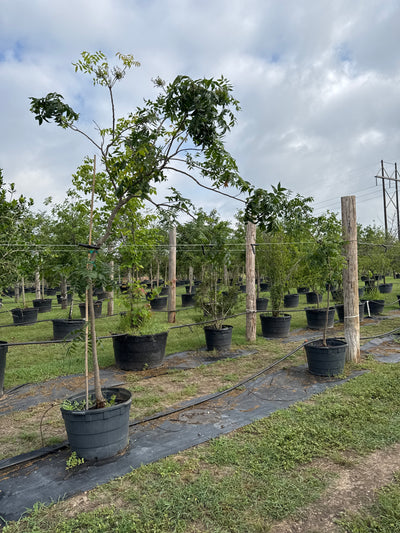


Lantana Pink Camara


Lantana Pink Camara
| Scientific Name | Lantana camara 'Pink' (Pink Lantana / Bush Lantana) |
| Foliage: Semi-evergreen to Evergreen |
Broad-spreading perennial shrub; dense, upright to mounding mound habit. Leaves: Ovate, 1.5–3 inches long with finely serrated edges; rough, rough-textured (scabrous) dark green surface; strongly aromatic/pungent citrus-herbal aroma when crushed Flowers: Dense, rounded clusters (umbels) of small, tubular flowers that open cream/yellow or soft pink and transition to deep rose-pink and magenta as they age; continuous bloom from spring to frost (year-round in frost-free climates). Fruit: Small, fleshy, round berry-like drupes ripening from green to dark metallic blue-black; Toxic to humans, pets, and livestock if ingested. Seeds: Hard, small seed kernels enclosed within the dark berries; easily dispersed by birds Bark: Square-stemmed green shoots when young, maturing to rough, light brown-gray woody stems with age (may bear tiny prickles). |
| Life Span: Perennial | 3–10+ years in warm, frost-free climates; grown as a tender annual in Zones 8 and colder. |
| Mature Height | 3–6 ft (In frost-free zones can reach up to 6 ft; grown as an annual stays around 2–3 ft) |
| Mature Width (Spread) | 3–5 ft |
| Growth Rate | Fast (Reaches full mature size within a single growing season) |
| USDA Zone / Chill Hours | Zones 9–11 (Perennial; root-hardy down to 20°F to 25°F / -4°C to -7°C); No chill hours required |
PLANT CARE & CHARACTERISITCS
Light Requirements: Full Sun (Requires 6+ hours of direct sunlight daily for heavy flower production and crisp foliage).
Water Requirements: Low to Moderate; water regularly to establish, then extremely drought-tolerant.
Drought Resistance: Exceptional (Thrives in intense summer heat, humidity, and dry soils once established).
Soil Type: Highly adaptable; prefers well-draining sandy loam, clay, or rocky soils; pH 6.0–7.5; dislikes waterlogged, soggy roots.
Deer Resistance: Very High (Pungent essential oils and toxic compounds in foliage make it highly unpalatable to deer and rabbits).
Pest / Disease Resistance: Highly resistant to disease and drought; occasionally susceptible to lantana lace bugs or whiteflies in hot, dry, airless conditions.
Pollination: Insect-pollinated; major nectar provider for butterflies, bees, and hummingbirds.
Harvest: N/A (Ornamental shrub; all parts, especially green berries, are toxic if eaten).
Pruning: Cut back hard by 1/3 to 1/2 in late winter or early spring to remove old woody growth and encourage clean, bushy shoots. Light trimming during summer removes seed heads and promotes fresh flower clusters.