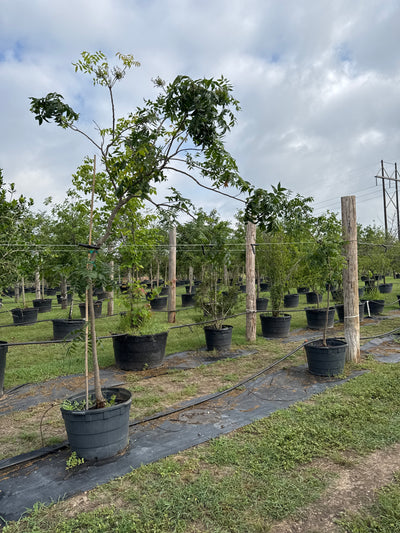
The Black Diamond® 'Best Red™' Crape Myrtle is a modern showstopper. It is famous for its "goth" aesthetic—stunning near-black foliage that provides a dramatic backdrop for its vivid scarlet blooms. The flowers bloom in large, showy clusters during the summer months, attracting butterflies and other pollinators. Its glossy, deep dark burgundy or near black leaves retain their color throughout the growing season, offering a visually stunning backdrop to the vibrant blooms. The Black Diamond series was bred to solve the biggest aesthetic problem with traditional crape myrtles: the "mid-summer slump" where green leaves can look a bit dusty. It has excellent resistance to Powdery Mildew, so you won't get that white fuzzy coating on the leaves that older varieties often suffer from. Because it stays relatively small (12 feet max), it is perfect for framing entryways or using it as a colorful privacy hedge.
|
Scientific Name
|
Lagerstroemia indica 'Best Red' |
|
Foliage: Deciduous
|
Leaves: Unique deep burgundy to near-black color that remains dark from spring until the leaves drop in winter.
Flowers: Vivid scarlet. Bright "fire-engine" red that pops against the black leaves.
Bark: Light brown/Tan. Peels in thin strips; less mottled than other Crape Myrtles.
Seeds: Round, dark capsules; highly visible against the dark foliage.
|
|
Mature Height
|
10–12 feet |
|
Mature Width (Spread)
|
6–8 feet |
|
Growth Rate
|
Moderate (typically 1–2 feet per year). |
|
USDA Zone
|
6–10 (In zones 2–5, it is popular as a container plant that is moved indoors for winter) |
Plant Care & Characteristics
Light Requirements: Full Sun (at least 6 hours). This is crucial for the foliage to stay black; in shade, the leaves may turn a muddy green.
Water Requirements: Moderate. Needs regular deep watering (twice a week) during its first year to establish a robust root system. Once established, it only needs water during dry spells.
Drought Resistance: High. Like most crape myrtles, it is very resilient to heat and dry conditions once the root system is mature.
Soil Type: Adaptable. Thrives in well-drained clay, loam, or sandy soils. Prefers a slightly acidic pH (5.5 to 6.5).
Deer Resistance: High. It is generally considered deer-resistant, making it a safe choice for areas with high "critter" traffic.
Maintenance: Crape Myrtles are generally low-maintenance plants, and the Black Diamond Best Red variety is no exception. Pruning is typically done in late winter or early spring to remove any dead or damaged branches and encourage new growth. Pro-Tip: If you "deadhead" (cut off) the spent seed pods in mid-summer right after the first bloom, you can often trick the tree into a second round of flowering in late summer.