


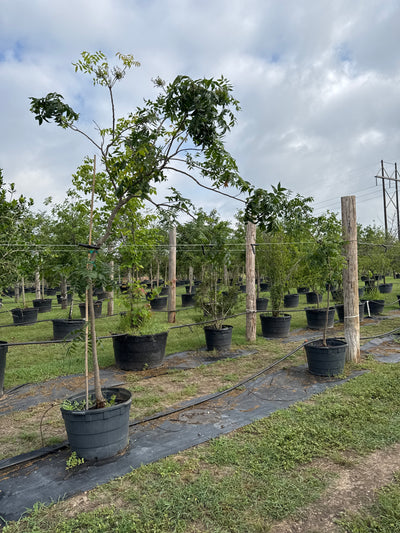


Jasmine Confederate


Jasmine Confederate
| Scientific Name | Trachelospermum jasminoides (syn. Rhynchospermum jasminoides / Star Jasmine) |
| Foliage: Evergreen |
Broadleaf evergreen twining vine or sprawling groundcover; dense, heavy, clambering habit. Leaves: Opposite, lanceolate to ovate, 1.5–3.5 inches long; thick, leathery, and glossy dark green; turns bronze-purplish in cold winter months. Flowers: Massed clusters of 1-inch, star- or pinwheel-shaped pure white blossoms with 5 twisted petals; intensely fragrant (sweet, jasmine-like scent); main bloom flush in late spring to early summer. Fruit: Inconspicuous, long, slender, bean-like double follicles (4–6 inches long); rarely forms in cultivation Seeds: Small, oblong seeds attached to white, silky tufts (comas) designed for wind dispersal Bark: Smooth and green on young stems, turning brown, woody, and slightly fissured with age; stems exude a milky white sap when broken |
| Life Span: Perennial | 20–50+ years |
| Mature Height | As a Vine/Climber: 10–20+ ft (when supported on a trellis or wall); As Groundcover: 1–2 ft |
| Mature Width (Spread) | 4–10+ ft (spreads extensively via twining stems) |
| Growth Rate | Fast (Once established, grows 2–3 ft per year) |
| USDA Zone / Chill Hours | Zones 8a–11 (Root-hardy down to 10°F to 15°F / -12°C to -9°C); No chill hours required |
PLANT CARE & CHARACTERISTICS
Light Requirements: Full Sun to Partial Shade (Full sun produces the maximum flower density and sweet scent; handles shade well but blooms less heavily).
Water Requirements: Moderate; needs regular watering during the first growing season to establish deep roots; low moisture needs once mature.
Drought Resistance: High once fully established.
Soil Type: Highly adaptable; prefers rich, loamy, moist, well-draining soil; tolerates clay, sand, and chalky soils; pH 6.0–7.5.
Deer Resistance: Very High (Toxic milky sap and leathery leaves make it highly unpalatable to deer and rabbits).
Pest / Disease Resistance: Exceptional resistance to major pests and diseases; occasionally susceptible to scale, mealybugs, or sooty mold if planted in stagnant, dark conditions.
Pollination: Insect-pollinated; major nectar source for bees, butterflies, and moths.
Harvest: N/A (Ornamental vine; milky sap can cause mild skin irritation and all parts are non-edible).
Pruning: Prune immediately after the main late-spring/early-summer flowering period to control size, shape growth, or clear dead stems. Avoid heavy pruning late in the season to protect developing flower buds for next spring. Providing support or a trellis for the vine to climb will help guide its growth and create an attractive display.