


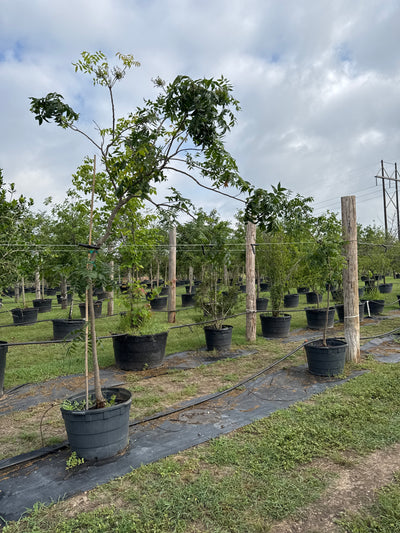


Blackberry Prime-Ark Freedom

Blackberry Prime-Ark Freedom
🌱 Planting Installation
The Prime-Ark® Freedom blackberry is a breakthrough variety released by the University of Arkansas in 2013, famous for being the world's very first thornless, primocane-fruiting blackberry. It forms a stout, upright bush growing 5 to 6 feet tall with completely smooth, thornless stems. Its 100% thornless nature makes managing, pruning, and harvesting completely pain-free. Prime-Ark Freedom fruits on both first-year wood (primocanes) and second-year wood (floricanes), it can yield two separate harvests a year—a floricane crop in early summer and a primocane crop from late summer until the first fall frost. It yields exceptionally large, glossy black berries with low acidity, making them noticeably sweeter and less tart than older heirloom varieties. They are ideal for fresh snacking straight off the plant, as well as freezing and baking.
| Scientific Name | Rubus 'Prime-Ark Freedom' (often designated broadly as Rubus hybrid) |
| Foliage: Deciduous |
Leaves: Deciduous compound leaves, typically displaying 3 to 5 distinct leaflets with sharply serrated (toothed) margins. The foliage is a deep, vibrant green with a slightly textured, prominently veined surface. True to its thornless nature, both the leaves and petioles are completely smooth and free of prickles. Flowers: Notably large, showy, five-petaled white flowers. On this variety, the blossoms can be exceptionally large, resembling small wild roses. They bloom in early spring on floricanes, and continue to bloom sporadically from mid-summer into fall on the tips of new primocanes. Fruit: Outstandingly large, elongated, glossy black aggregate fruits. The berries are exceptionally sweet, low in acid, highly aromatic, and firm enough to handle light shipping. Because of its primocane-fruiting habit, it yields a moderate crop in early summer, followed by a second, heavy crop in the late summer or fall. Seeds: Contains small, woody, edible seeds nestled within each individual drupelet. The seeds are considered small-to-medium for a blackberry of this size, making them less noticeable during fresh eating. Canes: 100% Thornless. The canes are stout, erect, and entirely smooth. First-year canes (primocanes) are fleshy and bright green; second-year canes (floricanes) mature to a sturdier, woody, light-brown or reddish-brown hue. |
| Life Span: Perennial | Individual canes live for 2 years (biennial), but the perennial root system is highly long-lived, continuously throwing up new fruiting canes for 15 to 20+ years. |
| Mature Height | 5 to 6 feet tall. Because it has an erect growth habit, the canes are stiff and self-supporting, though tipping them during the summer is necessary to keep them at this height. |
| Mature Width (Spread) | 3 to 4 feet wide at the base of the crown. It spreads moderately over time via underground runners. |
| Growth Rate | Extremely Fast. It exhibits exceptional vigor, with new spring primocanes rapidly rushing to their mature height in a matter of weeks. |
| USDA Zone | Zones 6 through 9 (it can be grown in Zone 5 with winter protection, though extreme freezes can damage the early floricane crop). |
| Chill Hours | Low (Estimated 500 hours or fewer). While specifically bred to perform well with low chilling requirements, its unique primocane-fruiting habit means it can still produce a late-summer crop even in areas that receive very few winter chill hours. |
PLANT CARE & CHARACTERISTICS
Light Requirements: Full Sun. Requires a minimum of 6 to 8 hours of direct, unfiltered sunlight daily. Full sun is absolutely critical to fuel its unique double-cropping habit, giving the plant enough energy to produce both the early-summer and late-fall fruit loads while maximizing berry sweetness.
Water Requirements: Moderate to High. Because it bears fruit twice a year, it demands highly consistent moisture. It needs about 1 to 1.5 inches of water per week during the growing season. Keeping the soil evenly moist (but not soggy) is particularly vital during the late-summer heat when the second crop of primocane berries is developing.
Drought Resistance: Low. Unlike older, rugged thorned varieties (like 'Brazos'), 'Prime-Ark® Freedom' has low drought tolerance. Extended dry spells will quickly stunt new primocane growth, abort the summer flower clusters, and lead to small, dry, or sunburned berries.
Soil Type: Well-Drained, Organic-Rich Sandy Loams. It prefers a loose, fertile soil with a slightly acidic pH (5.5 to 6.5). This cultivar is highly sensitive to wet feet and cannot tolerate standing water or heavy, compacted clay, which quickly leads to root rot. Raised beds or heavily amended soil are highly recommended.
Deer Resistance: Low. Because this variety is 100% thornless, it lacks the natural physical defense mechanism of thorned blackberries. Deer find the tender, smooth green leaves and succulent new primocane tips highly palatable and will readily browse them. Protection or fencing is recommended if deer pressure is high.
Pest/Disease Resistance: Good Overall Resilience (With Regional Caveats).
- Double Blossom/Rosette: Shows good resistance compared to older cultivars.
- Anthracnose & Leaf Spot: Moderate resistance; clean pruning and proper plant spacing to allow air movement will keep foliage healthy.
- Rust: Highly resistant.
- Note: In the Deep South, the intense summer heat can occasionally cause flower sterility on the late-summer primocane crop, making partial afternoon shade beneficial in extremely hot microclimates.
POLLINATION
1. Pollination Requirement: 100% Self-Fertile (Self-Pollinating). You do not need to plant a second variety, nor do you need multiple plants. A single Prime-Ark® Freedom plant will successfully pollinate its own flowers and produce a full, heavy double-crop of berries entirely on its own.
2. Primary Pollinators: Honeybees, Bumblebees, and Wild Native Bees. While gravity and gentle breezes help shake pollen down inside the blossoms, active bee foraging is the primary driver for getting perfectly shaped, plump fruit.
3. Double-Crop Bloom Timing: This variety blooms in two distinct waves.
- Spring Bloom (on Floricanes): Blooms very early in the spring (often March/April depending on your zone) to produce the early-summer crop.
- Summer/Fall Bloom (on Primocanes): Blooms progressively from mid-summer into autumn on the tips of the new green canes to produce the fall crop.
4. Pollen Quality & Viability: Excellent. It produces highly fertile, abundant pollen. However, in regions with extreme, sustained summer heat (consistently above 90°F to 95°F), pollen viability can temporarily drop, which may cause some minor dry or misshapen drupelets on the early-fall crop.
HARVEST
1. Spring/Early Summer Crop (Floricanes): Ripens very early, typically starting in May to June.
2. Late Summer/Fall Crop (Primocanes): Ripens on the new green canes from August through October (until the first hard freeze).
3. Years to First Harvest: Year 1! Unlike traditional blackberries that make you wait two years, Prime-Ark® Freedom will produce a late-summer/fall crop on its new primocanes during its very first growing season.
How To Tell When Your Blackberries Are Ready to Pick
Because 'Prime-Ark® Freedom' berries get massive and dark early, it's easy to pick them too soon:
1. The Dull Finish: Don't pick when the berry is shiny or glossy black. Wait for the skin to transition to a deep, warm, matte-black finish.
2. The Touch Test: Ripe berries are soft and yield gently when squeezed between your fingers.
3. The Clean Release: A fully ripe berry will release from the stem with a light, gentle touch. If you have to tug or pull, the sugars haven't fully peaked yet—leave it on the plant for another day or two.
YIELD
Annual Yield Volume: Very High. Between the two crop cycles, a mature plant crown can produce 10 to 15+ lbs of total fruit per year under good management.
Fruit Size: Exceptionally Large. It produces some of the largest individual blackberries available, often exceeding 10 to 12 grams per berry.
Flavor Profile: Exceptionally sweet with very low acidity. It lacks the sharp tartness of older varieties, offering a smooth, aromatic flavor profile that is fantastic for fresh eating.
STORAGE/SHELF LIFE
| Storage Method | Average Shelf Life | Optimal Conditions | Best Used For |
| Room Temperature (Countertop) | 12 to 24 Hours | Cool, shaded area (under 70°F) in a single, well-ventilated layer. | Immediate fresh eating or processing into desserts on harvest day. |
| Standard Refrigeration | 4 to 6 Days | 32°F to 36°F in a high-humidity zone, stored completely dry. | Fresh snacking, fruit salads, or staging before baking. |
| Freezer (Long-Term) |
10 to 12 Months | 0°F or lower; pre-frozen in a single layer before placing in bags. | Smoothies, baking, fruit sauces, and jams throughout the winter. |
| Dehydrated Freeze-Dried |
1 to 5+ Years | Vacuum-sealed in an airtight container with an oxygen absorber in a dark, cool space. | Trail mix, cereal/oatmeal toppings, or baking powders. |
Best Practices for Fresh Storage
1. Keep Moisture Off the Fruit: Freshly harvested 'Prime-Ark® Freedom' berries act like tiny sponges. Their large size and complex aggregate structure easily trap surface moisture, which rapidly triggers mold (Botrytis).
- Never wash berries before refrigerating. Wait to rinse them under a gentle, cold stream of water until right before eating or baking.
- If harvesting on a humid morning, let the berries sit on paper towels in a cool room for 15–20 minutes to evaporate any natural moisture before putting them in the fridge.2.
2. Refrigeration Technique
- Avoid Deep Piling: Use flat, ventilated containers (like clamshells or shallow glass dishes lined with paper towels). Because these berries are exceptionally large and heavy, stacking them more than two layers deep will crush the bottom fruit, releasing juice and shortening shelf life.
- Coldest Placement: Store the container on a middle or back shelf where temperatures stay consistently low, rather than in the door.
3. Long-Term Freezing: The Flash-Freeze Method: Because Prime-Ark® Freedom can produce heavy flushes of berries twice a year (early summer and fall), freezing is the best way to preserve your extra harvest.
- Rinse and air-dry thoroughly: Prevents water spots & ice. Gently wash the berries in cold water. Lay them out on a clean kitchen towel in a single layer and let them air-dry completely. Any trapped water will turn into large ice crystals, leading to mushy fruit when thawed.
- Flash freeze on a baking sheet: Keeps berries separated. Line a baking sheet with parchment paper and arrange the dry berries in a single layer, making sure they don't touch. Freeze for 2 to 4 hours until completely solid.
- Pack in airtight storage: Protects against freezer burn.Transfer the frozen individual berries into a heavy-duty freezer bag or vacuum-seal bag. Label with the date (noting whether it was from the summer or fall crop!). You can now easily scoop out exact portions without thawing the entire bag.
PRUNING
Because Prime-Ark® Freedom is a primocane-fruiting (double-cropping) variety, its pruning cycle is uniquely flexible. You can manage it in one of two ways depending on whether you want two harvests per year (early summer and fall) or one single, massive fall harvest.
And because it is 100% thornless, pruning this bush is completely painless!
The Double-Crop Method (Two Harvests per Year): This is the standard approach to get the most out of Prime-Ark® Freedom—an early-summer crop on last year's wood, followed by a late-summer/fall crop on new green wood.
1. Late Spring / Early Summer: Tip the New Primocanes. As the fresh, green primocanes shoot up from the ground in late spring, they need to be topped.
- When to tip: When the new green canes reach 3.5 to 4 feet tall.
- How to tip: Snip off the top 2 to 3 inches of the main cane.
- Why it matters: Tipping stops vertical growth and forces the cane to push out prolific lateral (side) branches. It is on the tips of these new side branches that your fall crop will grow!
2. Immediate Post-Harvest (July): Remove Old Floricanes. Right after you finish picking the early-summer crop off the older, woody canes, those stems will naturally turn brown and die back.
- Cut these old floricanes flush to the ground.
- Discard or burn the old wood to keep the patch clean and disease-free.
- Do not touch the green primocanes—they are currently setting flowers on their upper branches for your fall crop!
3. Late Winter (Jan/Feb): Detail the Side Branches. During winter dormancy, clean up the green canes that produced your fall crop (which are now overwintering to become next summer's floricanes).
- Trim lateral branches: Cut the side branches back to 12 to 18 inches.
- Remove damaged wood: Cut off the very top tips of the main canes where the fall berries grew, as those tips will die naturally.
- Thin the base: Select the 4 to 6 thickest, healthiest canes per crown and prune away any weak, thin stems at soil level.
The Single-Crop Method (One Huge Fall Harvest): If you live in a very cold northern climate (where winter freezes damage overwintering canes) or simply want a low-maintenance setup, you can manage Prime-Ark® Freedom as a single-crop plant.
- The Technique: In late winter (February), use loppers or a hedge trimmer to mow the entire plant down to the ground, cutting every single cane flush with the soil.
- The Result: The plant will push up vigorous new primocanes in spring, which will yield a single, massive crop of berries from late summer until the first frost.
- The Benefit: You completely bypass the need for selective winter pruning, eliminate overwintering disease risks, and concentrate all the plant's energy into one heavy fall harvest.
Pro-Tip on Tipping: Because Prime-Ark® Freedom is a very vigorous grower, don't wait to tip all the canes at once. Walk your patch once a week in early summer with hand pruners to catch each primocane right as it hits that 3.5-to-4-foot mark.


