


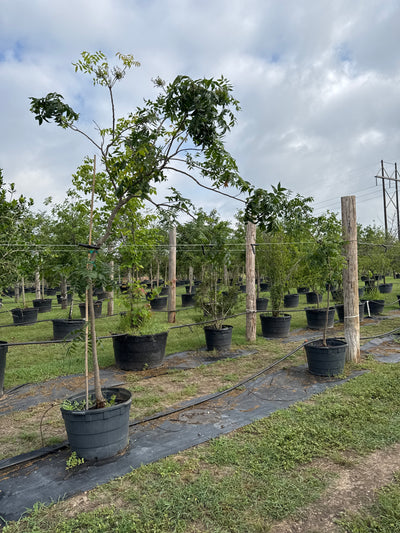


Avocado Joey


Avocado Joey
The 'Joey' Avocado is a highly prized Mexican-race avocado variety famous for its exceptional cold hardiness and compact growth habit. Discovered in Uvalde, Texas, it is one of the top choices for home orchardists looking to grow avocados outside traditional tropical zones. Joey produces small-to-medium, egg-shaped avocados with a distinct, paper-thin, dark purple-to-black skin when fully ripe. The flesh is smooth, low in stringy fiber, and carries an exceptionally rich, nutty flavor with a high oil content. The tree naturally features a compact, spreading profile, making it much easier to maintain than towering commercial varieties. It typically matures to around 10 to 15 feet tall if pruned, though left completely to its own devices on standard rootstock, it can eventually reach up to 20 or 25 feet.
| Scientific Name | Persea americana 'Joey' |
|
Foliage: Evergreen |
Leaves: Evergreen, medium-green, and lance-shaped. Like many Mexican-race avocados, the leaves have a distinct anise (licorice) scent when crushed. Flowers: Small, greenish-yellow clusters. It is a Type B pollinator, making it an excellent partner for a Type A tree like the Hass. Fruit: Small to medium-sized, egg-shaped (ovoid) with thin, smooth, dark purple-to-black skin. The flavor is rich and nutty with high oil content. Seeds: Features a single, relatively large seed in proportion to the fruit size, typical of Mexican-race varieties. Bark: Smooth and green on young wood; becomes grey-brown and develops a slightly corky, furrowed texture with age. |
| Life Span: Perennial | 50 to 150+ years (Productivity typically peaks between 15 and 40 years). |
| Mature Height | 15 to 25 feet (Naturally more compact than 'Hass' or 'Bacon'). |
| Mature Width (Spread) | 10 to 15 feet (Features a more upright, narrow-to-rounded canopy). |
| Growth Rate | Moderate; grows approximately 1–2 feet per year once established. |
| USDA Zone/Chill Hours | Zone 8b to 11 (Extremely cold hardy; can survive temperatures down to 15°F–18°F). Requires roughly 100–200 chill hours, though it is more adapted to temperature fluctuations than tropical varieties (Low-chill). |
PLANT CARE & CHARACTERISTICS
Light Requirements: Full Sun. Prefers 8–10 hours of direct sunlight. Good light exposure is critical for maintaining its compact canopy and maximizing fruit set.
Water Requirements: Moderate. While it needs regular water during its initial establishment and the summer fruiting season, it generally requires slightly less water than high-moisture tropical varieties.
Drought Resistance: Moderate (For an Avocado). Thanks to its Mexican-race heritage, the Joey possesses a slightly higher tolerance for dry spells once fully established compared to the Hass, though prolonged drought will still cause fruit drop.
Soil Type: Excellent Drainage Essential. Thrives in loose, sandy, or loamy soils. Like all avocados, it is highly intolerant of heavy clay or waterlogged soils, which suffocate the root system.
- Mulch as a Buffer: Maintaining a thick, 3-to-4-inch layer of coarse organic mulch around the base (keeping it a few inches away from the actual trunk) is vital. This mimics the natural forest floor, protects its shallow roots from summer heat spikes, and helps regulate soil moisture.
Deer Resistance: Low. Deer will readily browse the tender new foliage and young branches. Physical protection or fencing is highly recommended until the tree grows past their reach.
Pest/Disease Resistance: Moderate. It shows a slightly better resilience to cold-related root stresses, but it remains susceptible to Phytophthora (Root Rot) if overwatered, as well as common pests like mites and thrips.
POLLINATION
The "Type B" Flowering Cycle. Like all avocados, Joey uses a time-separated gender system (protogynous dichogamy) to prevent self-pollination.
- Day 1 (Afternoon): The flower opens for the first time as Female (receptive to pollen). It then closes in the evening.
- Day 2 (Morning): The same flower re-opens as Male (shedding pollen).
Because its male stage occurs in the morning and its female stage occurs in the afternoon, it operates on the exact opposite schedule of a Type A tree (like the Hass).
| Feature | Details |
| Flowering Type | Type B |
| Primary Pollinator | Honeybees, Bumblebees, and Hoverflies. |
| Self-Fertility | Partial to Moderate. In regions with fluctuating spring temperatures, the flower schedule often "overlaps," allowing a single Joey tree to set a decent crop on its own. |
| Best Cross-Pollinator | Type A Varieties. To achieve the maximum possible yield, plant it near a Type A tree whose female flowers open in the morning to catch the Joey's morning pollen. |
| Ideal Partners | Hass, Reed, Pinkerton, or Lula. |
HARVEST
The Joey Avocado has a relatively quick fruit development cycle compared to other varieties. Because it is a Mexican-race avocado, it sets fruit in the spring and ripens much faster than the Hass, allowing you to harvest the entire crop before the worst of the winter freezes arrive.
| Feature | Details |
| Harvest Window | Typically Late Summer to Early Fall (August to October). |
| Ripening Style | Climacteric. Like all avocados, the fruit remains firm on the branch and will only soften and become edible after it is picked from the tree. |
| Visual Indicator | The skin changes color from dark green to a deep purple or glossy black. |
| Texture Indicator | The skin is smooth and thin (unlike the pebbly Hass). When ready, the fruit loses its intense glossy sheen and takes on a slightly matte appearance. |
How to Determine Ripeness & Maturity
Because Joey avocados have thin skin, you have to be slightly more precise with your timing than you would with a thick-skinned Hass.
1. The Color Shift: Look for the fruit that has fully transitioned to a dark purple or black hue.
2. The Drop Test: If you notice a few completely dark, full-sized fruits naturally dropping to the ground, it is a definitive sign that the crop's oil content is high enough for harvest.
3. The Countertop Test: Clip one or two dark fruits from the tree and leave them at room temperature.
- If they soften beautifully within 5 to 7 days without shriveling or turning rubbery, the rest of your crop is ready.
Harvesting Tips for Thin-Skinned Fruit
1. Handle with Care: The skin of a Joey avocado is exceptionally thin and delicate. Avoid pulling the fruit, which can tear the skin at the stem. Instead, use sharp hand pruners to snip the stem, leaving a small 1/4-inch stub (the "button") attached to the fruit to prevent rot.
2. Clip and Catch: Because the skin bruises easily, avoid letting the fruit fall to the ground during harvest. If using a fruit-picking pole, ensure the basket is lined or padded.
3. Avoid Over-Hanging: While a Hass can hang on a tree for months, a Joey should be harvested relatively promptly once mature. Leaving the fruit on the tree too long into the late fall can cause the flesh around the seed to become watery or fiber-heavy, and it can drain the tree's energy right before winter dormancy.
YIELD
| Tree Status | Fruit Count | Development Focus |
| Years 1-2: Root & Frame Growth | 0 Fruit | Vegetative Phase. Pinch off any flowers or small fruits that form. Joey trees put on rapid vertical growth early on, and fruiting too soon will stunt their structural frame. |
| Year 3: First Production | 10 – 20 Fruit | The first true harvest. Because Joey is a compact tree, fruit is usually easy to reach without equipment. |
| Year 4: Adolescent Yield | 30 – 60 Fruit | The canopy begins to fill out into its characteristic dense, rounded shape. |
| Years 5-7: Early Maturity | 100 – 150 Fruit | The tree reaches its reliable, predictable production phase, yielding roughly 40–60 lbs of fruit annually. |
| Year 10+: Full Maturity | 200 – 300+ Fruit | At peak maturity, a well-cared-for Joey can produce 100+ lbs of fruit. Because it stays smaller than Hass, its total fruit count per tree is lower, but its yield per square foot of canopy is highly efficient. |
STORAGE/SHELF LIFE
| Stage/Notes | Storage Method | Shelf Life |
|
Unripe (Hard/Green): Ripens noticeably faster than Hass. Keep out of direct sunlight. |
Room Temperature (Countertop) | 3-5 days |
| Unripe (Hard/Green): Delicate skin is prone to "chill injury" (black spots) if kept below 40°F for too long. | Refrigerator (Crisper Drawer) |
Up to 1 week |
| Ripe (Soft/Black): Must be consumed quickly; thin skin offers less protection against over-ripening. | Room Temperature (Countertop) | 1-2 days |
| Ripe (Soft/Black): High oil content maintains creaminess, but use promptly before flesh turns stringy. | Refrigerator (Airtight Container) |
2-3 days |
| Cut (Open Fruit): Oxidizes (browns) rapidly due to enzyme levels. | Refrigerator (Wrapped & Sealed) | 1 day |
Best Practices for Managing Your Joey Harvest
1. Handling the Thin Skin: The skin of a Joey is so thin that it is actually edible (though most people still choose to peel it). Because it lacks the protective, armor-like shell of a Hass, never stack unripe Joey avocados on top of each other in a bowl. The weight alone can cause internal bruising before they fully ripen. Spread them out in a single layer on a counter.
2. Monitoring the Ripening Speed: Joey avocados can go from rock-hard to perfectly ripe in just a few days.
- The Check: Do not squeeze the middle of the fruit, as this easily bruises the delicate flesh. Instead, press gently right at the top near the stem (the "neck"). If it yields to gentle pressure, use it immediately.
- Slowing It Down: Because they ripen quickly, you cannot store unripe Joeys in the fridge for weeks like a Hass. Only use the refrigerator to hold them for an extra 3 to 5 days if a large batch all ripens at the same time.
3. Preserving Cut Fruit: Like all high-oil avocados, the flesh will begin to turn brown (oxidize) almost immediately after being cut. To get an extra day out of a cut half:
- Leave the seed in the unused half.
- Sprinkle the exposed flesh generously with lime juice or brush it with a thin layer of olive oil.
- Wrap it tightly in plastic wrap, pressing the film directly against the green flesh to eliminate air pockets.
4. Freezing for Longevity: If your Joey tree gives you a sudden influx of late-summer fruit that you cannot eat in time, freezing is your best option. Because of the thin skin, you cannot freeze them whole.
- The Method: Scoop out the flesh, mash it thoroughly with 1 tablespoon of lemon or lime juice (the acid prevents browning), and pack it into a heavy-duty, vacuum-sealed freezer bag. It will keep perfectly for 4 to 6 months for future use in guacamole, spreads, or smoothies.
PRUNING
1. Height Control & "Heading Back" (Early Years): Because Joey is an upright grower, it wants to shoot straight up before it fills out horizontally.
- Topping the Leader: Once your young Joey tree reaches about 4 to 5 feet tall, it is highly beneficial to snip the main vertical leader tip. This "heading cut" forces the tree to stop focusing strictly on upward growth and encourages it to push out lateral (side) branches, creating a bushier, more manageable shape.
- Maintaining the Picking Zone: In home orchards, keeping a Joey pruned to a height of 10 to 12 feet is ideal. This keeps the entire canopy within reach of a standard fruit-picking pole or a short stepladder.
2. Thinning the Dense Interior: The Joey develops incredibly tight, dense foliage. If left alone, the outer leaves will create a shadow wall, causing the inner branches to lose their leaves and stop producing fruit buds.
- The "Window" Method: Every late winter, look closely at the canopy. Remove a few crossing or crowded interior branches to create small "windows" of light. If sunlight can filter through the leaves and dapple the trunk, your interior wood will stay active and produce fruit.
- Air Circulation: Opening up the dense interior increases airflow. This is the single best way to prevent fungal issues like Anthracnose, which can thrive in humid, tightly packed foliage.
3. Skirt Raising (The 2-Foot Rule): Even though the Joey is an upright tree, its lower branches will eventually bow down when loaded with fruit.
- Clear the Ground: Prune away any low-hanging branches so that the bottom of the foliage canopy sits at least 2 feet off the ground.
- Why it Matters: The Joey has incredibly thin skin. If a fruit-laden branch sags all the way to the ground, the delicate fruit will scrape against the soil, causing scarring, and it creates a direct highway for ants, snails, and rodents to climb up and feast on your harvest.
4. Joey-Specific Pruning Precautions
- Bark Protection (Sunscald): Because Joey grows tightly, its interior branches have very sensitive, unexposed bark. If you make a heavy pruning cut that suddenly exposes a main branch to intense afternoon sun, you must paint that exposed bark with a 50/50 mix of white interior latex paint and water to prevent it from splitting or burning.
- The Freeze Connection: Do not prune a Joey tree in late summer or fall. Pruning stimulates tender, rapid new growth. If a sudden winter freeze hits, that soft new growth will be the first thing to die and can act as a gateway for frost damage to travel deeper into the main structure of the tree.
- The Perfect Window: The absolute best time to prune your Joey is in late winter or very early spring—right after the danger of hard frost has passed, but just before the tree pushes out its massive spring flower and leaf flush.
PRUNING SUMMARY
| Pruning Action | Strategy | Target Goal |
| Pinch Topping: Years 1-2 | Snip the central vertical tips during active growth. | Forces lateral branching; prevents a lanky, "pole" shape. |
| Height Maintenance: Annually (Late Winter) | Cut the tallest upright limbs down to a strong lateral branch. | Keeps the tree capped at 10–12 feet for easy harvesting. |
| Interior Thinning: Annually (Late Winter) | Remove weak, crowded, or crossing inward-facing branches. | Maximizes sunlight penetration to keep interior fruiting wood alive. |
| Skirt Raising: As Needed | Clean up branches hanging within 2 feet of the soil line. | Protects thin-skinned fruit from ground contact and pests. |
| Sanitation (DDD): Anytime | Cut away Dead, Diseased, or Damaged wood immediately. | Prevents wood-boring pests and fungal pathogens from spreading. |