




Avocado Bacon


Avocado Bacon
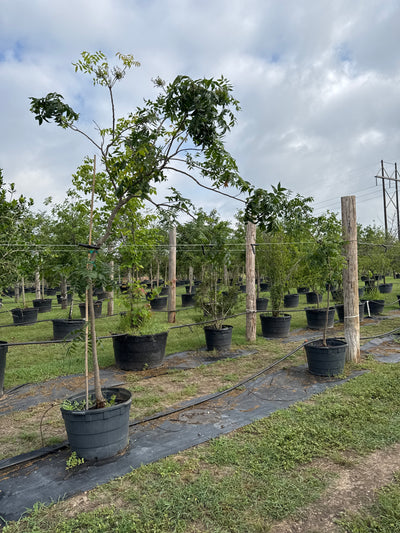
The Bacon Avocado is a cold-hardy, green-skinned avocado variety developed in California in the 1950s. It is widely prized by home orchardists for its ability to withstand temperatures that would kill more sensitive varieties like the 'Hass'. The Bacon Avocado features smooth, thin, bright green skin that remains green even when the fruit is fully ripe. The flesh is pale yellow-green with a light, creamy consistency. It has a milder, less oily flavor than a 'Hass,' often described as clean and buttery. Unlike many spreading fruit trees, the Bacon grows in a tall, upright, and columnar fashion, making it an excellent choice for narrow spaces or as a windbreak. Because of its slender vertical shape and glossy evergreen foliage, it serves as an attractive ornamental tree as well as a food producer. It is particularly popular in USDA Zones 8b–11, where growers need a reliable tree that can handle occasional light freezes without losing its crop.
| Scientific Name | Persea americana 'Bacon' |
|
Foliage: Evergreen |
Leaves: Evergreen, large, and glossy. They are dark green, elliptical, and leathery. New spring growth often emerges with a reddish or bronze tint. Flowers: Small, greenish-yellow, and grow in clusters. The 'Bacon' is a Type B pollinator (flowers open as female in the afternoon and male the following morning). Fruit: Medium-sized (6–12 oz) with smooth, thin green skin that remains green even when ripe. The flesh is pale green, creamy, and has a mild, buttery flavor. Seeds: Features a single, relatively large, round seed located in the center of the fruit. Bark: On young trees, the bark is smooth and green. As it matures, it becomes greyish-brown, thick, and develops a slightly rough or corky texture. |
| Life Span: Perennial | 50 to 400+ years (Avocado trees are very long-lived, though commercial productivity may peak around 20–40 years). |
| Mature Height | 20 to 30 feet (Can be kept smaller with regular pruning). |
| Mature Width (Spread) | 15 to 20 feet (It has a more slender, upright "columnar" habit compared to other spreading varieties). |
| Growth Rate | Fast; can grow several feet per year under ideal conditions. |
| USDA Zone/Chill Hours | Zone 8b to 11 (One of the most cold-tolerant varieties, handling temperatures down to 20°F–24°F); Requires 100-200 chill hours below 45°F to set fruit effectively (Low-chill). |
PLANT CARE & CHARACTERISTICS
Light Requirements: Full Sun. Requires at least 6–8 hours of direct sunlight daily for optimal fruit production and a strong canopy.
- Sun Protection: Young avocado trees have thin green bark that is prone to sunscald. It is a common practice to paint the trunk of young trees with a 50/50 mixture of white interior latex paint and water to protect them from the harsh afternoon sun until the canopy provides enough natural shade.
Water Requirements: Moderate to High. Needs consistent moisture, especially during the flowering and fruit-set stages. Young trees require deep watering 2–3 times a week during hot periods.
Drought Resistance: Low to Moderate. Once established, it can tolerate short dry spells, but prolonged drought will cause fruit drop and leaf scorch. It is not a xeric plant.
Soil Type: Loose and Well-Draining. Prefers sandy or loamy soils with a slightly acidic to neutral pH. It is highly sensitive to "wet feet" and heavy clay that retains water.
- The Mounding Method: If you have soil that doesn't drain perfectly, plant the 'Bacon' avocado on a slight mound or "hill" (about 1–2 feet high). This ensures the sensitive root crown stays above the water line during heavy rains.
- Mulching: Because avocado roots are very shallow, they benefit immensely from a thick layer (4–6 inches) of coarse wood mulch. This regulates soil temperature and keeps the roots from drying out in the sun.
Deer Resistance: Low. Deer will readily browse the tender new foliage and young shoots, though they tend to ignore the thicker, mature leathery leaves.
Pest/Disease Resistance: Moderate. Susceptible to Phytophthora (Root Rot) if soil drainage is poor. It shows good resistance to many common avocado pests but can be affected by mites or thrips in dry conditions.
Pollination: Type B Flowing. Flowers open as female in the afternoon and male the following morning. While it can self-pollinate, yield is significantly higher if planted near a Type A variety ('Avocado Hass', 'Reed', or 'Pinkerton') for cross-pollination.
Harvest: Typically late fall through winter (November to March). Unlike most fruit, avocados do not ripen on the tree; they must be picked once they reach full size to begin the softening process.
YIELD
| Year | Fruit Count | Notes |
| Years 1–2: Establishment | 0 Fruit | Focus on root growth. It is highly recommended to remove any fruit that sets during these years so the tree doesn't "run out." |
| Year 3: First Harvest | 5 – 20 Fruit | The tree is large enough to support a small "sample" crop. Staking may be needed to support the weight on young limbs. |
| Years 4–5: Young Producer | 50 – 100 Fruit | The tree begins to fill out its columnar shape. Yield becomes more consistent year-over-year. |
| Years 6–10: Increasing Maturity | 150 – 250 Fruit | The canopy has hardened. At this stage, the tree typically produces 100+ lbs of fruit annually. |
| Year 10+: Full Maturity | 300 – 500+ Fruit | In ideal conditions, a mature Bacon tree can produce 200 to 400 lbs of avocados per season. |
STORAGE/SHELF LIFE
| Stage | Storage Method | Shelf Life |
| Unripe (Hard/Green) | Room Temperature (Countertop) | 3 to 5 days |
| Unripe (Hard/Green) | Refrigerator (Crisper Drawer) | 7 to 10 days |
| Ripe (Soft/Green) | Room Temperature (Countertop) | 1 to 2 days |
| Ripe (Soft/Green) | Refrigerator (Airtight container) | 2 to 3 days |
| Cut (Open Fruit) | Refrigerator (Wrapped/Sealed) | 24 hours |
Critical Storage & Handling Rules
1. The "Feel" Test (Not the "Look" Test): Unlike the Hass, which turns black when ready, the Bacon remains green when ripe. To check for ripeness, apply very gentle pressure near the stem end. If it yields slightly to the touch, it is ready. Do not wait for a color change, or the fruit will over-ripen and rot on your counter.
2. Thin-Skin Vulnerability: The skin of a Bacon avocado is very thin and brittle. It does not protect the flesh from bruising as well as the pebbly Hass skin. Avoid stacking them on top of each other in a bowl, as the weight of the top fruit can bruise the ones underneath, leading to grey or black spots in the flesh.
3. Managing Oxidation: Because Bacon avocados have a slightly higher water content and lower oil content than Hass, they tend to oxidize (turn brown) faster once cut.
- If you only use half, leave the pit in the remaining half.
- Cover the surface with a thin layer of olive oil or lemon juice and wrap tightly with plastic wrap, ensuring the wrap is touching the flesh.
4. Refrigeration Limits: While you can store unripe Bacon avocados in the fridge to delay ripening, they are more susceptible to "chilling injury" than other varieties if kept near the back of the fridge where it is coldest. Keep them in the produce crisper drawer to maintain a slightly more moderate temperature.
PRUNING
1. Structural Training (Years 1–3): The goal for a young Bacon tree is to force it to branch out horizontally rather than just vertically.
- Topping the Leader: Once the tree reaches your desired "shoulder height" (usually around 3–4 feet), clip the central vertical leader. This breaks apical dominance and forces the tree to push out lateral (side) branches.
- Scaffold Selection: Choose 3 to 4 strong side branches to be your "scaffold" limbs and remove any competing vertical shoots that try to take over as a new leader.
2. Height Management (The "Rule of 15"): In home orchards, it is common practice to keep Bacon trees at a maximum height of 12 to 15 feet.
- Heading Back: Every year, identify the tallest vertical shoots and cut them back to a side-growing branch. This keeps the fruit within reach of a standard picking pole or ladder.
- The Window Effect: If the tree becomes too tall, the lower branches often lose their leaves due to shading, leaving you with a "lollipop" tree. Keeping the top lowered ensures sunlight reaches the bottom of the canopy.
3. Maintenance Pruning (Annual)
- Skirt Raising: Prune the lowest branches so they are at least 2 feet off the ground. This prevents "Splash-up" (soil-borne pathogens reaching the leaves) and keeps the fruit from resting on the mulch.
- Thinning the Interior: Remove "twiggy" or crossing growth from the center of the tree. Improving air circulation is the best defense against fungal diseases like anthracnose.
- Dead Wood: Remove any dead, diseased, or damaged (DDD) wood as soon as you see it, regardless of the season.
4. Timing and Safety
- When to Prune: The ideal time is late winter or early spring, immediately after the fruit harvest but before the heavy spring bloom. Avoid pruning in mid-summer, as the sudden exposure to high heat can stress the tree.
- The "One-Third" Rule: Never remove more than 25-30% of the canopy in one year. Excessive pruning can cause the tree to go into a "vegetative shock" where it produces lots of leaves but zero fruit for the next season.
5. Tool Care: Always use sharp, sterilized bypass pruners or a pruning saw. Clean your tools with a 10% bleach solution or isopropyl alcohol between trees to prevent the spread of pathogens like Avocado Sunblotch Viroid or root rot.
PRUNING SUMMARY
| Pruning Type/Timing | Action / Technique | Primary Purpose |
| Structural (Topping): Years 1–3 | Cut the central vertical leader at 3–4 feet high. | Forces horizontal branching; prevents a "telephone pole" shape. |
| Maintenance: Late Winter/ Early Spring | Remove Dead, Diseased, or Damaged (DDD) wood. | Prevents rot and keeps the tree's energy focused on healthy growth. |
| Height Control: Annually (Post-Harvest) | Head back the tallest vertical shoots to a side branch. | Keeps the tree at a manageable 12–15 feet for easy harvesting. |
| Interior Thinning: Annually | Remove "twiggy" or crossing branches from the center. | Improves airflow and light penetration to prevent fungal issues. |
| Skirt Raising: Any Time | Prune lower branches to be 2 feet above the ground. | Prevents soil-borne diseases from splashing onto the foliage. |
| Rejuvenation: Every 5–10 Years | Heavy thinning of the canopy (max 25-30% of total). | Reinvigorates older trees and encourages new fruiting wood. |