


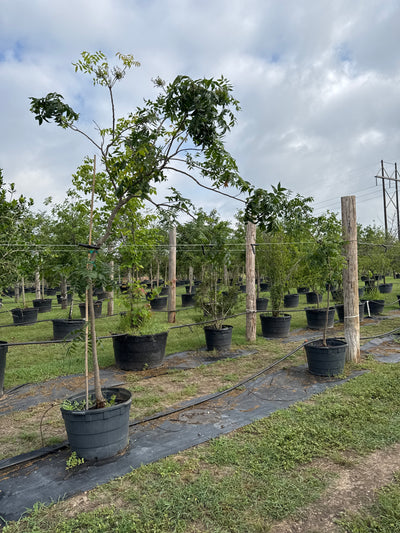


Apple Anna


Apple Anna
🌱 Planting Installation
The Anna Apple is an Israeli variety that revolutionized apple growing in warm climates. Before its development in the 1950s, it was nearly impossible to grow high-quality 'Golden Delicious' style apples in regions like Southern California or Florida. It is famous for its extremely low chill requirement and its habit of ripening in the middle of summer. The Anna apple is typically medium to large in size with a greenish-yellow skin overlaid with a red blush. It has creamy white flesh that is juicy, crisp, and sweet with a slightly tart flavor. It's often described as having a tropical-like taste. Anna apples are versatile and can be enjoyed fresh, used in cooking, or pressed for juice. They are suitable for eating out of hand, slicing into salads, baking into pies, or making applesauce.
| Scientific Name | Malus domestica 'Anna' |
| Foliage: Deciduous |
Leaves: Deciduous, dark green, and oval. It is a dense, lush tree that provides excellent shade. Flowers: Beautiful white blossoms with a distinct pink blush; they bloom very early in the spring. Fruit: Large, elongated apples (resembling a 'Red Delicious' in shape). The skin is light yellow-green with a bright red blush. The flesh is white, crisp, and sweet with a slight tartness. Seeds: Small, dark brown seeds (Note: Like all apples, seeds contain amygdalin and should not be consumed). Bark: Relatively smooth and greyish-brown, becoming more textured and flaky as the tree ages. |
| Lifespan: Perennial |
Dwarf: 15 to 20 years Semi-Dwarf: 20 to 35 years Standard (Full Size): 50 to 80+ years |
| Mature Height |
Dwarf: 8 to 10 feet Semi-Dwarf: 12 to 15 feet Standard: 15 to 25 feet |
| Mature Width (Spread) | Generally equal to the height (8-25 feet depending on the rootstock). Broad, spreading canopy. |
| Growth Rate | Fast and vigorous |
| USDA Zone/Chill Hours | Zone 5-10 (thrives in hot, humid, and desert climates); Requires 200-300 chill hours (One of the lowest of any apple variety) |
PLANT CARE & CHARACTERISTICS
Light Requirements: Full Sun; (6-8 hours) Essential for fruit sweetness.
Water Requirements: Moderate to High; needs regular deep watering, especially in desert heat.
Drought Resistance: Moderate (once established); but fruit quality drops during drought.
Soil Type: Prefers well-drained, loamy soil; pH 6.0-7.0
Deer Resistance: Low. Deer are highly attracted to the sweet fruit and spring foliage.
Pest/Disease Resistance: Generally good, though it can be susceptible to Apple Scab and Powdery Mildew in very humid, stagnant air. It has moderate resistance to Fire Blight.
Pollination: Anna is partially self-fertile. You can get fruit with one tree, but the yield is significantly better if paired with a pollination partner such as a 'Dorsett Golden' or 'Ein Shemer'. These are popular choices because they bloom at the same time and are compatible for cross-pollination.
Harvest: Anna apples are typically ready for harvest late June to July, making them an early-season apple variety. Because the Anna Apple is so productive in warm climates, it sometimes attempts to produce a second, lighter crop in the late fall. While exciting, this can exhaust the tree; it is usually better to remove the late-season flowers to ensure a massive harvest the following summer.
HARVEST TIMELINE BY TREE SIZE
| Dwarf Trees | These are the fastest. You can see your first few "tester" apples in as little as 2 years. |
| Semi-Dwarf Trees | The most common home orchard choice. These usually take 3-4 years to produce a meaningful harvest. |
| Standard (Full-Sized) Trees | These focus on growing wood and roots first. They generally take 5-7 years before they start producing a heavy crop. |
2-Year Rule: Anna Apple trees can produce fruit in their first year, however, it is highly recommended that you pinch off the blossoms for the first two seasons. If a young tree puts all its energy into making a heavy apple, it won't have enough energy to grow the strong branches needed to hold future harvests. Waiting until the tree is 3 or 4 years old (total age) ensures the branches are thick enough to support the fruit without snapping.
How to Tell if Your Anna Apple Tree is Ready to Harvest
1. The Color Shift: Look for the "ground color" (the part of the skin without the red blush). It will turn from a bright, leafy green to a soft, creamy yellowish-green. The red blush will also deepen in intensity.
2. The "Vertical" Snap: Lift the apple and give it a slight twist. If it’s ready, the stem will pop away from the branch easily. If you have to pull hard, the sugars aren't fully developed.
3. The Taste Test: Anna apples are at their best when they are crisp and slightly tart, similar to a Granny Smith but with more sugar. If the flesh starts to feel "soft" while still on the tree, you’ve waited a few days too long.
4. Seed Color: If you slice one open, the seeds should be a glossy dark brown.
YIELD
| Years 1-2 | Establishing roots; remove all fruit. |
| Year 3 | The "First Taste" (approx. 10-15 lbs of fruit). |
| Year 5 | Established producer (approx. 30-50 lbs of fruit). |
| Years 10+ | Mature peak (A standard Anna can produce over 100 lbs annually). |
STORAGE/SHELF LIFE
| STORAGE METHOD | SHELF LIFE | NOTES |
| Countertop | 3-5 days | They ripen very quickly at room temperature. |
| Pantry (Cool/Dark) | 1-2 weeks | Better than the counter, but quality drops fast. |
| Refrigerator | 3-4 weeks | Best for maintaining crispness. |
| Freezer (Sliced) | 6-8 months | Texture will become mushy; best for baking or smoothies |
Best Practices for Storing Anna Apples
1. The "One Bad Apple" Rule: Anna apples bruise easily. Inspect them before storing; one bruised or overripe apple releases high levels of ethylene gas, which will cause the others to turn mushy almost overnight.
2. Crisper Settings: Set your refrigerator’s crisper drawer to high humidity. If your fridge is very dry, place the apples in a perforated plastic bag or wrap them loosely in a damp paper towel to prevent the skin from shriveling.
3. Isolation: Keep them away from strong-smelling foods (like onions or garlic) and other ethylene-sensitive produce (like leafy greens), as apples absorb odors and speed up the wilting of vegetables.
4. Don’t Wash Early: Only wash Anna apples right before you eat them. Moisture on the skin during storage can encourage mold growth and skin breakdown.
How to Tell if Your Anna Apples Have Gone Bad
1. Deep soft spots or a spongy texture when squeezed.
2. Internal browning (often visible only after slicing)
3. A fermented or alcoholic smell, which indicates the sugars have begun to break down.
Helpful Tip: If your Anna apples have started to get slightly soft but aren't rotten, they are perfect for making homemade applesauce or apple butter, as their natural sweetness means you won't need to add much extra sugar!
PRUNING
Pruning an Anna Apple tree is a bit different than pruning traditional varieties. Because the Anna is a low-chill tree bred for warm climates, it grows very fast and has a tendency to become "leggy" or "weedy" if not managed. Furthermore, because it blooms so early (often in January or February in warm zones), your pruning window is much tighter.
1. Timing: The "Warm Climate" Window- In most regions where Anna thrives (Zones 8–10), the tree doesn't stay dormant for long.
- Primary Pruning: Perform your heavy structural cuts in late December or January. You want to finish before the first blossoms open in late winter.
- Summer "Pinch": Because Anna is so vigorous, a light pruning in July (after harvest) is helpful. Remove the long, whip-like "water sprouts" that shoot straight up from the branches to keep the tree from getting too tall.
2. The Shape: "Open Center" vs. "Central Leader"
- Open Center (Vase): This is highly recommended for Anna apples in humid climates (like Florida or the Gulf Coast). By removing the central trunk and letting the tree grow like a bowl, you maximize airflow. This prevents the fungal diseases and "summer rot" that Anna can be prone to.
- Central Leader (Christmas Tree): Use this if you want a taller tree for shade or if you live in a drier, desert climate (like Arizona).
3. Structural Priorities: Anna trees are "heavy setters"—they produce a massive amount of fruit. If your branches are thin and weak, they will snap in June.
- Thin the Scaffolds: Ensure your main side-branches are spaced about 12–18 inches apart vertically. If they are too crowded, they will shade each other out.
- The 45-Degree Rule: Aim for branches that grow out at a 45-to-60-degree angle. Anna tends to grow very "vertical." Use branch spreaders (small notched sticks) to push young branches outward while they are still flexible.
- Heading Cuts: On young trees, cut back the ends of long branches by about 1/4. This "stiffens" the branch, making it thick and sturdy enough to hold the heavy fruit load.
4. Pruning for Fruit Quality: Anna apples grow on spurs (short, stubby twigs) and sometimes on the tips of branches.
- Keep the Spurs: Be careful not to shave the "bumps" off the main branches; those are where your apples grow!
- Remove "Down-hangers": Any branch that is thin, weak, and hanging toward the ground should be removed. These branches rarely produce sweet fruit because they are shaded.
5. The "Anna Special": Aggressive Thinning: While not technically "wood pruning," fruit thinning is the most important pruning task for an Anna tree.
- The Task: In March or April, when the baby apples are the size of a marble, you must remove most of them.
- The Rule: Leave only one apple per cluster, and space those clusters 6 inches apart.
- Why? Anna is so productive it will literally "fruit itself to death" or break its own trunk if you don't thin the fruit.
6. What to remove?
- The 3 D's: Anything Dead, Damaged, or Diseased.
- Suckers: Anything growing from the ground/below the graft union.
- Water Sprouts: The vertical "whips" that grow straight up into the air.
- The "Light Window": Any branch crossing through the center of the tree.


