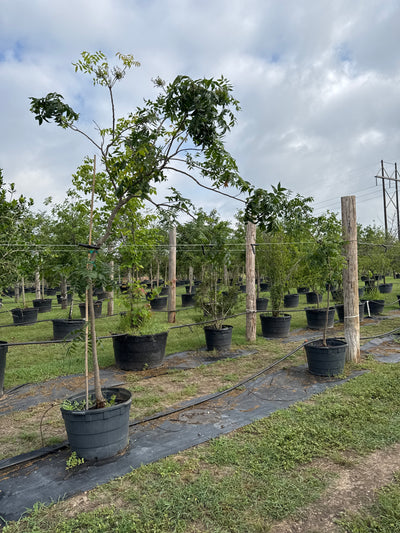
The Acoma Crape Myrtle is a standout semi-dwarf hybrid known for its graceful, weeping habit and pristine white flowers. It was specifically bred by the U.S. National Arboretum to be tough and disease-resistant. Unlike many other varieties, the 'Acoma' is highly resistant to Powdery Mildew, a common fungal issue for Crape Myrtles. Its unique "weeping" branch structure makes it a beautiful specimen plant for small yards, or even large containers. The plant features dark green foliage that emerges in spring and turns vibrant shades of orange, red, and yellow in the fall before dropping. In summer, 'Acoma' Crape Myrtles produce clusters of pure white flowers that cover the branches and last for several weeks, attracting pollinators like bees and butterflies.
|
Scientific Name
|
Lagerstroemia x 'Acoma' |
|
Foliage: Deciduous
|
Leaves: Glossy dark green leaves in summer; transforms into a showy reddish-purple in the fall.
Flowers: Pure white with golden centers; the pretals have a ruffled, "crinkled" appearance that resembles crepe paper (hence the name). It typically flowers from late June through September, often providing 90+ days of color. The flowers give way to small, round seed capsules that persist into the fall and winter.
Bark: Multi-color. Peels to reveal shades of cream, tan, and light gray.
Seeds: Small, dark brown capsules; persist into winter.
|
|
Mature Height
|
10–15 feet (semi-dwarf) |
|
Mature Width (Spread)
|
10–15 feet (it often grows wider than it is tall, creating an umbrella-like canopy). |
|
Growth Rate
|
Moderate (typically 1–2 feet per year) |
|
USDA Zone
|
6–9 (Very cold-hardy for a Crape Myrtle) |
Plant Care & Characteristics
Light Requirements: Full Sun (6+ hours). Shady spots will lead to fewer flowers and increased risk of mildew.
Water Requirements: Moderate. Needs consistent moisture while establishing; once mature, it is quite self-sufficient.
Drought Resistance: High. It is exceptionally heat and drought-tolerant once the root system is established.However, benefit from regular watering during periods of dry weather, especially during the growing season and when the flowers are developing.
Soil Type: Adaptable, Well Drained. Thrives in clay, loam, or sandy soils. Prefers a slightly acidic pH (5.0 to 6.5) but tolerates neutral/alkaline soils'. Adding organic matter such as compost or aged manure to the planting hole can improve soil fertility and structure.
Deer Resistance: High/Intermediate. Generally considered "deer resistant," though hungry deer may nibble new growth in early spring.
Maintenance: 'Acoma' Crape Myrtles are relatively low-maintenance plants but benefit from regular pruning to maintain their shape and size and to encourage abundant flowering. Pruning is typically done in late winter or early spring before new growth begins. Remove any dead, diseased, or crossing branches, and thin out the canopy to improve air circulation and light penetration. 'Acoma' Crape Myrtles are relatively pest and disease resistant but may occasionally be affected by issues such as aphids or scale insects. These problems can usually be managed with proper cultural practices, such as providing good air circulation and avoiding overhead watering.
Landscape Use: 'Acoma' Crape Myrtles are valued for their compact size, abundant flowers, and attractive bark, making them an excellent choice for smaller landscapes, borders, and containers. They make beautiful specimen plants when planted singly or in small groups and can also be used as focal points, accents, or foundation plantings in gardens and landscapes. 'Acoma' Crape Myrtles are also suitable for planting along walkways, driveways, or patios, where their showy flowers and colorful foliage can be enjoyed up close. Overall, the 'Acoma' Crape Myrtle is a versatile and attractive plant that adds beauty, charm, and elegance to the landscape.