


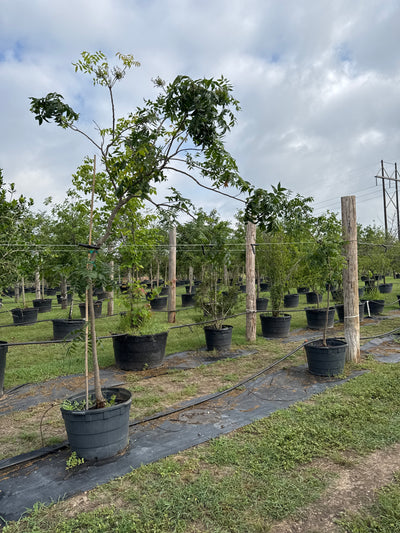


Sumac Prairie Flame Leaf


Sumac Prairie Flame Leaf
Location on Farm:
🌱 Planting Installation
Prairie Flame™ Sumac, also known as Prairie Flame Leaf or Shining Sumac, is a compact, semi-dwarf native deciduous shrub celebrated for its tropical-looking foliage and electric autumn color. Growing five to seven feet tall with a spread of six to ten feet, it forms a bushy, mounding thicket over time. Its glossy, deep green compound leaves feature unique, leafy "wings" along the central stem, giving the foliage a distinct, architectural texture throughout the summer. True to its name, as cooler autumn weather arrives, the lustrous green canopy transforms into a brilliant display of fire-engine red, crimson, and orange.
In native gardens, mass plantings, rocky slopes, and modern landscapes, Prairie Flame Sumac serves as an exceptional structural accent and erosion-control plant. Because 'Prairie Flame' is a male cultivar, it produces dense clusters of creamy greenish-yellow summer flowers that attract native pollinators, but it is completely fruitless and seedless—preventing aggressive, unwanted seedling spread. Overall, it is extremely tough and low-maintenance, and it thrives in full sun and lean, dry, rocky, or clay soils. Once established, it possesses outstanding drought tolerance, deer resistance, and urban heat tolerance, requiring minimal care beyond occasional root-sucker control to manage its footprint.
| Scientific Name | Rhus copallina var. latifolia 'Morton' (Prairie Flame™ Winged / Shining Sumac) (Also refers closely to native Prairie Flameleaf Sumac, Rhus lanceolata) |
| Foliage: Deciduous |
Semi-dwarf, thicket-forming deciduous shrub with a bushy, mounding habit and winged leaf rachises. Leaves: Alternate, pinnately compound (6–10 in long) with 5–13 broad, lustrous dark green leaflets featuring distinct leafy wings along the central stem; turns a brilliant, fiery crimson-red in autumn. Flowers: Small, dense, terminal pyramidal panicles of creamy greenish-yellow blossoms appearing in mid-to-late summer. Fruit: N/A ('Prairie Flame' is a male clone and is completely fruitless). Seeds: N/A (Does not produce seeds due to being a male cultivar). Bark: Smooth, grayish-brown young stems that develop thin, scaly plates and prominent lenticels on mature woody bases. |
| Life Span: Perennial | 30–50+ years; continuously renews itself via suckering root colonies |
| Mature Height | 5–7 ft |
| Mature Width (Spread) | 6–10 ft (Spreads over time via root suckers to form natural colonies) |
| Growth Rate | Moderate to Fast |
| USDA Zone / Chill Hours | USDA Zones 4a–9b (Cold-hardy down to -30°F); No specific chill hour requirement |
PLANT CARE & CHARACTERISTICS
Light Requirements: Full Sun (Requires 6+ hours of direct sunlight daily for maximum glossy leaf texture and intense autumn red color).
Water Requirements: Low to Moderate; needs initial moisture to establish, then thrives on minimal watering.
Drought Resistance: Exceptional (Highly adapted to hot, dry slopes, glades, and lean soils).
Soil Type: Highly adaptable; thrives in poor, rocky, sandy, shallow, or lean clay soils; pH 5.5–7.5; requires sharp drainage and cannot tolerate wet, boggy ground.
Deer Resistance: High (Tough, resinous foliage naturally deters deer and rabbits).
Pest / Disease Resistance: Excellent overall resistance to pests and diseases; occasional slight susceptibility to powdery mildew or verticillium wilt in overly wet soils.
Pollination: Insect-pollinated; male flowers provide rich nectar and pollen for honeybees, native bees, and butterflies.
Pruning: Minimal required. Cut back root suckers annually if you wish to restrict colony spread, or cut stems near the ground in late winter to rejuvenate or maintain a compact footprint.