


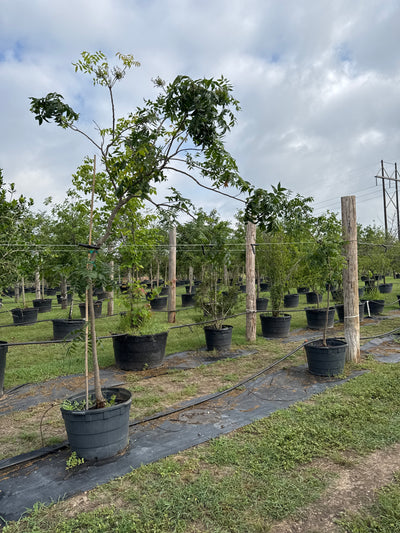


Arborvitae Green Giant


Arborvitae Green Giant
Location on Farm:
🌱 Planting Installation
The Arborvitae 'Green Giant' is a powerhouse in the landscaping world. It is a hybrid between the Western Red Cedar and the Japanese Arborvitae, specifically bred to be a faster-growing, more resilient alternative to the disease-prone Leyland Cypress. This tree is the ultimate choice for a "living privacy fence." Because of its pyramidal shape and massive size, it creates a windbreak and visual screen much faster than almost any other evergreen. The Green Giant's rich green color remains outstanding throughout the hardiness range. It has no serious pest or disease problems and has been widely grown and tested in commercial nursery production.
| Scientific Name | Thuja standishii x plicata |
|
Foliage: Needled Evergreen |
Leaves & "Needles": While often called needles, the foliage consists of scale-like leaves arranged in flattened, fan-shaped sprays. The scales are tiny and overlapping, creating a textured, braided look on the stems. They are a rich, lustrous dark green year-round. Unlike many other arborvitae, 'Green Giant' holds its green color exceptionally well in the winter and rarely "bronzes" (turns brown/yellow) in cold weather. Foliage Scent: Pineapple/Citrus scent when crushed. Cones: Persistent, oblong cones, approximately 1/2 inch length. Cones emerge green and mature to cinnamon-brown. Bark: Red-brown, shredded, and stringy. |
| Lifespan: Perennial | You can expect a healthy 'Green Giant' to live for 40-60 years, with some specimens potentially reaching 80+ years in optimal environments. |
| Mature Height | 40 – 60 feet |
|
Mature Width (Spread) |
12 – 18 feet |
| Growth Rate | Very Fast (typically 3–5 feet per year) |
| USDA Zone | Zone 5 – 8 (Can struggle in the extreme humidity of Zone 9) |
PLANT CARE & CHARACTERISTICS
Light Requirements: Full Sun to Partial Shade. It prefers full sun (at least 6 hours) for the densest foliage. While it can handle partial shade, it may become slightly more "open" or thin in appearance.
Water Requirements: Moderate. It likes regular watering, especially during its first two years. Once established, it is quite self-sufficient, but it prefers moist, well-drained soil rather than bone-dry earth.
Drought Resistance: Moderate. It is more drought-tolerant than most other Arborvitae varieties, but it will show stress (browning needles) during prolonged periods of extreme heat without supplemental water.
Soil Type: Adaptable. It thrives in almost any soil type—sandy, loamy, or clay—provided it is well-drained. It is also surprisingly tolerant of alkaline soils.
Deer Resistance: High. Unlike the Thuja occidentalis (Emerald Green Arborvitae), which deer treat like a buffet, 'Green Giant' is much less palatable to them. They rarely touch it once it’s established.
PEST/DISEASE RESISTANCE
| Pest/Disease Symptoms |
Management |
| Bagworms: Produce small, cone-shaped bags (1–2 inches) made of silk and needles. Occurs on hanging branches and causes rapid defoliation. | Hand-pick and destroy bags in winter before eggs hatch in late May. For large infestations, use B.t. (Bacillus thuringiensis) on young larvae. |
| Spider Mites: Cause fine yellow stippling/speckling on needles and can occur on delicate webbing between twigs. Foliage looks "dusty" or bronzed. | Blast foliage with a strong stream of water to dislodge them. Use insecticidal soaps or miticides if natural predators (ladybugs) aren't present. |
| Scale Insects: Cause tiny, bumpy brown shells on stems and yellowing needles. They produce a sticky residue ("honeydew") that may attract ants or sooty mold. | Apply dormant oil in early spring to smother eggs. Use systemic insecticides for active "crawlers" in June. |
| Root Rot: Causes sudden wilting, yellowing, and death of the entire tree. The roots will appear brown and mushy instead of white. | Cause: Poor drainage or overwatering. Prevention: Ensure "Green Giants" are planted in well-drained soil; they do not like "wet feet." |
| Tip Blight: Occurs on new needle tips and causes them to turn yellow then reddish-brown. Tiny black fungal fruiting bodies may appear on dead tissue. | Cause: Fungi like Phomopsis or Pestalotiopsis. Prevention: Improve airflow by spacing trees properly and avoid overhead watering which keeps foliage wet. |
| Cercospora Blight: Causes browning that starts on the inner foliage near the bottom and spreads upward and outward. | Prevention: Prune out dead inner wood to increase light and air penetration. Fungicides can be used in severe cases but are rarely needed for this variety. |
POLLINATION
It is a Sterile Hybrid. The 'Green Giant' is a "triploid" hybrid—a cross between the Japanese Arborvitae (Thuja standishii) and the Western Red Cedar (Thuja plicata).
1. No Viable Seeds: While the tree will produce the small, cinnamon-colored cones mentioned earlier, the seeds inside them are almost always sterile.
2. No "Partner" Needed: Because it is sterile and not grown for fruit or offspring, you do not need to worry about planting a "male" or "female" tree, nor do you need a second variety nearby for cross-pollination.
3. Monoecious (But Non-Functional): Like its parent species, the 'Green Giant' is technically monoecious, meaning a single tree produces both male and female reproductive structures (cones).
- Male Cones: These are tiny, inconspicuous tips on the ends of the foliage that release pollen in the spring.
- Female Cones: These are the small, leathery green-to-brown cones that develop after receiving pollen.
- The Result: Even though the pollen may reach the female cones, the resulting seeds will not germinate. If you want to grow a new 'Green Giant', you cannot plant the seeds; you must take a cutting from an existing tree to create a clone.
PRUNING
1. Shaping for a Privacy Screen: To keep your 'Green Giant' lush from top to bottom, always prune it in a tapered (pyramidal) shape. The bottom of the tree should be wider than the top. This ensures that sunlight can reach the lower branches; if the top is wider, it will shade the bottom, causing the lower needles to turn brown and fall off.
2. Managing the "Leader"
- Single vs. Multi-Leader: 'Green Giants' often develop multiple vertical "leaders" (tops). For a stronger tree that won't split under heavy snow or ice, it is best to select the strongest vertical stem and prune the competing ones back slightly.
- Topping: If the tree is reaching a height you cannot maintain, you can cut the top leader. However, the tree will immediately try to send up new vertical shoots to replace it. You will need to commit to "topping" it every year or two to maintain that height.
3. Increasing Density: If your tree looks a bit "thin" or "see-through," you can lightly shear the outer 1–3 inches of the green tips in late spring. This stimulates the plant to branch out further, creating a much thicker, more opaque wall of green.
4. Sanitation: If you are pruning multiple trees in a row, and you notice any browning or "flagging" on one, sanitize your shears with 70% isopropyl alcohol or a 10% bleach solution before moving to the next tree. This prevents the spread of fungal spores like Pestalotiopsis tip blight.
PRUNING SUMMARY
| Goal | Method | Best Timing |
| Height Control & Structure |
Topping: Cutting the central leader to a desired height. | Early Spring |
| Width / Density | Shearing: Trimming the outer green tips to encourage thicker growth. | Late Spring / Early Summer |
| Health | Thinning: Removing dead or crossing branches from the interior. | Anytime |
| Formal Hedge | Box Shearing: Shaping the sides into a "tapered" vertical wall. | Late Spring |