


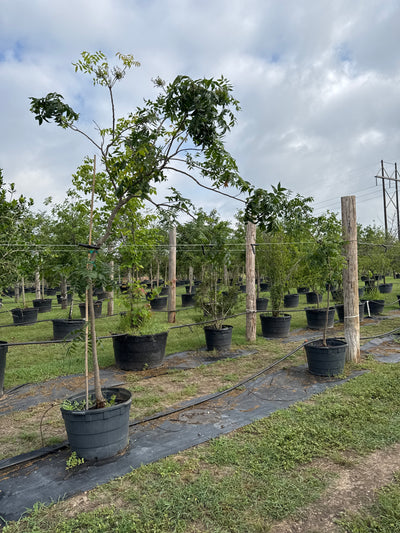


Holly Fern

Holly Fern
Location on Farm:
🌱 Planting Installation
The Holly Fern is a distinctive, broadleaf evergreen fern prized for its bold architectural texture and lustrous, leathery foliage. Native to coastal regions of East Asia, this non-woody perennial grows from short, scaly, dark brown rhizomes to form a neat, fountain-like clumping mound. Its arching fronds reach one to two-and-a-half feet long and are clad in thick, sickle-shaped leaflets with coarsely serrated margins and a deep, glossy green shine—closely resembling traditional holly leaves. As a flowerless pteridophyte, it produces no true blossoms or fruit. Instead, it reproduces via tiny, windborne spores contained within round, dark brown clusters called sori, which scatter densely across the undersides of mature fronds in late summer and autumn.
| Scientific Name | Cyrtomium falcatum (Japanese Holly Fern) |
| Foliage: Evergreen |
Broadleaf evergreen fern; stiff, arching fronds arising from a central rootstock in a neat, fountain-like clumping habit. Leaves: Pinnately compound fronds, 1–2.5 ft long; individual pinnae (leaflets) are thick, leathery, glossy dark green, and sickle-shaped with coarsely serrated edges resembling holly leaves. Flowers: Non-flowering. (Pteridophyte/Fern); reproduces via spores rather than blossoms. Fruit: None (Does not produce fruit). Seeds: None; reproduces via microscopic spores borne in round, dark brown clusters (sori) scattered across the undersides of mature leaflets. Bark: None (Non-woody herbaceous plant); short, scaly, dark brown rhizomes at the base. |
| Life Span: Perennial | 10–20+ years under ideal growing conditions |
| Mature Height | 1.5–2.5 ft (18–30 inches) |
| Mature Width (Spread) | 2–3 ft |
| Growth Rate | Moderate |
| USDA Zone / Chill Hours | Zones 6a–10b (Root-hardy down to 0°F to 5°F / -18°C to -15°C; foliage remains evergreen in Zones 8–10, dies back in cold winters in Zones 6–7); No chill hours required. |
PLANT CARE & CHARACTERISTICS
Light Requirements: Partial Shade to Full Shade (Thrives in dappled or deep shade; direct afternoon sun will scorch, bleach, or burn the leathery foliage).
Water Requirements: Moderate; prefers consistently moist, well-draining soil; does best with regular moisture, especially during warm summer months. However, they are sensitive to waterlogged conditions and may develop root rot if the soil remains excessively wet for extended periods. Watering frequency may vary depending on factors such as temperature, humidity, and soil type.
Drought Resistance: Moderate (Significantly more drought-tolerant than most delicate fern species once established).
Soil Type: Rich, organic-matter-heavy, humusy soil; requires well-draining soil; pH 5.5–7.0 (slightly acidic to neutral). Amending the soil with organic matter such as compost or leaf mulch can help improve soil structure and moisture retention, creating an ideal growing environment for Holly Ferns.
Deer Resistance: Very High (Thick, leathery texture makes foliage unpalatable to deer and rabbits).
Pest / Disease Resistance: Highly resistant to most diseases and pests; occasionally susceptible to scale or mealybugs in overly dry or indoor environments.
Pollination: N/A (Reproduces via windborne spores; does not rely on insects or wind pollination).
Pruning: Minimal required; trim away old, tattered, or winter-damaged fronds down to the base in late winter or early spring before new fiddleheads emerge to keep the clump looking tidy.


