Redbud Texas

Redbud Texas
Redbud Texas
Redbud Texas
Redbud Texas
Redbud Texas
Redbud Texas

Redbud Texas

Sale price $82.00
/
Size

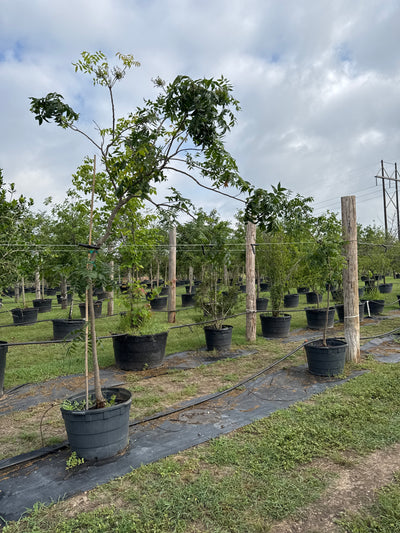
Texas Redbud is a handsome, multi-trunked native understory tree adapted to the dry, limestone hillsides and prairies of Texas and Oklahoma. Reaching fifteen to twenty feet in height with an equal spread, it features thick, leathery, dark green heart- to kidney-shaped leaves with a distinct glossy finish and a waxy cuticle that helps conserve moisture during hot summers. In autumn, the foliage turns a soft, clear yellow before dropping to reveal the tree's dark, sculptural branching structure.


In early spring before the leaves emerge, Texas Redbud erupts in a dramatic display of small, pea-like, bright rose-purple to magenta blossoms lining the bare branches and main trunks. Hardy in USDA Zones 6a through 9b, it is significantly more drought, heat, and alkaline soil-tolerant than the Eastern Redbud, thriving in full sun to light shade and rocky, well-drained soils. Its early spring flowers serve as a vital food source for native bees and pollinators, making it an exceptional native specimen or accent tree for water-wise landscapes and Southwestern gardens.

Scientific Name Cercis canadensis var. texensis (Texas Redbud)
Foliage: Deciduous

Small, multi-trunked or low-branching, deciduous native tree with a compact, flat-topped to rounded canopy.

Leaves: Thick, leathery, shiny dark green, broad heart-shaped to kidney-shaped (reniform) leaves (2–4 in wide) with smooth, wavy margins and a waxy cuticle; turns golden-yellow in autumn.

Flowers: Prolific clusters of small, pea-like, bright rose-purple to magenta blossoms produced directly along bare branches and main trunks (cauliflory) in early spring before leaf emergence.

Fruit: Flat, reddish-purple to dark brown, thin-walled legume seed pods (2–4 in long) that ripen in late summer and often persist on branches through winter.

Seeds: Hard-coated, flattened, dark brown seeds contained within dry pods.

Bark: Smooth, dark grayish-brown bark on young branches, aging into rougher, dark gray-black bark with fine ridges and furrows.

Life Span: Perennial 40–75 years
Mature Height 15–20 ft
Mature Width (Spread) 15–20 ft
Growth Rate Moderate (1–2 ft per year)
USDA Zone / Chill Hours Zones 6a–9b (Heat-hardy Southwestern native); Requires low chill hours (~300–400 hours)
PLANT CARE & CHARACTERISTICS

Light Requirements: Full Sun to Partial Shade (Requires 6+ hours of direct sunlight daily for peak flower density; highly sun and heat tolerant compared to eastern redbuds).

Water Requirements: Low to Moderate; requires regular deep water during initial establishment, highly drought-tolerant once mature.

Drought Resistance: High (Thick, waxy foliage allows superior drought and heat adaptation compared to Cercis canadensis var. canadensis).

Soil Type: Highly adaptable; prefers well-drained, dry to moist, alkaline limestone, rocky, gravelly, or clay soils; pH 6.5–8.5; strictly requires good drainage to avoid root rot. Applying a layer of mulch around the base of the tree can help retain soil moisture and suppress weeds.

Deer Resistance: Moderate (Mature foliage is generally ignored, though young branches or buds may occasionally be browsed).

Pest / Disease Resistance: High overall resistance; remarkably resilient against heat stress and leaf scorch; susceptible to verticillium wilt or leaf spot if planted in waterlogged soils.

Pollination: Insect-pollinated; early spring nectar and pollen are a critical food source for honeybees, bumblebees, and native solitary bees.

Harvest: Heavy, dense flush of pinkish-magenta blooms across the frame every spring.  Flowers are edible with a crisp, slightly tangy lemon flavor (used fresh in salads, garnishes, or pickled); seed pods are non-crop.

Storage / Shelf Life: Fresh edible blossoms keep 2–3 days refrigerated in airtight containers.

Landscape Use: Texas Redbuds are popular ornamental trees valued for their early spring flowers and attractive foliage. They make excellent focal points in landscapes, especially when planted near patios, entryways, or other areas where their blooms can be enjoyed up close. They also work well as understory trees in woodland gardens or as part of a mixed border planting. Additionally, Texas Redbuds are attractive to pollinators, making them a beneficial addition to wildlife-friendly landscapes.

Pruning: Prune immediately after spring blooming completes to shape canopy, remove lower suckers, or cut crossing branches. Avoid heavy winter pruning, which removes the coming season's floral buds.

This site is protected by hCaptcha and the hCaptcha Privacy Policy and Terms of Service apply.

Farm Location: