


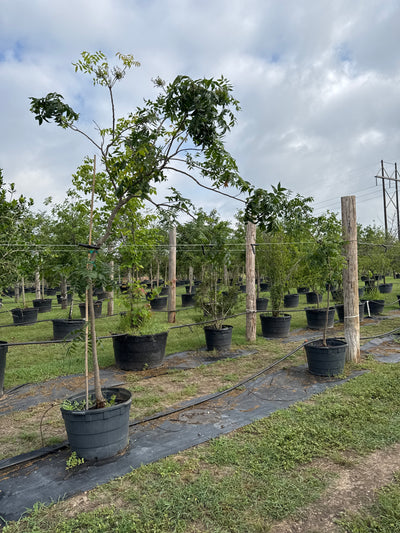


Sycamore American


Sycamore American
Location on Farm:
🌱 Planting Installation
American Sycamore, also known as Buttonwood, is one of the largest and most majestic native hardwood trees of Eastern North America. Reaching mature heights of 75 to over 100 feet with an equally wide-spreading canopy, it is instantly recognizable by its striking, camouflage-patterned bark that peels away in brittle plates to reveal smooth patches of white, cream, olive, and gray inner bark. Its massive, bright green maple-like leaves measure four to ten inches across, turning tan to golden-brown in autumn. In early spring, inconspicuous reddish-green flowers give way to dense, fuzzy seed balls that hang individually on long stalks throughout winter before dispersing seeds on cold winds.
Naturally thriving along riverbanks, floodplains, and wetland margins, the American Sycamore is a dominant riparian species that stabilizes stream banks and provides vast shade and habitat for native wildlife. In large open landscapes and parks, it serves as a grand specimen shade tree, though its enormous mature size, brittle wood, and powerful surface roots require ample distance from buildings, sidewalks, and underground utilities.
| Scientific Name | Platanus occidentalis (American Sycamore / Buttonwood / American Planetree) |
| Foliage: Deciduous |
Massive, fast-growing deciduous shade tree with an expansive, wide-spreading canopy and heavy structural limbs. Leaves: Alternate, massive 3–5 lobed maple-like leaves (4–10 in wide); bright green above with paler green, slightly pubescent undersides; turns tan to golden-brown in autumn. Flowers: Monoecious; small, dense, spherical reddish-green floral heads appearing in early spring alongside emerging foliage. Fruit: Solitary, dense, spherical seed balls (1–1.5 in diameter) hanging from long stalks, persisting into winter. Seeds: Small, tufted achenes packed into fruit heads, dispersed by winter winds and water. Bark: Flakes off in brittle, irregular puzzle-like plates to reveal a striking camouflage pattern of white, creamy yellow, olive, and gray inner bark. |
| Life Span: Perennial | Long-lived; 250–500 years |
| Mature Height | 75–100+ ft (One of the largest native hard-wood trees in Eastern North America) |
| Mature Width (Spread) | 70–100 ft |
| Growth Rate | Fast (2–3+ ft per year) |
| USDA Zone / Chill Hours | Zones 4a–9b (Cold-hardy down to -30°F to -20°F); Requires ~500–800 winter chill hours |
PLANT CARE & CHARACTERISTICS
Light Requirements: Full Sun (Requires 6+ hours of direct sunlight daily for massive growth and dense leafing).
Water Requirements: High; demands abundant soil moisture; thrives along riverbanks, floodplains, and wetland margins.
Drought Resistance: Low to Moderate (Suffers leaf scorch, premature leaf drop, and dieback in severe dry heat).
Soil Type: Adaptable; prefers deep, rich, moist to wet alluvial soils, loam, or heavy clay; pH 5.0–8.0; highly tolerant of wet soils and temporary flooding.
Deer Resistance: Moderate to High.
Pest / Disease Resistance: Highly susceptible to sycamore anthracnose (causing early spring leaf drop), lace bugs, powdery mildew, and bacterial leaf scorch; susceptible to iron chlorosis in high-pH alkaline soils.
Pollination: Wind-pollinated.
Yield: Massive timber volume and extensive shade coverage
Pruning: Prune during winter dormancy to remove deadwood, crossing branches, or low-hanging limbs. Train early in life to establish a strong central leader and sound branch structure.
Landscape Use: American Sycamores are valued for their massive size, attractive bark, and broad canopy, making them excellent shade trees for parks, streetscapes, and large landscapes. They are also suitable for planting along waterways, where their extensive root systems help stabilize banks and prevent erosion. American Sycamores can be used as specimen trees, focal points, or shade trees in gardens and landscapes, where their distinctive bark and foliage add visual interest and natural beauty. Additionally, they provide habitat and food for wildlife, making them valuable components of wildlife gardens and naturalized areas. Overall, the American Sycamore is a majestic and iconic tree that adds beauty, shade, and ecological value to the landscape.