


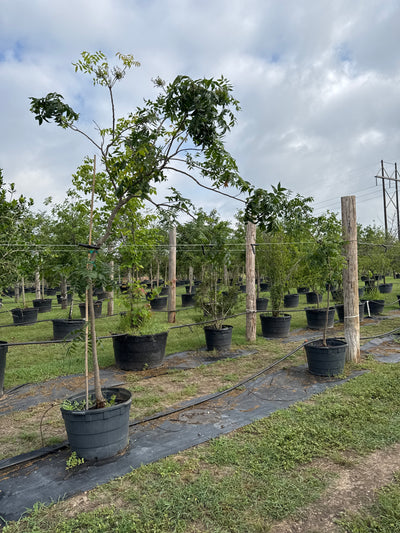


Peach Sam Houston

Peach Sam Houston
🌱 Planting Installation
The Sam Houston Peach is a Texas-born gem, developed by Texas A&M specifically to thrive in hot, humid Southern climates where other peaches might struggle with disease or lack of winter chill. The 'Sam Houston' peach produces medium to large-sized fruits with yellow skin and juicy, flavorful flesh. The fruit is typically freestone, meaning the flesh easily separates from the pit, making it convenient for fresh eating, canning, or baking. The flavor is sweet and aromatic, with a good balance of acidity. Sam Houston peaches are often prized for their excellent flavor and texture.
| Scientific Name | Prunus persica 'Sam Houston' |
| Foliage: Deciduous |
Leaves: Deciduous, lance-shaped, and dark green. They create a dense, spreading canopy that provides excellent shade for the fruit. Flowers: Showy, fragrant pink blossoms that appear in early-to-mid March. Fruit: Large, freestone peaches. They feature golden-yellow skin with a vibrant red blush. The flesh is yellow, firm, and notably low in acid, giving it a very sweet, "melting" flavor. Seeds: A single, deeply pitted stone at the center that separates easily from the flesh. Bark: Dark greyish-brown; smooth when young, developing a rougher, fissured texture with age. |
| Life Span: Perennial | The life span is typically 10 to 15 years, though well-cared-for trees in ideal home orchards can sometimes reach 20 years. |
| Mature Height | 15-25 feet (Standard) |
| Mature Width (Spread) | 10-20 feet |
| Growth Rate | Fast (Expect 24+ inches of growth annually under good care). |
| USDA Zone/Chill Hours | Zone 6-9 (Highly recommended for the South and Gulf Coast); Requires 500-550 chill hours (considered a "low-to-medium" chill variety) |
PLANT CARE & CHARACTERISTICS
Light Requirements: Full Sun; (At least 6-8 hours of direct light)
Water Requirements: Moderate; requires regular, deep watering during the summer heat and when the tree is fruiting, to keep the soil consistently moist but not waterlogged.
Drought Resistance: Moderate once established; however, consistent water is vital for fruit quality.
Soil Type: Well-drained, sandy loam; prefers a pH of 6.0-7.0. Prior to planting, it's beneficial to amend the soil with organic matter such as compost or aged manure to improve soil structure and fertility. Fertilize the tree annually with a balanced fertilizer formulated for fruit trees, following the manufacturer's instructions.
Deer Resistance: Low. Deer find the young shoots and ripening fruit highly attractive.
Pest/Disease Resistance: High resistance to Bacterial Spot and moderate resistance to Brown Rot and Gummosis. This makes it a "low-maintenance" favorite compared to more sensitive varieties.
Pollination: Self-pollinating. (Sets fruit alone, but nearby peach trees can boost its crop size).
Harvest: Late June to July. It is a mid-season producer that typically follows the 'June Gold'. Sam Houston ripens over a 10–14 day window. To extend your shelf life, pick the most "blushed" peaches first and leave the slightly greener ones on the tree for 2–3 more days.
4 Signs Your 'Sam Houston' Peach is Ready to Harvest
1. The Ground Color: Check the skin near the stem (the area not covered by the red blush). When it shifts from lime green to a warm golden yellow, the peach is mature.
2. The "Swell": In the last 10 days before harvest, the peaches will suddenly increase in size (the "final swell") and become noticeably rounder.
3. The Touch Test: Gently press the fruit near the stem (the "shoulders" of the peach). If it has a slight "give" (like a ripe avocado), it is ready to be picked.
4. The East of Release: A ripe 'Sam Houston' peach should come off the branch with a gentle upward twist. If you have to pull hard, it needs another day or two.
5. The Scent: It has a very traditional "peach" aroma that becomes intense 2-3 days before it is fully soft.
YIELD
| Tree Age | Yield (lbs) | Yield (Bushels) |
| Year 1: Establishment: Focus is on vegetative growth. If the tree attempts to grow fruit, it is often recommended to pinch off the young peaches. This redirects the tree's energy into the wood and roots, ensuring a much healthier and more productive tree for the long haul. | 0 lbs | 0 |
| Year 2: "Taster" Crop | 10 – 20 lbs | ~1/3 Bushel |
| Year 3: First "Real" Harvest | 40 – 75 lbs | 1 – 1.5 Bushels |
| Year 4: Expansion Phase | 100 – 150 lbs | 2 – 3 Bushels |
| Year 5+: Prime Production | 175 – 250+ lbs | 3.5 – 5+ Bushels |
STORAGE/SHELF LIFE
| STORAGE METHOD | SHELF LIFE | NOTES |
| Countertop (Room Temp) |
2 – 4 Days | Ripening firm fruit. Keep them in a single layer to avoid bruising the "shoulders" of the peach. |
| Refrigerator (33°F - 38°F) |
1 – 2 Weeks | Best for fresh eating. Sam Houston has a firm enough texture to hold up well in cold storage. |
| Freezer (Sliced/ Pitted) |
10 – 12 Months | Because of the high sugar content, these peaches make incredible frozen slices. Lay them on a cookie sheet to freeze individually before bagging them to prevent a "peach block." Excellent for baking and preserves. Since it's a freestone, the pit pops out easily for fast processing. |
| Canned/ Preserved |
1 – 2 Years | This is a premier canning peach because of its high sugar-to-acid balance and easy pitting. Sam Houston is often cited by Texas growers as the best variety for peach butter because the flesh breaks down into a very smooth, rich consistency. |
Critical Handling for Sam Houston
1. The "Freestone" Advantage: As a freestone, the pit does not stick to the flesh when the fruit is ripe. This means you can slice it cleanly for drying or freezing without tearing the fruit, which helps prevent the flesh from browning (oxidizing) as quickly.
2. The "Shoulder" Bruise: Sam Houston peaches are known for being large and heavy (often 2.5" to 3"). Because of their weight, they can bruise themselves just by sitting on a hard counter. Store them stem-side down or on a soft surface like a folded kitchen towel.
3. Avoid the "Mealy Zone": Like most yellow peaches, storing them between 36°F and 50°F for more than a few days can lead to a dry, "woolly" texture. For the best quality, either leave them on the counter to eat or get them into a very cold refrigerator (33°F-35°F) immediately.
PRUNING
Pruning should be done annually during the dormant season to remove any dead, damaged, or diseased branches, as well as to shape the tree and encourage airflow. The 'Sam Houston' is a "Texas Superstar" plant. Because it is a heavy producer, thinning the fruit is essential. If you don't remove some of the small green peaches in April, the branches may sag or break under the sheer weight of the harvest in July. Like all peaches, the Sam Houston fruits only on one-year-old reddish wood. If you don't prune, the tree will become "leggy," and the fruit will only grow at the very tips of the branches.
1. The "Open Center" Vase Shape: An open center allows the morning sun to dry the blossoms and fruit quickly, preventing fungal rot.
- The Scaffold: Select 3 to 5 main branches growing outward at a 45-degree angle.
- The "Clear Center": Prune out every branch growing toward the middle of the tree. A bird should be able to fly through the center of your tree without hitting a wing.
- Height Control: For your 15 Gallon (treeProductId: 52300822773928) trees, keep the height capped at 8–9 feet so you can harvest everything without a ladder.
2. Selecting Fruiting Wood: In the winter, look for the reddish-purple shoots that grew last summer.
- The "Pencil" Rule: Keep shoots that are about the thickness of a No. 2 pencil. These are the most productive.
- The Heading Cut: Shorten these fruiting shoots by about one-third. Always cut just above an outward-facing bud to keep the tree spreading rather than growing straight up.
3. The "Two-Finger" Thinning Rule (April): The Sam Houston is a heavy producer. If you don't thin the fruit, the branches will literally touch the ground or break under the weight by July.
- Spacing: Once the peaches are the size of a nickel, thin them so there is 6 to 9 inches (a generous hand-span) between each fruit.
- Why? This variety is known for its large size. Thinning ensures the tree puts all its energy into making "Texas-sized" peaches rather than hundreds of tiny ones.
Specific Maintenance Tips
1. Sanitation: Use rubbing alcohol to clean your shears between trees. This prevents the spread of bacterial canker, which can be common in Southern peach orchards.
2. Angle of Cuts: Make all cuts at a 45-degree angle sloping away from the bud. This prevents water from sitting on the cut, which can lead to rot.
3. Low-Chill Management: Because this tree may bloom during a "false spring," keep your pruning tools ready. If a late frost hits and kills some blossoms, you may not need to thin the fruit aggressively in April.
PRUNING OVERVIEW
| Pruning Type | Timing | Primary Goal |
| Dormant Pruning | Late Winter (Jan/Feb) | The "Heavy Lift." Remove 40–50% of the previous year's growth to keep the tree at a manageable height. |
| Thinning | April (Nickel-sized fruit) | Critical. Remove 60–80% of young fruit to ensure the remaining peaches reach their signature 3-inch size. |
| Summer Pruning | Late July (Post-Harvest) | Remove "water sprouts" (fast-growing vertical shoots) to let sunlight reach the wood for next year's crop. |


