


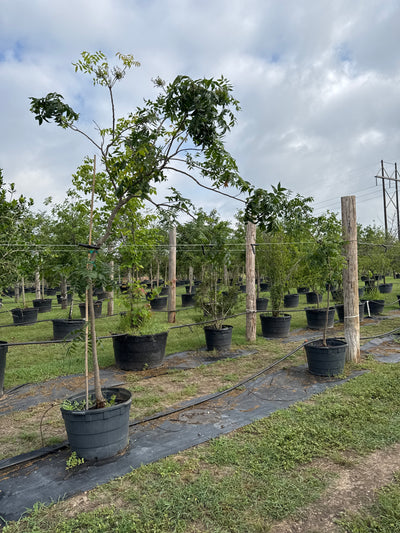


Grapefruit Rio Red


Grapefruit Rio Red
Location on Farm:
🌱 Planting Installation
Rio Red Grapefruit is a premier, heavy-yielding broadleaf evergreen fruit tree renowned for producing some of the deepest red, sweetest, and juiciest grapefruits in the world. Originally developed in Texas through bud mutation breeding, this attractive citrus tree features a dense, rounded, spreading canopy clothed in large, dark glossy green leaves that emit a pleasant citrus scent when crushed. In spring, it produces clusters of intensely fragrant, five-petaled white blossoms that fill the surrounding air with a sweet perfume while attracting pollinators. The resulting fruit is large, round to slightly oblate, with a smooth yellow peel that displays a characteristic blush of crimson red. Inside, the pale-to-deep ruby flesh is virtually seedless, offering a exceptionally rich, balanced flavor profile that is notably sweeter and far less acidic than older white or pink grapefruit cultivars.
| Scientific Name | Citrus × paradisi 'Rio Red' |
| Foliage: Evergreen |
Broadleaf evergreen fruit tree; dense, rounded, spreading canopy. Leaves: Large, ovate to broad-elliptic, 3–6 inches long; thick, leathery, dark glossy green with slightly winged petioles; highly aromatic when crushed. Flowers: Clusters of fragrant, 1–1.5 inch, 5-petaled white blossoms; bloom heavily in spring (filling the air with a sweet citrus scent). Fruit: Large, round to slightly oblate fruit with smooth, yellow rind featuring a distinctive red blush; deep ruby-red pulp; exceptionally sweet, juicy, and less acidic than older grapefruit varieties. Seeds: Seedless to nearly seedless (typically 0–6 seeds per fruit). Bark: Smooth, thin, greenish-gray on young branches, maturing to gray-brown on trunks; may feature occasional small, blunt thorns on vigorous shoots. |
| Life Span: Perennial | 50+ years |
| Mature Height | In-Ground: 15–20 ft; Container/Dwarf: 8–10 ft |
| Mature Width (Spread) | 15–20 ft |
| Growth Rate | Moderate (12–24 inches per year) |
| USDA Zone / Chill Hours | Zones 9a–11 (Tender to temperatures below 28°F); Low chill requirements (~100–200 chill hours) |
PLANT CARE & CHARACTERISTICS
Light Requirements: Full Sun (Requires 8+ hours of direct sunlight daily for peak fruit set, sugar development, and vibrant red blush).
Water Requirements: Moderate; needs deep, regular watering during dry spells, especially while fruit is developing; prefers well-drained, evenly moist soil.
Drought Resistance: Moderate once established, but drought stress significantly reduces fruit yield and size.
Soil Type: Deep, well-draining sandy loam or loamy soil; pH 6.0–7.5; highly sensitive to saline soils and poor drainage/standing water.
Deer Resistance: Moderate (Deer generally avoid thick citrus leaves and thorny stems, but may browse tender new spring shoots).
Pest / Disease Resistance: Susceptible to citrus leafminer, scale insects, whiteflies, aphids, and spider mites; susceptible to Citrus Greening (HLB) and phytophthora root rot in waterlogged soils.
Pollination: Self-fertile (Does not require a cross-pollinator; insects and wind assist in self-pollination).
Harvest: Main harvest window runs from November through May (fruit holds exceptionally well on the tree, sweetening further as winter progresses).
Yield: Heavy (Mature tree yields 200–500+ lbs of fruit per year under ideal conditions).
Storage / Shelf Life: Excellent; holds on the tree for up to 6 months; once harvested, lasts 2–3 weeks at room temperature or 4–6 weeks refrigerated.
Pruning: Minimal required; prune in late winter/early spring after frost threat passes to remove suckers, deadwood, or crisscrossing branches. Lower skirts are often trimmed to keep fruit off the ground.


