


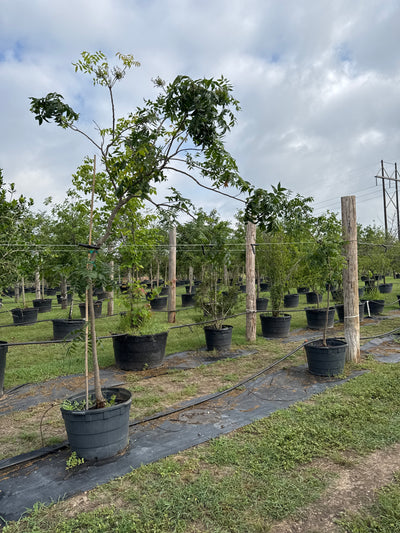

Viburnum Snowball


Viburnum Snowball
🌱 Planting Installation
| Scientific Name | Viburnum opulus 'Roseum' (syn. Viburnum opulus 'Sterile') |
| Foliage: Deciduous |
Leaves: Deciduous, opposite, and deeply 3-lobed (resembling maple leaves) with coarsely toothed margins. They are a soft, bright green during the spring and summer, transitioning to a spectacular wine-red or purplish-red in autumn. Flowers: Spectacular, large, spherical clusters (3 to 4 inches across) resembling actual snowballs. They emerge in late spring as a soft, apple-green/chartreuse, quickly mature to a brilliant, pure white, and sometimes blush a soft pink as they fade. Seeds: None. Sterile cultivar. Bark: Stems and younger branches are smooth, light gray-brown, and slightly ribbed. Older woody trunks become lightly fissured and rougher with age. |
| Life Span: Perennial | Can live for 40+ years with proper maintenance. |
| Mature Height | 10 to 12 feet |
| Mature Width (Spread) | 10 to 14 feet (develops a beautifully rounded, upright, and naturally spreading vase shape). |
| Growth Rate | Moderate (typically growing 1 to 2 feet per year until maturity). |
| USDA Zone/Chill Hours | Zone 3 through 8 (exceptionally cold-hardy, surviving temperatures down to -40°F/-40°C); Requires 400 to 500+ hours below 45°F (7°C). As a classic cool-climate, cold-hardy northern shrub, it requires a solid winter dormancy period to trigger its heavy spring bloom cycle. It struggles significantly and fails to flower well if planted past Zone 8. |
PLANT CARE & CHARACTERISTICS
Light Requirements: Full Sun to Partial Shade. It blooms most prolifically and achieves its best autumn leaf color in Full Sun (6+ hours of direct sunlight). In hotter, southern regions (like USDA Zone 8), it greatly appreciates partial afternoon shade to prevent leaf scorch.
Water Requirements: Moderate. It prefers consistently moist, well-draining soil. It requires regular, weekly watering during its first few growing seasons to establish. Once established, it needs about an inch of water per week, via rain or irrigation.
Drought Resistance: Low to Moderate. It is not a desert plant and does not tolerate prolonged dryness well. Extended drought will cause the leaves to wilt, crisp at the edges, and drop early, and it can severely diminish the size of next spring's flower buds.
Soil Type: Highly versatile. It thrives in rich, fertile, loamy soils that retain moisture but drain well. It prefers a slightly acidic to neutral pH but can tolerate moderately alkaline or heavy clay soils far better than many other ornamental shrubs.
Deer Resistance: Moderate. It is generally considered "occasionally severely browsed." Deer typically ignore it when other food is abundant, but they will happily graze on the tender new spring growth and soft leaves if they are hungry.
Pest/Disease Resistance: Moderate / Requires Monitoring. Highly susceptible to the Viburnum Leaf Beetle (VLB), which can skeletonize the leaves. Aphids are also very common on new spring growth, often causing the leaves to curl under as the flowers open. Generally resilient against disease, but can experience Powdery Mildew or fungal leaf spots if planted in stagnant air, dense shade, or if overhead watering keeps the foliage wet.
- Pro-Tip for Aphid Management 🐜 Watch for the Curl: Because Snowball Viburnum produces such tender, succulent new growth in the spring, aphids love to target it right as the flower balls are forming. If you see ants marching up the branches or notice the leaves around the blossoms starting to tightly curl, blast the underside of the leaves with a sharp stream of water from your garden hose, or apply an insecticidal soap early in the morning.
POLLINATION
1. Fertility Status: Completely Sterile. The 'Roseum' cultivar is a mutation that was specifically selected by horticulturists because its flowers are completely sterile.
2. Anatomical Modification: In a wild-type Viburnum opulus, a flower cluster consists of a ring of large, showy, sterile flowers on the outside to attract insects, surrounding a center of tiny, fertile, functional flowers. In the Snowball cultivar, every single tiny flower in the ball has been transformed into a large, showy, sterile petal. It completely lacks functional stamens (pollen-producing organs) and pistils (egg-producing organs).
3. Pollinator Attraction: High Visual Attraction, Low Reward. Because the massive, pure-white flower balls are so bright, they easily grab the attention of passing bees, butterflies, and hoverflies. However, because the flowers are sterile, they produce no pollen and virtually no nectar. Insects that land on them will quickly realize there is no food reward and fly away.
4. Fruit & Seed Production: Because pollination cannot occur, the Snowball Viburnum will never produce fruit or seeds. Unlike wild viburnums that bear bright red berries for birds in the autumn, the flowers of this bush simply fade to a light pink or tan and fall cleanly off the plant.
5. Propagation Method: Because it cannot produce seeds, this plant relies entirely on humans for reproduction. It is propagated via softwood or hardwood stem cuttings taken in the summer, which easily root in soil to create an exact genetic clone of the parent bush.
PRUNING
1. Annual Shaping & Deadheading
- When? Early Summer (Immediately after the snowball flowers fade and turn brown in June).
- How? Use clean hand pruners to snip back individual spent flower stems down to a healthy leaf node or side branch. Lightly trim the outer canopy to maintain your desired shape.
- Why? Doing this right after flowering gives the shrub the entire rest of the summer to grow fresh new wood. It is on this fresh summer wood that the plant will set its flower buds for the following spring.
2. Thinning & Renewal (To Boost Vitality & Airflow)
- When? Early Summer (Right after blooming finishes).
- How? Identify the oldest, thickest, most woody canes near the base of the shrub. Use loppers or a pruning saw to cut up to one-third (33%) of these ancient canes completely down to the ground.
- Why? This opens up the interior of the bush, drastically improving airflow (which wards off powdery mildew) and encouraging the root system to shoot up vigorous, young, highly productive flowering wood from the base.
3. Rejuvenation "Chop" (Overgrown Restoration)
- When? Late Winter (While fully dormant. Note: this will sacrifice spring flowers).
- How? If a viburnum has become a massive, tangled, 12-foot monster that has stopped blooming well, cut the entire shrub hard down to about 6 to 12 inches off the ground.
- Why? This is a drastic, "clean slate" reset for a neglected plant. The shrub will aggressively push out an entirely new, clean framework of stems by summer, resetting its growth habit.
4. The "No-Cut" Window (Late Summer to Late Winter): Never prune a Snowball Viburnum during the late summer, autumn, or winter. By August, the shrub has already finished microscopic development of all its flower buds for the next year. If you shear the plant into a neat ball in the fall or winter, you are physically clipping off every single potential spring blossom. If you miss the post-bloom early summer window, it is always best to leave the shears in the shed until the following year's show is over.