


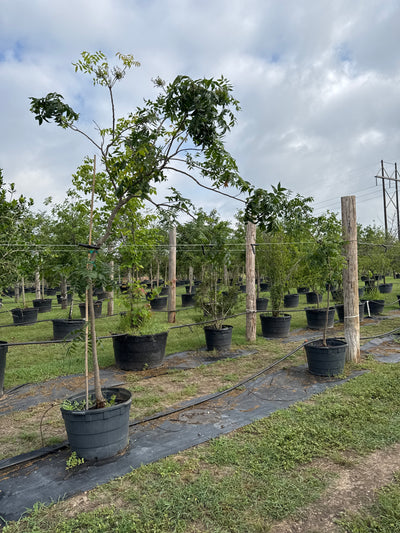

Raspberry Caroline


Raspberry Caroline
🌱 Planting Installation
|
Scientific Name |
Rubus idaeus 'Caroline' |
|
Foliage: Deciduous |
Leaves: Compound with 3–5 leaflets; dark green with a distinctly wrinkled (rugose) texture and silvery-white undersides. Flowers: Small, 5-petaled, and creamy white. They appear in clusters at the tips of the canes and are highly attractive to pollinators. Fruit: Very large, conical-shaped, and deep red. They are firm with a rich, "intense" raspberry flavor and high sugar content. Seeds: Small and numerous (drupelets). In 'Caroline', the seeds are less noticeable than in older varieties like 'Heritage'. Canes: Upright and sturdy, but they do possess small, fine prickles (thorns). New growth is green, turning woody and tan with age. |
|
Mature Height |
3 – 4 feet (Vines can reach 5 feet if trellised) |
|
Mature Width (Spread) |
3 – 4 feet (Spreads via underground suckers) |
|
Growth Rate |
Fast (Can reach full production in 1–2 seasons) |
|
USDA Zone/Chill Hours |
Zone 4 – 9 (Extremely heat tolerant compared to other reds); Requires 300-400 hours (relatively low for a red raspberry) |
PLANT CARE & CHARACTERISTICS
Light Requirements: Full Sun. Minimum 6–8 hours of direct light for best fruit sweetness and cane strength. Unlike many red raspberries that turn "bland" in the heat, the Caroline maintains an intense, tart-sweet flavor. Higher sun exposure (8+ hours) directly correlates to higher sugar (Brix) levels in the fruit.
- Warning: If you see "white drupelets" (white spots) on the berries in the nursery, it is usually Sunscald. While the Caroline is heat-tolerant, 100°F+ days can "cook" the side of the berry facing the sun. A light afternoon shade cloth can prevent this during extreme heat waves.
Water Requirements: High. Requires consistent moisture (1–2 inches per week), especially during fruit set.
Drought Resistance: Low. Shallow root systems mean the plant will wilt and fruit will shrivel quickly in dry spells.
Soil Type: Well-Drained. Prefers rich, loamy soil with high organic matter and a pH of 5.5–6.5. Apply a 3-inch layer of pine bark or straw around the base of the canes. This keeps the roots cool during the heat of July and prevents the soil from drying out between waterings.
-
Unlike your fruit trees, raspberries spread via underground "runners." In a home landscape, they can become invasive if not contained. Install them in a dedicated raised bed or use a "root barrier" to keep them from creeping into the lawn or other planting beds.
Deer Resistance: Moderate. While the prickles offer some protection, deer will eat the tender new "primocane" tips.
Pest/Disease Resistance: The Caroline has a high resistance to Phytophthora root rot, which is a major benefit if your installation site has soil that stays damp (though well-drained soil is still preferred).
- Airflow: If the canes are too crowded (more than 4–6 canes per square foot), the humidity will cause Grey Mold (Botrytis) on the fruit.
Pollination: Self-fruiting. Does not require a second variety to produce fruit, however bees are helpful. If you have a 'Methley Plum' or an 'Orlando Tangelo' nearby, the bees are drawn to those trees and will often stop at the Caroline blossoms, increasing the "berry set" and ensuring fewer "crumbly" (incomplete) berries.
Harvest: Everbearing. A moderate summer crop (June/July) and a heavy fall crop (August–Frost). The Caroline is a primocane-fruiting variety. This means it produces fruit on the tips of the current season's growth in the Fall, and then produces a second crop on the lower portion of those same canes the following Summer.
- Morning Harvest:The best time to pick is between 8:00 AM and 10:00 AM, after the dew has dried but before the heat of the afternoon sun has softened the fruit.
- Field Heat: Berries picked in the 90°F afternoon sun have "field heat" trapped inside them. If put directly into a fridge, they will sweat inside the container, leading to condensation and rot.
- Massive Fruit Size: The Caroline is famous for being about 20-30% larger than the standard Heritage raspberry. This means it takes fewer berries to fill a pint jar, making harvesting much faster.
YIELD
Yield is typically measured by linear foot of row rather than per individual plant, as the "runners" will eventually fill in the gaps to create a solid fruiting hedge.
The "Double Crop" Choice: You can choose how to manage the yield.
- Two Crops: Prune normally (see below) to get a light June harvest and a heavy September harvest.
- One Massive Fall Crop: Some growers mow the canes to the ground in February. This skips the summer crop but results in a 30-40% larger fall harvest on much stronger canes
| Plant Age | Production Phase | Summer Crop (Lbs) | Fall Crop (Lbs) | Total Annual Yield |
| Year 1 | Establishment | Trace (Mostly roots) | 0.5 – 1.0 lb | ~1 lb / plant |
| Year 2 | Young Row | 0.5 – 1.5 lbs | 1.5 – 2.5 lbs | 2 – 4 lbs / plant |
| Year 3 | Established | 1.5 – 2.5 lbs | 3.0 – 5.0 lbs | 5 – 7 lbs / linear ft |
| Year 4+ | Peak Maturity | 2.0 – 3.0 lbs | 4.0 – 6.0 lbs | 6 – 9 lbs / linear ft |
STORAGE/SHELF LIFE
Because raspberries are highly porous, moisture is their primary enemy. To get the full 5 days of refrigerator life, follow these three rules:
1. The "No-Wash" Rule: Never wash a Caroline raspberry until the exact second you are ready to eat it. The hollow center traps water, which triggers immediate breakdown and mold growth.
- Pro-Tip: If the berries are dusty, a light "air puff" or a soft brush is safer than water.
2. The Shallow-Pack Method: Never stack Carolines more than two berries deep.
- The Physics: The weight of the top berries will crush the "drupelets" (the tiny juice spheres) of the bottom berries. Once a berry leaks juice, it creates a sticky environment that invites rapid fermentation.
| STORAGE METHOD | SHELF LIFE | NOTES |
| Countertop (Room Temp) | 12 – 24 Hours | Eat immediately. Mold (Botrytis) can develop overnight. |
| Refrigerator (33°F - 36°F) | 2 – 5 Days | Keep in a shallow, vented container to prevent crushing. |
| Cold Storage (Professional) | 5 – 7 Days | Requires near-freezing temps and 90% humidity. |
| Frozen | 10 – 12 Months |
Excellent. Best for smoothies, baking, or sauces. Flash Freeze: To keep them from clumping, spread the berries in a single layer on a cookie sheet and freeze them for 2 hours. Once they are "beads," pour them into a freezer bag. This preserves the individual shape of the berry for garnishes. |
| Preserves | 12-18 Months | The "Pink" Preserve: Because the Caroline has a deep red color and high acidity, it makes a vibrant, clear jam that doesn't turn brown as quickly as other red varieties. |
PRUNING
| Method | Timing | Goal | Result |
| The "Mow-Down" | Late Feb / March | Simplicity. Cutting everything to the ground. | One massive Fall crop (Aug–Oct). |
| The "Two-Crop" | Late Winter | Extended Harvest. Only cutting fruited tips. | Light Summer crop + Heavy Fall crop. |
Method 1: The "Mow-Down" (Recommended for Beginners)
This is the easiest way to manage a Caroline row and results in the largest, cleanest fruit.
- The Cut: In late February, before any green buds appear, use a mower or loppers to cut every single cane to about 1–2 inches above the soil.
- The Growth: The plant will send up brand-new "primocanes" in the spring.
- The Harvest: These canes will flower and fruit starting in August and continue until the first hard frost.
- Why do this? It eliminates overwintering pests and disease, and the plant focuses 100% of its energy on one giant harvest.
Method 2: The "Two-Crop" (For Maximum Season Length)
Use this if the client wants raspberries in June and September.
- The Winter Identification: Look for the canes that fruited last fall (they will have dried fruit clusters at the very tips).
- The Tip-Prune: Cut off only the top 1/3 of the cane (the part that already fruited). Leave the bottom 2/3 of the cane standing.
- The Summer Crop: In June, those standing canes will produce the "Summer Crop" on their lower side-branches.
- The Cleanup: As soon as the June harvest is over, cut those old canes all the way to the ground. They are finished.
- The Fall Crop: Meanwhile, new green canes will be growing up from the ground to provide the "Fall Crop" in September.
General Maintenance & Training
1. Thinning the "Suckers": The Caroline is an aggressive spreader. By year three, the row will get too wide.
- The Rule: Keep your fruiting row only 12–18 inches wide.
- The Action: Dig up or mow down any "runners" that try to escape into the lawn or the middle of the path. This ensures sunlight can reach the center of the row, preventing moldy berries.
2. The "V-Trellis" Support": Because Caroline canes are heavy with large fruit, they tend to lean outward.
- The Setup: Place T-posts at the ends of the row with two wires running at 3 feet high, spaced about 2 feet apart.
- The Benefit: This creates a "V" shape that holds the canes upright but lets them lean out slightly. This makes picking much easier and keeps the berries away from the "splash zone" of the soil.