


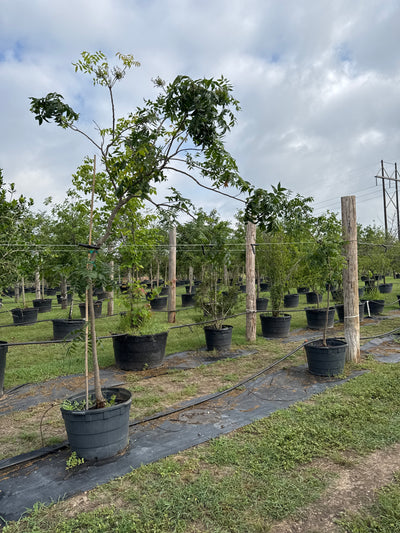

Persimmon Fuyu


Persimmon Fuyu
🌱 Planting Installation
The Fuyu Persimmon is widely considered the gold standard for home orchards due to its dual-purpose role as a gourmet fruit producer and a stunning ornamental shade tree. Unlike the traditional "puckery" astringent varieties, the Fuyu is non-astringent, meaning it is deliciously sweet and crisp even when it is firm. The tree produces fruit that is squat and flattened like a tomato with glowing deep-orange skin. The flesh is honey-sweet, fiberless, and can be eaten sliced like an apple while crunchy, or allowed to soften into a jelly-like consistency. In the spring and summer, it boasts large, leathery, dark-green glossy leaves. In the autumn, the foliage transforms into a spectacular display of vivid reds, oranges, and purples. One of its most unique features is that the bright orange fruit often remains hanging on the bare branches long after the leaves have fallen, looking like living ornaments against the winter sky. These trees are incredibly hardy and virtually pest and disease-free. They feature a slow-to-moderate growth rate and exceptionally strong wood (historically used for golf club heads), meaning they rarely suffer from the branch breakage common in other fruit trees.
| Scientific Name | Diospyros kaki 'Fuyu' |
|
Foliage: Deciduous |
Leaves: Large, broad, and leathery with a high-gloss sheen. They turn spectacular shades of brilliant orange, red, and gold in the fall. Flowers: Small, creamy-white to pale yellow bell-shaped blossoms. They are inconspicuous and tucked under the foliage in late spring. Fruit: Medium-to-large, squat and flattened (oblate) like a tomato. The skin is a deep, glowing orange when ripe. Seeds: Usually seedless in the 'Fuyu' variety, though an occasional small, flat brown seed may appear if cross-pollinated. Bark: Distinctive and ornamental; develops a dark gray, "alligator skin" blocky texture as the tree matures. |
|
Mature Height |
15 – 20 feet (Can be maintained at 12–15 feet with pruning). |
|
Mature Width (Spread) |
12 – 15 feet (Rounded, symmetric canopy). |
|
Growth Rate |
Slow to Moderate. A steady grower that builds very strong wood. |
|
USDA Zone/Chill Hours |
Zone 7 – 10 (Prefers warmer climates; heat-loving); Requires 200 chill hours or less (Very low; excellent for Southern climates). |
PLANT CARE & CHARACTERISTICS
Light Requirements: Full Sun. Minimum 6–8 hours. High light is necessary for the fruit to develop its deep orange color and high sugar content.
Water Requirements: Moderate. Needs regular deep watering during the first 2 years. Mature trees are efficient but need water during "fruit swell" in late summer.
Drought Resistance: High. Once established, it is one of the most drought-tolerant fruit trees in your inventory, though extreme thirst can cause fruit drop.
Soil Type: Adaptable. Prefers well-drained, loamy soil with a pH of 6.0–7.5. It is more tolerant of heavy clay than most stone fruits (like plums).
-
The Taproot Factor: Persimmons are known for having a very deep taproot.
- The Action: During self installations, avoid "teasing" or roughly spreading the roots as you might with a pot-bound shrub. Keep the root ball as intact as possible to prevent transplant shock.
- The Benefit: This deep root system is what makes the Fuyu so drought-hardy and wind-resistant once it is established in the landscape.
Deer Resistance: Moderate. Deer generally dislike the leathery leaves and the wood, but they will occasionally go after the ripening fruit in late autumn.
Pest/Disease Resistance: Excellent. Virtually pest-free. It is highly resistant to the typical blights and rots that affect your plum and apple stock.
Pollination: Self-Fruiting. You only need one tree to get a full crop. It does not require a cross-pollinator.
Harvest: Late Fall. Typically ripens in October through November. The fruit can often hang on the tree after the leaves have fallen. Leave the fruit on the tree into early winter as long as there isn't a hard freeze (below 26°F). It makes for a stunning landscape display and the cold actually helps concentrate the sugars.
-
Harvest Tip: Fuyu is attached with a very tough, woody calyx (the green "hat"). Never pull the fruit off the tree; you will damage the fruiting spur or tear the skin. Always use hand pruners to snip the stem just above the fruit.
YIELD
| Tree Age | Production Phase | Yield (Lbs) | Estimated Fruit Count |
| Year 1 | Establishment | 2 – 5 lbs | 5 – 12 fruits |
| Year 2 | Expanding | 15 – 30 lbs | 40 – 80 fruits |
| Year 3 | Sub-Mature | 50 – 75 lbs | 120 – 200 fruits |
| Year 4 | Sub-Mature | 100 – 150 lbs | 250 – 400 fruits |
| Year 5+ | Full Maturity | 200 – 300+ lbs | 500 – 800+ fruits |
STORAGE/SHELF LIFE
| STORAGE METHOD | SHELF LIFE | NOTES |
| Countertop (Room Temp) | 2 – 3 Weeks | Best for fresh eating; they will slowly soften and get sweeter. |
| Refrigerator (33°F - 38°F) | 2 – 3 Months | Keep them dry. They are the ultimate "slow-burn" winter fruit. |
| Frozen (Whole or Sliced) | 12 Months | Can be eaten frozen like a sorbet or used in baking. |
| Dehydrated (Hoshigaki style) | 12+ Months | Sliced Fuyus dry into a chewy, candy-like treat. |
PRUNING
1. Maintaining the Central Leader: The Fuyu likes to have one main trunk that goes up the middle.
- The Action: If you see two branches competing to be the "top" of the tree, prune the weaker one away.
- The Benefit: This creates a sturdy "spine" that supports the weight of the heavy, tomato-shaped fruit without the tree leaning or tipping in the 15-gallon pot.
2. Encouraging Wide Crotch Angles: Persimmon wood is incredibly strong, but it is at its best when branches come off the trunk at a 60-degree to 90-degree angle.
- The Technique: Fuyus naturally tend to grow with wide angles, but if you see a branch growing tightly against the trunk (a narrow "V"), remove it.
- The Result: Wide angles create a "shelf" for the fruit to sit on, reducing the leverage that causes branches to sag.
3. The "Light Touch" Rule: Over-pruning a Fuyu can actually delay fruit production.
- The Protocol: Focus on "Thinning Cuts" (removing a whole branch at its base) rather than "Heading Cuts" (cutting off the tips).
- The Reason: Fuyus fruit on the current season's growth that emerges from one-year-old wood. If you "haircut" the entire tree by trimming all the tips, you are cutting off the majority of next year’s crop.
4. Dealing with "Heavy Hangers": As the tree matures, the fruit at the very ends of the branches can pull the limbs down, creating a "weeping" look.
- The Maintenance: If a branch is hanging too low (blocking a walkway or touching the mulch), prune it back to an upward-facing bud or a more upright side-branch.
PRUNING SUMMARY
| Pruning Phase | Timing | Primary Goal |
| Structural Thinning | Late Winter (Dormant) | Removing "crossing" branches and maintaining a single leader. |
| Heading Back | Late Winter | Shortening overly long branches to prevent "weeping." |
| Sanitation | Any Time | Removing the occasional dead or broken twig. |