


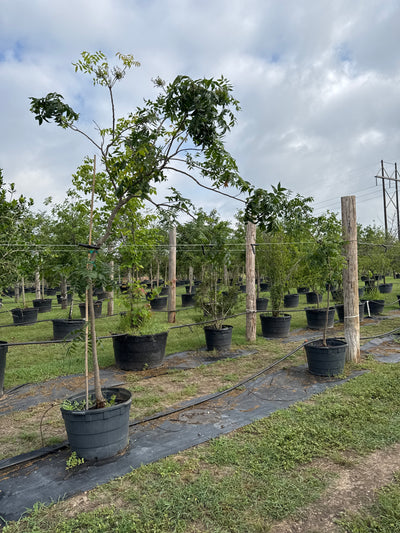

Pear Shinseiki Asian


Pear Shinseiki Asian
🌱 Planting Installation
The Shinseiki Asian Pear (often called "New Century") is one of the most popular Asian pears because it is exceptionally precocious—meaning it starts bearing fruit at a very young age. It is widely considered the best choices for gardeners for its crisp, juicy texture and sweet, refreshing taste. With its high percentage of dietary fiber and antioxidants, it promotes digestive health and boosts the immune system. Its green-yellow skin and smooth flesh make it a visually appealing and healthy choice for a pear connoisseur.
| Scientific Name |
Pyrus pyrifolia 'Shinseiki' |
|
Foliage: Deciduous |
Leaves: Large, glossy, dark green, and ovate. They provide a dense canopy and turn a striking bright yellow to orange-red in late autumn. Flowers: Showy, fragrant, white flowers arranged in five-petaled clusters along the branches. The flowers feature delicate pinkish-red to purple anthers (stamens). Fruit: Round and apple-shaped with smooth, thin, lime-yellow skin (no russeting). The flesh is white, exceptionally crisp, and sweet with a refreshing, mild flavor. Seeds: Small, dark brown seeds housed in a small, central star-shaped core. Bark: Smooth and greyish-brown when young, developing small lenticels (Pores) and becoming slightly more textured/furrowed as the tree matures. |
|
Mature Height |
12-15 feet (Standard); 8-10 feet (Dwarf) |
|
Mature Width (Spread) |
6-7 feet (Upright, spreading habit) |
|
Growth Rate |
Moderate to fast (Typically 12-24 inches per year). |
|
USDA Zone/Chill Hours |
Zone 5-9; Requires 250-450 chill hours (Lower than many pears, making it excellent for California, Texas, and the Deep South). |
PLANT CARE & CHARACTERISTICS
Light Requirements: Full Sun. Needs at least 6-8 hours of direct sunlight.
Water Requirements: Moderate; requires consistent, deep watering to thrive, generally needing 1-2 inches of water per week, especially during the first year and the summer fruiting season. They need moist but well-drained soil, consuming roughly 12–15 gallons per week for mature trees between May and September.
Drought Resistance: High. Shinseiki Asian pear is considered drought-resistant once it is fully established. It is a robust, hardy variety that can handle both heat and cold, with a mature, well-established root system that allows it to withstand dry spells better than many other fruit trees.
Soil Type: Well-drained, and deep, loamy soil is preferred, though they adapt to heavy clay if it is not constantly wet. pH range of 6.0 to 7.0 is ideal for optimal nutrient uptake.
Deer Resistance: Low. Not considered deer-resistant; in fact, they are highly attractive to deer, which often eat the fruit and browse the foliage. While the tree is resistant to pests and diseases, it requires protective measures like fencing or tree tubes to prevent significant damage from deer and other wildlife.
Pest/Disease Resistance: Moderate to high. High resistance to Cedar Apple Rust. It is moderately resistant to Fire Blight, though slightly more susceptible than the Shinko. If you see "shepherd's crooks" (wilted tips that turn black and curl like a hook), prune them immediately. cut them off 12 inches below the damage and sanitize your shears with rubbing alcohol between every single cut.
Pollination: Partially self-pollinating, but yields can increase by up to 30-40% with a partner like (e.g., 'Hosui', 20th Century, or 'Moonglow').
Harvest: Early season, typically late August to early September. Often produces fruit in 2-3 years. Unlike European pears, the Shinseiki is tree-ripened. You can pick it and eat it immediately right off the branch.
- *Pro-tip: Pears on the outside of the canopy that get more sun will ripen 5–7 days faster than those tucked inside the shade. Plan to harvest your tree in 2 or 3 "passes" rather than all at once.
How to Tell if Your 'Shinseiki Asian' Pear is Ready to Harvest
1. The Color Shift: The skin will change from a bright lime-green to a soft, lemon-yellow. Once that green tint fades and the yellow warms up, the sugars are at their peak.
2. The "Lift" Test: Hold the pear in your hand and tilt it upward toward the branch. If it is ripe, the stem will "snap" away from the spur naturally. If you have to pull or use force, leave it for a few more days. Never pull the fruit downward, as this can tear the delicate skin near the stem.
3. The Taste Test: Asian pears are prized for their "crunch." If the fruit is firm, juicy, and sweet like a mild honey-apple, it is ready. If it still has a "starchy" or vegetable-like taste, it needs more time on the tree. If you wait until it feels "soft," it is already overripe and will be mealy.
YIELD
| Tree Age | Production Phase | Yield (Bushels) | Yield (lbs) |
| Year 1 | Establishment | 0.25 – 0.5 Bushel | 10 – 20 lbs |
| Year 2 | Early Producer | 1.5 – 2.5 Bushels | 65 – 110 lbs |
| Year 3 | Expanding | 3.5 – 5 Bushels | 150 – 220 lbs |
| Year 4 | Sub-Mature | 6 – 8 Bushels | 270 – 350 lbs |
| Year 5+ | Full Maturity | 8 – 12+ Bushels | 350 – 500+ lbs |
STORAGE/SHELF LIFE
| STORAGE METHOD | SHELF LIFE | NOTES |
| Cold Storage (32°F - 34°F) | 1 – 3 Months | Long-term keeping. Flavor stays crisp but sugars may decline after 90 days. |
| Refrigerator (35°F - 40°F) | 4 – 6 Weeks | If keeping them in the refrigerator, place them in a perforated plastic bag or a crisper drawer with a damp paper towel. This prevents the cold air from sucking the juice out of the fruit and maintains the "snap" texture. |
| Countertop (Room Temp) | 5 – 7 Days | Shinseikis lose moisture quickly. Keep them in a cool spot away from sun. |
| Frozen / Sliced | 10 – 12 Months | Good for baking; they maintain a slightly firmer texture than European pears. |
*Helpful Tip: The "Handle Like Eggs" Rule- The pale yellow skin of the Shinseiki shows every fingerprint and bump. Even a slight squeeze during harvest will turn into a brown "pressure spot" within 48 hours.
PRUNING
1. Building the "Strong Frame": Shinseiki branches are prone to "loading up" with fruit at the very tips, which causes them to bend and potentially snap.
- The "Heading Back" Cut: For any long, thin branches (whips) that grew over the summer, cut them back by one-quarter to one-third. This forces the branch to grow thicker (gaining "caliper") rather than just getting longer and floppier.
- Angle Training: While more spreading than a European pear, you should still use spreader sticks on young 15-Gallon trees to keep the branches at a 45° to 60° angle. This creates the strongest joint for a 10-bushel mature harvest.
2. The "3-Year Spur" Rule: Shinseiki fruits on short, stubby spurs that grow off the main branches.
- Quality over Quantity: A spur is most productive and produces the largest fruit in its 2nd and 3rd years.
- The Cut: If you see a spur that looks like a miniature, gnarled branch with 10+ buds on it, it’s too old. Prune it off entirely. This tells the tree to grow a brand-new, vigorous spur nearby that will produce much larger, sweeter yellow pears.
3. The "Summer Thinning" (Crucial): This is the most important "pruning" task for the Shinseiki. If you skip this, the tree will be "biennial" (only fruiting every other year) and the fruit will be the size of golf balls.
- The 1-per-6 Rule: When the pears are about 3/4 inch wide, thin them so there is only one pear every 6 inches of branch.
- The Center Pear: In a cluster of 5 pears, always keep the "King" pear (usually the largest one in the center of the cluster) and snip the others off.
4. Low Suckers: Always remove any fast-growing green shoots (suckers) coming from the base of the trunk or below the graft union. These steal energy from your fruit production.
PRUNING SUMMARY
| Pruning Phase | Timing | Primary Goal |
| Dormant Pruning | Late Winter (Jan/Feb) | Thinning. Removing 20% of the interior wood to improve light and air. |
| Spur Management | Winter | Fruit Quality. Cutting back old spurs to encourage new, vigorous growth. |
| Thinning | Late May / June | Size Control. Ensuring the tree doesn't break under its own massive yield. |