


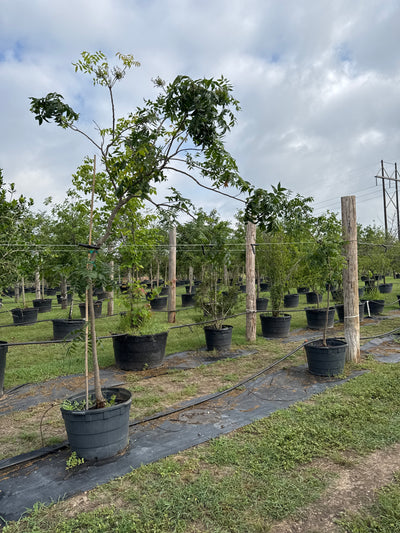


Pear Ayers


Pear Ayers
Location on Farm:
🌱 Planting Installation
The Ayers Pear is a premier Southern dessert pear, celebrated for its smooth, grit-free texture and high sugar content. Developed by the University of Tennessee, it is a hybrid of the European and Chinese sand pear, making it exceptionally resistant to the "Fire Blight" disease that often plagues other varieties in humid climates. The Ayers pear, often called the "Sugar Pear," is a premier dessert variety highly regarded for its exceptional sweetness. Unlike "crisp" Asian pears, the Ayers has a "melting" buttery smooth flesh similar to an 'Anjou' or 'Bartlett'. It is widely considered one of the best fresh-eating pears for Southern orchards.
| Scientific Name | Pyrus communis x Pyrus pyrifolia 'Ayers' |
| Foliage: Deciduous |
Leaves: Glossy and Ovate. Small, dark green leaves with finely serrated edges. They turn a vibrant yellow or reddish-purple in the autumn. Flowers: Early Spring White. Clusters of 5-petalled white blossoms with small red-tipped anthers. They are highly ornamental but bloom early, making them a frost risk in some areas. Fruit: Small-to-Medium Dessert Pear. Features a classic pyriform (pear) shape. The skin is a smooth yellow-green with a beautiful red blush and prominent russet dots. Seeds: Small Black Pips. Encased in a central core. The flesh around the core is exceptionally smooth and lacks the "sand" or "grit" cells found in many other pears. Bark: Grey-Brown and Scaly. Smooth and light grey when young, developing a rugged, blocky, and deeply fissured texture as it reaches maturity. |
| Life Span: Perennial | Typically 20 to 35 years under good growing conditions, though standard European pear varieties can sometimes live longer with proper care |
|
Mature Height |
15-20 feet; Can be maintained smaller with consistent pruning, but naturally grows into a substantial upright tree. |
| Mature Width (Spread) | 10-12 feet; Has a more columnar, upright growth habit compared to the spreading canopy of a peach tree. |
| Growth Rate | Moderate to Fast-growing; Typically focuses on building a strong central leader before putting on heavy lateral fruiting branches. |
| USDA Zone | Zone 5-9 (Extremely versatile, though it specifically excels in the heat and humidity for the Southeast) |
| Chill Hours | Requires 600-700 chill hours (Requires a moderate winter to break dormancy and produce a reliable fruit set). |
PLANT CARE & CHARACTERISTICS
Light Requirements: Full Sun. Requires 8+ hours of direct sunlight. Good light penetration is essential for developing the characteristic red blush on the fruit.
Water Requirements: Moderate. Needs regular deep watering during the first 2 years of establishment. Once established, generally requires 1 inch of water every 7–10 days from rainfall or irrigation. Mature trees require consistent moisture during fruit swell (June–July) or during prolonged dry spells.
Drought Resistance: Moderate to High. Once established, it is more drought-tolerant than many peach varieties, though extreme dry spells can lead to smaller fruit.
Soil Type: Prefers well-drained, fertile loamy soil with a pH of 6.0 to 7.0. It is adaptable to slightly heavier clay soils than most stone fruits.
Deer Resistance: Low. It is considered a "deer magnet" because of its exceptionally high sugar content. Fencing or trunk guards are recommended.
Pest/Disease Resistance: Highly resistant to Fire Blight, this is its strongest selling point. However, it is good practice to prune during the dormant season (January/February) to maintain airflow. This ensures that even in exceptionally humid springs, the tree remains healthy. It also shows good resistance to Leaf Spot.
- Fire Blight Sanitation: Even though Ayers is highly resistant, it is not immune. If you see a branch tip that looks black and shriveled (like it was burned by a lighter), cut it off 12 inches below the visible damage.
- The "Alcohol Dip": This is mandatory for pears. Dip your shears in 70% isopropyl alcohol between every single cut if you suspect blight is in the area.
Pollination: While some sources list it as partially self-fertile, it performs significantly better with a pollinator. The 'Barrlett', 'Orient', 'Kieffer', and 'Moonglow' are excellent matches for the Ayers pear.
Harvest: Early to Mid-August. It's a "summer pear." The fruit should be picked while still firm and allowed to ripen off the tree for the best texture.
4 Keys to a Successful Ayers Harvest
1. The "Firm Pick" Rule: Like most high-quality dessert pears, the Ayers should not be allowed to ripen fully on the tree. If it softens on the branch, the core can become "mealy." Pick it when the skin transitions to a lighter green-yellow, then store it in a cool place for 3–5 days to reach its buttery peak.
2. The "Tilt" Test (Harvesting): To know if your Ayers is ready in early August, pick up a pear and tilt it horizontally. If the stem "snaps" cleanly away from the branch at the natural joint, it is mature. If the stem resists or tears the bark, it needs more time.
3. The "Chill" Requirement (Conditioning): For the best dessert quality, put your harvested Ayers pears in the refrigerator for 2 to 3 days immediately after picking. This "cold shock" triggers the internal enzymes that turn starches into sugars, resulting in that famous buttery texture.
4. The "Check the Neck" Rule: To see if a stored pear is ready to eat, press your thumb gently near the stem (the "neck"). If it yields slightly to pressure, it is ripe. If the "belly" of the pear is soft, it is likely overripe inside.
YIELD
| Tree Age | Yield (Bushels) | Yield (lbs) |
| Year 1: Establishment | 0 | 0 lbs |
| Year 2: "First Fruits" | 0.25 Bushel | 10 – 15 lbs |
| Year 3: Young Producer | 1 – 2 Bushels | 50 – 90 lbs |
| Year 4: Sub-Mature | 3 – 4 Bushels | 130 – 180 lbs |
| Year 5+: Full Maturity | 5 – 8+ Bushels | 220 – 350+ lbs |
STORAGE/SHELF LIFE
| STORAGE METHOD | SHELF LIFE | NOTES |
| Cold Storage (30°F - 32°F) |
1 – 2 Months | Long-term keeping. Commercial-grade refrigeration extends this even further. |
| Refrigerator (35°F - 40°F) |
2 – 3 Weeks | Delaying the ripening process for fresh eating. |
| Countertop (Ripening) |
3 – 5 Days | Move from fridge to counter to trigger the "melting" texture. |
| Canned Preserved |
1 – 2 Years | Ayers is world-class for canning because it holds its shape in syrup. |
PRUNING
1. Structural Training
- The "One King" Rule: Ensure there is only one main vertical trunk (the leader). If another branch is trying to grow just as tall and straight as the main trunk, cut it back by half or remove it entirely.
- The Scaffold Selection: Choose 4 or 5 "scaffold" branches that are spaced out around the trunk like a spiral staircase. Remove any branches that are growing directly on top of another.
2. The "Widening" Technique: Ayers branches tend to grow at "narrow crotch angles" (very tight V-shapes). These are weak and will split under a heavy fruit load.
- Spreader Sticks: While the wood is young and flexible, place notched sticks between the trunk and the branch to force the branch outward.
- The 60-Degree Goal: Aim for branches that grow out at a 60-degree angle. This slows down vegetative growth and triggers the tree to produce "fruiting spurs" (the short, stubby twigs where pears actually grow).
3. Managing Fruiting Spur: Unlike peaches, pears fruit on permanent spurs that can produce for 10+ years.
- Do Not "Clean" the Branches: Be careful not to prune off the short, gnarly-looking stubs on the main branches; these are your fruit factories.
- Spur Thinning: If a branch is 5 years old and covered in dozens of spurs, thin them out so they aren't crowded. This ensures the remaining spurs get enough nutrients to make large, "melting" pears rather than small, woody ones.
4. Heading Back: Avoid "topping" the tree (cutting the very top off) unless you have reached your maximum desired height (typically 15–18 feet). Topping causes a "broom" of 20 new vertical shoots to explode from the cut, which ruins the tree's light penetration.
PRUNING OVERVIEW
| Pruning Phase | Timing | Primary Goal |
| Dormant Pruning | Late Winter (Jan/Feb) | Structure & Thinning. Remove "competitor" leaders and opening the canopy. |
| Spreading | Spring/Early Summer | Widening. Using weights or spreaders to pull vertical branches to a 45°–60° angle. |
| Thinning | Late May (Fruit is 1" wide) | Weight Management. Reducing clusters to 1–2 pears to prevent branch snapping. |