


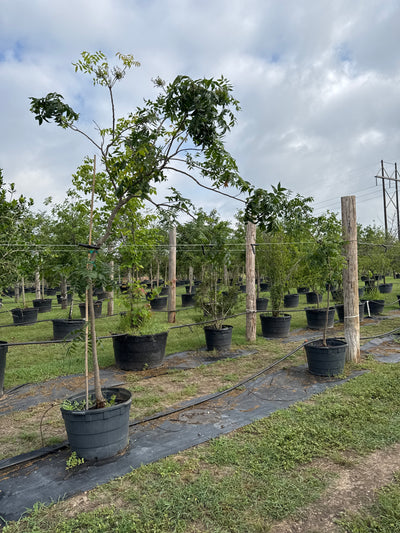

Loquat


Loquat
🌱 Planting Installation
The Loquat, often called the "Japanese Plum," is an unique tropical evergreen prized for its architectural foliage and its ability to provide the first fresh fruit harvest of the spring, long before nectarines or peaches begin to ripen. The tree produces small, oval, and golden-orange fruit with a slightly fuzzy skin. The flavor is a sophisticated, refreshing blend of peach, citrus, and mango with a honey-like sweetness. It is a favorite for fresh eating, but its high pectin content also makes it the premier choice for spring preserves and jellies. The tree features massive, leathery, deep-green leaves with a "rusty" velvet underside. While other trees are dormant, the Loquat produces clusters of small, creamy-white flowers in late fall and early winter. These blossoms carry a potent, vanilla-almond fragrance that can scent an entire garden during the cooler months. Unlike most fruit trees that go dormant, the Loquat remains lush and vibrant through the winter, making it an excellent candidate for edible privacy screening or a focal point in Mediterranean-style landscapes.
|
Scientific Name |
Eriobotrya japonica |
|
Foliage: Evergreen |
Leaves: Evergreen. Massive (6–10 inches), leathery, and deeply veined. Dark glossy green on top with a "rusty" fuzzy underside.
Flowers: White and fragrant. Produced in large clusters (panicles) at the branch tips during late fall/early winter. Smells like vanilla or almond. Fruit: Small, oval to pear-shaped. Yellow to orange skin with a fuzzy texture. The flavor is a mix of peach, citrus, and mango. Seeds: Large, smooth, glossy brown seeds (usually 1–3 per fruit). They are quite heavy and take up a significant portion of the fruit. Bark: Smooth and gray-brown when young; becomes slightly fissured with age but generally remains clean and structural. |
|
Mature Height |
15 – 25 feet (Can be kept at 10–12 feet with regular pruning). |
|
Mature Width (Spread) |
15 – 20 feet (Rounded, umbrella-like canopy). |
|
Growth Rate |
Fast. Often grows 2+ feet per year in ideal conditions. |
|
USDA Zone/Chill Hours |
Zone 8 – 10 (The tree is hardy to 10°F, but flowers/fruit are damaged at 27°F); Requires 0 – 100 hours (very low chill). Thrives in coastal and warm-winter areas. |
PLANT CARE & CHARACTERISTICS
Light Requirements: Full Sun to Partial Shade. Best fruiting occurs in full sun, but the large leaves appreciate some afternoon shade in extremely hot climates.
Water Requirements: Moderate. Needs regular, deep watering during the flowering and fruiting season (winter/spring) to ensure juicy fruit.
Drought Resistance: High (Once Established). While it can survive dry spells, the fruit size and leaf quality will suffer without supplemental water.
Soil Type: Adaptable. Prefers well-drained, loamy soil but can tolerate slightly alkaline or clay soils better than most stone fruits. Fertilize in late summer or early fall. This provides the nitrogen and potassium the tree needs to fuel its winter bloom and spring fruit set. Fertilizing too late in the spring can actually reduce the flavor of the fruit.
Deer Resistance: Moderate. The thick, leathery, "fuzzy" texture of the leaves makes them less palatable to deer than peaches or nectarines.
Pest/Disease Resistance: Fair. Loquats are in the Rosaceae family (like apples and pears) and are susceptible to Fire Blight. If the tips of the branches look like they have been "burned" by a blowtorch and curl into a "shepherd's crook," prune them off immediately. Sterilize your pruners with alcohol between every single cut to prevent spreading the bacteria through the rest of the tree.
Pollination: Self-Fertile. Most varieties produce excellent crops solo, though cross-pollination can lead to slightly larger fruit.
Harvest: Early Spring (March – May). One of the first fresh fruits of the year, ripening long before your nectarines.
-
The "Color Over Gloss" Rule: Loquats can look ripe while they are still quite tart.
- The Strategy: Wait for the fruit to turn a deep apricot-orange. If the skin is still pale yellow, the sugars haven't fully "set."
- The Taste Test: The fruit should give slightly under gentle pressure, similar to a ripe peach.
- Harvesting the "Entire Panicle": Picking individual loquats can bruise the fruit next to them.
- The Technique: Use hand pruners to snip the entire cluster (panicle) off the tree at once.
- The Benefit: This keeps the fruit on the stem longer, which helps prevent the fruit from shriveling and extends the "counter life" by an extra day.
YIELD
| Tree Age | Production Phase | Yield (Lbs) | Estimated Fruit Count |
| Year 1 | Establishment | 2 – 5 lbs | 20 – 50 small fruits |
| Year 2 | Expanding | 15 – 25 lbs | 150 – 250 fruits |
| Year 3 | Sub-Mature | 40 – 60 lbs | 400 – 600 fruits |
| Year 4 | Sub-Mature | 80 – 100 lbs | Massive clusters |
| Year 5+ | Full Maturity | 150+ lbs | Thousands of fruits |
STORAGE/SHELF LIFE
| STORAGE METHOD | SHELF LIFE | NOTES |
| Countertop (Room Temp) | 1 – 2 Days | Must be eaten almost immediately; skin will spot and bruise. |
| Refrigerator (33°F - 38°F) | 1 – 2 Weeks | Will hold its texture, but the flavor is best at room temperature. |
| Freezing (Pitted) | 6 – 10 Months | Top Choice: Excellent for smoothies or jam-making later in the year. |
| Dehydrating | 6+ Months | Sliced loquats dry into a "fruit leather" texture that is very shelf-stable. |
PRUNING
1. The "Terminal Bud" Rule: Loquats fruit at the very tips of their branches.
- The Action: If you prune the tree in the winter, you will cut off all of your spring fruit.
- The Timing: Only prune immediately after the harvest is finished in May or June. This gives the tree all summer to grow new "tips" that will hold the flowers for the following winter.
2. Creating "Light Channels": Because loquat leaves are so large (up to 12 inches), they cast an incredibly deep shade. This shade can kill off the tree's own interior branches.
- The Technique: Remove about 20% of the large leaves from the "shoulders" of the tree.
- The Benefit: This allows light to reach the interior wood. If the interior wood gets light, it will stay productive; if it’s in total darkness, it will become brittle and die, leaving you with a "hollow" tree.
3. Managing the "Central Leader": Left to its own devices, a loquat can hit 25 feet, making the fruit a feast for birds rather than the homeowner.
- The Strategy: For residential installations, "cap" the height at 10 feet.
- The Maintenance: Once the tree reaches the desired height, prune the central vertical trunk back to a strong horizontal side-branch. This forces the tree to grow "out" rather than "up," keeping the harvest within arm's reach.
4. Pruning for "Screening" (Privacy as a hedge):
- The Action: Instead of one central trunk, encourage 3–5 main trunks from the base.
- The Pro-Tip: Do not "shear" a loquat like a boxwood hedge. Cutting through those large, leathery leaves with shears leaves jagged, brown edges. Always use hand pruners to cut the stems behind the leaves.
5. The "Thinning" Secret for Size: Loquats naturally produce fruit in huge clusters. If left alone, the fruit will be small with very large seeds.
- The Technique: When the fruit is the size of a marble, thin the clusters so only 3–4 fruits remain per bunch.
- The Result: The remaining loquats will grow to the size of a large apricot with a much better flesh-to-seed ratio.
PRUNING SUMMARY
| Pruning Phase | Timing | Primary Goal |
| Heading Back | Post-Harvest (Late Spring) | Snipping the ends of branches to force them to branch out rather than just up. |
| Thinning | Late Summer | Removing "water sprouts" (vertical shoots) from the center of the tree. |
| Sanitation | Year-Round | Immediate removal of any branch showing "Fire Blight" (burnt-look) symptoms. |