


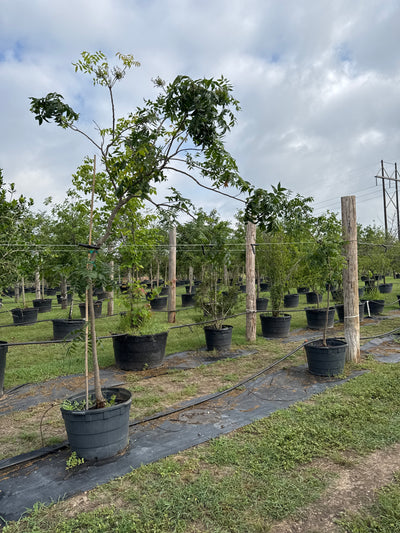

Kumquat Tart (Nagami)

Kumquat Tart (Nagami)
🌱 Planting Installation
The Nagami Kumquat (Tart) is a popular citrus tree distinguished for its cold hardiness and horticultural versatility. The tree produces distinctive oval shaped fruit with a unique "inside-out" flavor profile. Unlike most citrus, the Nagami is eaten whole—skin and all. The thin, smooth rind is surprisingly sweet and aromatic, while the juice and pulp provide a sharp, refreshing tartness. This contrast makes it a favorite for fresh snacking, gourmet marmalades, and culinary garnishes. The tree features dark-green, lancet-shaped leaves and a naturally compact, globose habit, it serves as an excellent "living sculpture." It stays tidy and "manicured" with minimal effort, making it ideal for entryway "sentinel" pots or low-maintenance garden hedges. The bright orange, egg-shaped fruits can hang on the branches for months. This provides a vibrant pop of color throughout the winter when most other orchard trees are dormant. As one of the most resilient citrus varieties, the Nagami can tolerate temperatures as low as 15°F - 18°F once established. This tree is highly recommended for those in slightly cooler microclimates who still want the "tropical" citrus experience.
| Scientific Name | Citrus japonica (formerly Fortunella margarita) |
|
Foliage: Evergreen |
Leaves: Small and Lancet-shaped. Dark, glossy green and much finer in texture than a lemon or orange leaf. Flowers: Pure White. Tiny, star-shaped, and produced in late spring or summer. Very sweet, honey-like fragrance. Fruit: Oval / Egg-shaped. Small (1–2 inches). Bright orange when ripe with a smooth, sweet, edible rind and tart pulp. Seeds: Present. Small, green-to-cream colored seeds are typically found in the center of the segments. Bark: Brown-Gray and Tight. Older wood is very sturdy; young branches are green and almost entirely thornless. |
| Mature Height | 6 – 10 feet (Easily maintained at 4–5 feet in pots). |
| Mature Width (Spread) | 4 – 6 feet (Very dense, compact, and shrub-like). |
| Growth Rate | Slow |
| USDA Zone/Chill Hours | Zone 8 – 11 (Extremely hardy; can survive brief dips to 15°F - 18°F); 0 chill hours. Subtropical, does not require cold to fruit. |
PLANT CARE & CHARACTERISTICS
Light Requirements: Full Sun. Requires 6–8 hours. High light is essential for the skin to develop the sugars that make it sweet.
Water Requirements: Moderate. Prefers deep, infrequent watering. Let the top 2–3 inches of soil dry out between sessions.
Drought Resistance: Moderate. Most drought-tolerant citrus you carry; much more resilient than the Improved Meyer.
Soil Type: Versatile / Well-Drained. Tolerates a wider range of soil types than lemons, including slightly heavier soils.
Deer Resistance: High. Between the dense, small leaves and the lack of high-sugar scent in the foliage, deer rarely bother it.
Pest/Disease Resistance: Strong. Naturally resistant to many common citrus ailments, including Citrus Scab.
Pollination: Self-Fertile. A single tree will produce a massive crop on its own.
Harvest: Late Fall to Spring. Fruit can hang on the tree for months without losing quality.
-
The "Snap" Harvest: Kumquats don't "drop" when they are ripe; they will hang on the tree until they shrivel.
- The Strategy: Harvest when the fruit is a solid, vibrant orange with no hint of green.
- The Technique: Gently "snap" the fruit upward or use small snips to leave a tiny piece of the stem attached. This prevents the skin from tearing at the top, which can lead to quick molding.
YIELD
| Tree Age | Production Phase | Yield | Estimated Fruit Count |
| Year 1 | Establishment | 2 – 4 lbs | 50 – 100 kumquats |
| Year 2 | Expanding | 5 – 10 lbs | 200 – 400 kumquats |
| Year 3-4 | Sub-Mature | 15 – 25 lbs | 600 – 1,000 kumquats |
| Year 5+ | Full Maturity | 40 – 50+ lbs | Thousands |
STORAGE/SHELF LIFE
| STORAGE METHOD | SHELF LIFE | NOTES |
| Countertop (Bowl) | 5 – 7 Days | Ideal for "grab-and-go" snacking. |
| Refrigerator (Bagged) | 3 – 4 Weeks | Keeps the fruit crisp and prevents the rind from shriveling. |
| Preserved / Candied | 12+ Months | Top Choice: Excellent for marmalades or "glassed" kumquats. |
| Frozen (Whole) | 6 Months | Can be dropped directly into drinks as a "flavor ice cube." |
PRUNING
1. The "Light-Touch" Approach: Because the Nagami grows slowly, every cut counts.
- The Action: Never remove more than 10-15% of the canopy in a single year.
- The Technique: Focus on "pinching" back new growth to encourage branching rather than cutting back old wood.
- The Reason: If you prune too hard, it can take two years for the Nagami to recover its lush, dense look.
2. Interior "Air-Pockets": The foliage of a Nagami is so dense that the interior of the tree can become a "dead zone" where light and air don't reach.
- The Strategy: Reach into the center of the canopy and prune out small, spindly "twiggy" growth that has lost its leaves.
- The Benefit: This discourages Scale and Whitefly, which love the stagnant air inside a Kumquat. It also ensures that the fruit growing inside the canopy gets enough light to turn a vibrant orange.
3. Rootstock Vigilance
- The Observation: If you see a branch with three-lobed leaves and massive thorns growing from the base, that is the rootstock.
- The Action: Prune these "suckers" off immediately flush with the trunk. If left alone, the vigorous rootstock will literally "starve" the Kumquat out.
4. Container Training
- The Technique: Use a pair of sharp floral snips to keep the "ball" shape tight.
- The Maintenance: Prune back any "long-shot" branches that extend more than 4 inches past the rest of the canopy.
PRUNING SUMMARY
| Pruning Type | Timing | Primary Goal |
| Dead-Heading | Post-Harvest (Spring) | Removing old fruit stems to make way for new growth. |
| Thinning | Early Spring | Opening up the very dense center to prevent "hidden" pests. |
| Shaping | Late Spring | Tiding up "stray" branches that break the rounded silhouette. |