


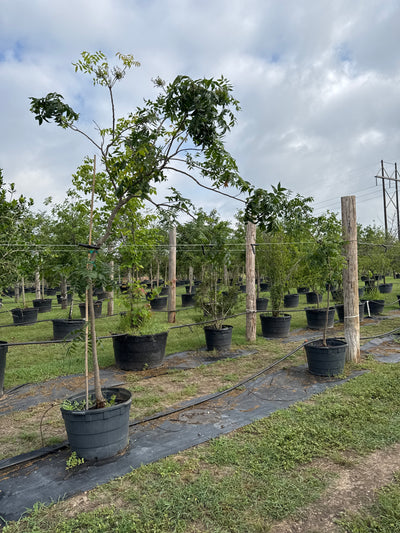

Jujube Honey Jar

Jujube Honey Jar
🌱 Planting Installation
The Honey Jar Jujube is a deciduous fruit tree that is the undisputed "dessert king". True to its name, the tree produces fruit that is incredibly sweet with a thin, delicate skin. Its texture is more akin to a high-end Asian Pear or a crisp apple than a traditional date, providing a refreshing "honey-water" burst when eaten fresh. It is a high-efficiency tree that often begins fruiting in its very first year after installation. It typically ripens earlier in the season than other varieties. Beyond its fruit, it is one of the most attractive trees. Its small, oval leaves have a high-gloss, mirror-like finish that reflects light, making the tree shimmer in the afternoon sun. The tree is naturally more compact and slower-growing than the 'Lang Jujube' making it the premier choice for urban "pocket" orchards, large patio containers, or smaller suburban landscapes where space is more limited.
| Scientific Name | Ziziphus jujuba 'Honey Jar' |
|
Foliage: Deciduous |
Leaves: Small, Oval, and Mirror-Glossy. They have a distinct "lacquered" look that reflects sunlight beautifully. Flowers: Tiny, Star-like, Yellow. Sweetly scented; they appear in clusters along the fruiting branchlets in late spring. Fruit: Round to Slightly Oval. Smaller than the Lang, but with a much thinner skin and an incredibly crisp, "shattering" crunch. Seeds: Small, Pointed Pit. Very small in proportion to the fruit, leaving more room for the sweet flesh. Bark: Zig-Zag and Gray-Brown. The branches have a more refined, delicate zig-zag pattern compared to the rugged Lang. |
| Mature Height | 10 – 15 feet (Naturally smaller and more "dwarf" than the Lang). |
| Mature Width (Spread) | 8 – 10 feet (A very manageable, compact canopy). |
| Growth Rate | Slow to Moderate. Focuses energy on fruit production early. |
|
USDA Zone/Chill Hours |
Zone 5 – 10 (Slightly more cold-hardy than some citrus; handles ice well). Requires 150 – 300 chill hours. Low requirement; very reliable in Southern climates. |
PLANT CARE & CHARACTERISTICS
Light Requirements: Full Sun. 6–8+ hours. Maximum sunlight is required to develop the high sugar levels that give this variety its name.
Water Requirements: Low to Moderate. Needs regular watering during the first two years to establish the root system and ensure juicy fruit.
Drought Resistance: High. Once established, it is exceptionally drought-tolerant, though supplemental water during fruit-set prevents fruit drop.
Soil Type: Adaptable / Well-Drained. Thrives in a wide range of soils, including alkaline and poor rocky soils. Avoid areas with standing water.
Deer Resistance: High. The combination of waxy leaves and a slightly thorny, zig-zag branch structure makes it unattractive to deer.
Pest/Disease Resistance: Excellent. Naturally resistant to most common orchard pests. It is virtually maintenance-free in terms of spraying.
Pollination: Self-Fertile. Produces well on its own, but planting near a 'Li' or 'Lang' can further increase the crop yield.
Harvest: Late Summer to Early Fall. Typically one of the earliest jujubes to ripen; fruit is ready when it reaches a "mottled" brown stage. This is the moment the sugars have peaked but the flesh remains at its crispest, most apple-like state.
YIELD
| Tree Age | Production Phase | Yield | Typical Use |
| Year 1-2 | Establishment | 3 – 6 lbs | Gourmet fresh snacking. |
| Year 3-4 | Sub-Mature | 15 – 25 lbs | Fresh eating & neighbor-gifting. |
| Year 5-7 | Productive | 30 – 45 lbs | Fresh eating & light preserving. |
| Year 10+ | Full Maturity | 60 – 80+ lbs | Maximum canopy capacity. |
STORAGE/SHELF LIFE
| Storage Method | Phase of Fruit | Shelf Life | Best Use Case |
| Countertop (Bowl) | Mottle-Brown (Fresh) | 3 – 4 Days | Peak flavor; best for immediate eating. |
| Refrigerator (Bagged) | Mottle-Brown (Fresh) | 2 – 3 Weeks | Top Choice: Retains the "snap" and juice. |
| Pantry (Air-tight) | Fully Dried | 6 – 8 Months | While sweet, it is smaller/airier than a dried Lang. |
| Frozen (Whole) | Fresh/Crisp | Not Recommended | Freezing ruins the unique "shattering" cell structure. |
PRUNING
1. The "Light & Airy" Center: Honey Jar leaves are smaller and glossier than other varieties, but the branches can grow very close together.
- The Action: Focus on removing "crossing" branches (branches that rub against each other).
- The Benefit: This prevents skin damage to the fruit. Because Honey Jar fruit is smaller and thinner-skinned than the Lang, wind-rub against a neighboring branch can cause scarring.
2. Encouraging "Fruiting Wood": Jujubes fruit on the current year's growth that emerges from older "spurs."
- The Strategy: Avoid the urge to "hedge" the tree (cutting all the tips off).
- The Technique: Instead, remove entire branches that are misplaced. This stimulates the tree to push out vigorous new fruiting shoots from the main scaffold branches.
3. Managing the "Thorny" Stage: When Honey Jar trees are young, they can be surprisingly "spiny."
- The Observation: As the tree matures and the wood gets thicker, these thorns often become less prominent or disappear on the main structural branches.
- The Maintenance: Prune out the most aggressive thorny "water sprouts" that shoot straight up from the center of the tree. These rarely produce good fruit and are a literal pain during harvest.
4. "Potted Specimen" Training
- The Technique: Use "Pinch-Pruning" during the summer. Simply pinch off the growing tips of branches once they reach the desired length.
- The Result: This forces the tree to stay incredibly dense and rounded, turning it into a "fruiting topiary" that fits perfectly on a patio.
PRUNING SUMMARY
| Pruning Type | Timing | Primary Goal |
| Thinning the "Brush" | Late Winter | Removing the very fine, twiggy growth that can make the interior too dense. |
| Height Management | Winter | Topping the main leader at 8–10 feet to keep all fruit within "arm's reach." |
| Limbing Up | Early Spring | Removing lower branches to create a clean trunk for a "tree-form" look. |