


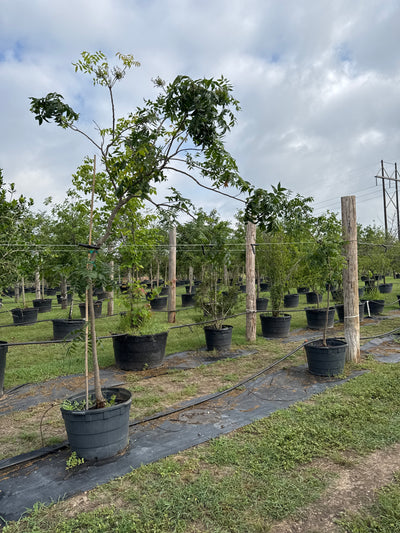


Crabapple Prairifire


Crabapple Prairifire
🌱 Planting Installation
The Prairifire Crabapple is widely considered one of the most stunning ornamental trees available. It was introduced by the University of Illinois and is famous for its "shimmering" intensity, as it is one of the few crabapples that features reddish-purple foliage and dark pink flowers simultaneously. One of the main reasons Prairifire is so popular is its excellent resistance to common apple diseases like Scab, Cedar-Apple Rust, and Mildew. It is much lower-maintenance than older crabapple varieties that often lose their leaves by mid-August due to fungus.
| Scientific Name | Malus x 'Prairifire' |
|
Foliage: Deciduous |
Leaves: Emerge as a deep maroon or purplish-red in spring, turn a dark green with purple veins in summer, and shift to a beautiful bronze-orange in the fall. Flowers: Unlike the white flowers of the 'Callaway,' the 'Prairifire' produces masses of dark pink to crimson-red flowers in the spring. Because the leaves emerge purple at the same time, the tree looks like it is "on fire" from a distance. Fruit: It produces small, 1/2-inch dark purple to shiny red fruits. These are "persistent" fruits, meaning they don't drop and make a mess on your lawn; instead, they stay on the tree to feed birds throughout the winter. Seeds: Teardrop or Oval-shaped. They are small, usually measuring about 3–5 mm in length. 3 to 8 seeds per fruit. Most Prairifire "pomes" (the botanical term for the fruit) contain a small central star-shaped chamber holding the seeds. Bark: As the tree matures, the bark becomes thin and develops a glossy, dark reddish-brown color with prominent horizontal pores (lenticels), similar to a cherry tree. |
| Life Span: Perennial | The Prairiefire crabapple has an expected lifespan of 50 years or more under ideal growing conditions. |
| Mature Height | 15-20 feet |
| Mature Width (Spread) | 15-20 feet |
| Growth Rate | Moderate |
| USDA Zone | Zone 4 – 8 |
| Chill Hours | Requires 800-1,000 chill hours (between 32-45 °F) to break dormancy and bloom properly in spring. If you are planting this tree in a borderline zone (like Zone 8), planting it on the north side of a building or in a spot that stays shaded and cool during the winter can help the tree "accumulate" those necessary cold hours more efficiently by preventing the afternoon sun from warming the bark. |
PLANT CARE & CHARACTERISTICS
Light Requirements: Full Sun. To get the best leaf color and the most intense flowering, it needs at least 6–8 hours of direct sun. In shade, the purple leaves will fade to a dull green.
Water Requirements: Moderate. It prefers consistent moisture. It is important to water at the base of the tree rather than over the leaves to prevent any potential fungal issues.
Drought Resistance: Moderate. Once the root system is established, it can handle short dry periods, but it will lose its vibrant color and "glow" if it becomes too stressed by heat.
Soil Type: Well-Drained. It is very adaptable to different soil types, including heavy clay, as long as it doesn't stay waterlogged. It prefers a slightly acidic soil but handles neutral-to-alkaline soils well.
Deer Resistance: Low. Deer are attracted to the fruit and the tender bark. Trunk protection is recommended for young trees during the winter months.
Pest/Disease Resistance: Moderate to High. Generally ignored by major pests, though it can occasionally attract Japanese Beetles or Aphids in early summer. Its dark foliage tends to be less attractive to leaf-eating insects than bright green varieties. It is highly resistant to the "Big Four" apple diseases: Apple Scab, Cedar-Apple Rust, Fire Blight, and Powdery Mildew. This makes it a "low-maintenance" landscape choice.
Pollination: Self-Fertile / Universal Pollinator. It produces an abundance of pollen and has a long bloom period, making it a "gold standard" pollinator for many edible apple varieties that bloom in mid-to-late spring.
Harvest: Because 'Prairifire' is primarily an ornamental tree, the "harvest" is usually defined by when the fruit reaches its peak color and when it is used by wildlife.
- Fruit Set (June): Tiny green marbles appear shortly after the petals fall.
- Color Transition (July – August): The fruit turns from green to a dark, shiny purplish-red.
- Maturity (September – October): The fruit is fully ripe. While edible for humans (best for jelly), it is very tart and firm at this stage.
- The "Persistent" Phase (November – February): This is a standout feature of 'Prairifire'. The fruit does not drop when it gets cold. It stays on the branches, providing "winter interest" for your landscape. Because 'Prairifire' fruit is "persistent" (it stays on the tree), you can harvest in stages without the fruit rotting on the ground.
- The Wildlife Harvest (Late Winter): After several freeze-thaw cycles, the fruit softens. This is when birds (cedar waxwings, robins) will typically "harvest" the tree, often stripping it clean in a single afternoon.
Edibility: While the fruit is technically edible, it is very small and quite tart. If you do harvest them for yourself, they are best used for Crabapple Jelly. Their high pectin content and deep red pigment create a clear, ruby-red jelly with a sharp, complex flavor.
YIELD
Because 'Prairifire' is primarily an ornamental crabapple with very small fruits (about 0.5 inches in diameter), its yield is rarely measured in pounds by commercial growers. However, for those harvesting for jelly or wildlife management, the weight increases significantly as the tree transitions from a narrow sapling to a spreading, rounded canopy. On average, a gallon of 'Prairifire' crabapples weighs approximately 5.5 to 6 lbs.
| Tree Age | Yield in Pounds (lbs) | Equivalent Volume |
| Year 1–2: Establishment. The tree is focusing on root and trunk caliper growth. | 0 – 1 lbs | A few handfuls |
| Year 3–4: Early Bearing. The first "ornamental" crop that is visible from a distance. | 5 – 15 lbs | 1 – 2.5 Gallons |
| Year 5–7: Adolescence. The canopy begins to broaden; fruit clusters become much denser on older wood. | 30 – 60 lbs | 5 – 10 Gallons |
| Year 10–12: Young Maturity. The tree is now a "cloud" of dark red fruit in autumn. | 100 – 150 lbs | 18 – 25 Gallons |
| Year 20+: Peak Maturity. At its full 20-foot height and spread, the tree produces massive quantities of persistent fruit. | 200 – 300+ lbs | 35 – 50+ Gallons |
*If you are harvesting for Crabapple Jelly, keep in mind that 10 lbs of fruit typically yields about 6 to 8 half-pint jars of jelly, depending on how much water you add during the initial boiling and straining process.
STORAGE/SHELF LIFE
The storage and shelf life of the 'Prairifire' Crabapple (Malus 'Prairifire') differ significantly from standard table apples. Because these fruits are small (about 0.5 inches), high in pectin, and very tart, they are "persistent," meaning they are naturally designed to stay on the tree through the winter.
| STORAGE METHOD | SHELF LIFE | NOTES |
| On the Tree (Persistent) |
4 – 5 Months | The fruit naturally "stores" on the branches from October through February. The cold weather acts as a natural preservative. |
| Countertop | 1 – 2 Weeks | Keep in a cool, dry spot. Because they are dense and low-moisture, they resist shriveling better than large apples. |
| Refrigerator | 1 – 2 Months | Store in a perforated plastic bag in the crisper drawer. They handle refrigeration exceptionally well due to their high acid content. |
| Freezer (Whole) |
8 – 12 Months | Wash and dry thoroughly. Freezing actually helps break down the cellular structure, making them easier to juice for jelly later. |
Critical Handling & Storage Tips
1. The "Natural Curing" Process: If you are harvesting for wildlife or for specialized culinary uses, leaving the fruit on the tree through a few light frosts (30°F–32°F) actually improves the "shelf life" by slightly concentrating the sugars and softening the tough outer skin.
2. Harvesting for Jelly: If you plan to make jelly, harvest the fruit when it is deep purple-red and firm (usually late September or October). Once the fruit has gone through several heavy freezes on the tree, the pectin levels can begin to degrade, which may result in a softer set for your preserves.
3. Avoid "Bruise Chains": Because these crabapples are so small, they are often harvested by the bucketful. Avoid piling them more than 6 inches deep in a container for long-term storage; the weight of the top layer can bruise the bottom fruit, leading to fermentation.
4. Pectin Retention: 'Prairifire' is prized for its high pectin. To maintain this for the longest period, keep the harvested fruit at a consistent 33°F - 38°F. Fluctuating temperatures will cause the fruit to "breathe" and lose its gelling properties faster.
5. Wildlife Storage: If your goal is to provide food for birds, the "shelf life" on the tree is your best asset. The fruit undergoes a natural freeze-thaw cycle that "bleets" the fruit (softens it). This makes the fruit palatable to birds like Cedar Waxwings in mid-winter when other food sources are scarce.
6. Identifying Spoilage
- Texture: If the fruit feels "hollow" or extremely mushy when squeezed, it has likely fermented or dried out past the point of culinary use.
- Color: Watch for a transition from deep, glossy red to a dull, matte brown. A brown internal color indicates the starches have oxidized and the flavor will be bitter.
PRUNING
1. Maintaining the "Spur" System: Like edible apples, 'Prairifire' produces flowers and fruit on fruiting spurs—short, stubby twigs that grow slowly off the main branches.
- The Goal: Do not "flush cut" these small spurs. They are the source of the tree's spectacular spring bloom.
- Thinning: If the canopy becomes too dense, remove an entire branch rather than "heading back" (shortening) every branch. This maintains the spurs on the remaining wood.
2. Airflow & Sunlight (The "Bird Flight" Rule): A well-pruned 'Prairifire' should have a canopy open enough that a small bird could fly through the center without hitting its wings.
- Crossover Branches: Remove branches that grow toward the center of the tree or rub against one another. Rubbing bark creates entry points for pests.
- Light Penetration: Ensuring light reaches the interior of the tree keeps the inner fruiting spurs productive and prevents them from dying off due to shade.
3. Managing the "V-Crotch": Watch for "included bark," where two main branches grow upward at a very sharp angle (forming a tight "V"). These joints are weak and prone to splitting during heavy ice or wind storms.
- The Fix: Prune one of the competing branches early in the tree’s life to encourage a wider, stronger "U-shaped" attachment.
4. Important Considerations for 'Prairifire'
- Avoid Late Summer Pruning: Pruning in late summer can stimulate a flush of new, tender growth that won't have time to "harden off" before the first freeze. This can lead to significant winter dieback.
- Fire Blight Precaution: Although 'Prairifire' is highly resistant to Fire Blight, it is still best practice to sanitize your tools with a 10% bleach solution or rubbing alcohol between cuts if you notice any blackened, "scorched" looking tips on the branches.
- Minimal "Heading": Avoid "topping" the tree. 'Prairifire' has a naturally graceful, spreading habit. Topping results in an explosion of weak, vertical water sprouts that ruin the tree's silhouette and reduce flowering.
5. The "Bottom-Up" Check: Check the very bottom of the trunk. 'Prairifire' is often grafted onto a hardy rootstock. If you see leafy shoots growing from the soil or the very base of the trunk, cut them off immediately. These "suckers" are not 'Prairifire' wood and will eventually outgrow and "choke out" the ornamental top if left alone.
PRUNING SUMMARY
| Type of Pruning | Timing | Purpose |
| Dormant Pruning | Late Winter / Early Spring | The best time for structural cuts. Pruning while the tree is dormant (before buds swell) minimizes stress and allows you to see the branch structure clearly. |
| Maintenance | Anytime | Immediate removal of the "3 Ds": Dead, Damaged, or Diseased wood. This keeps the tree’s energy focused on healthy growth. |
| Sucker/Water Sprout Removal | Late Spring / Summer | Removing vigorous, vertical shoots that grow from the base (suckers) or straight up from main branches (water sprouts). |


