


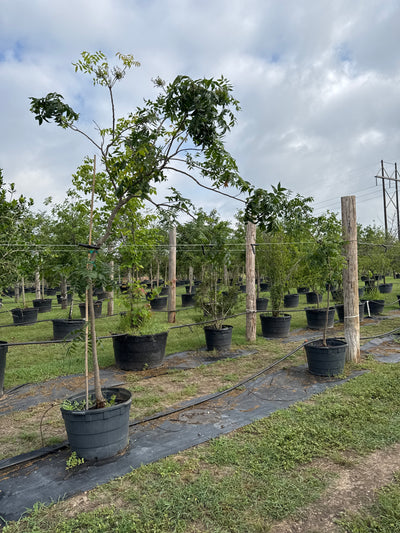


Crabapple Callaway


Crabapple Callaway
Location on Farm:
🌱 Planting Installation
The 'Callaway' Crabapple is widely considered one of the best crabapple varieties for the Southern United States. It was specifically developed at the Callaway Gardens in Georgia to thrive in warmer climates where other crabapples struggle with disease and lack of winter chill. If you enjoy bird watching, this is the tree for you. The red fruits are persistent (they stay on the tree for a long time) and serve as a vital food source for cedar waxwings, robins, and mockingbirds throughout the fall and winter. Because of its manageable size, it is a perfect "understory" tree or a focal point for a small front yard where a massive Oak or Cottonwood would be too large.
| Scientific Name | Malus x 'Callaway' |
|
Foliage: Deciduous |
Leaves: The leaves are simple and alternate, typically 2 to 4 inches long. They are a crisp, dark green with a clean, oval (elliptic) shape and serrated edges. In the fall, they turn a soft yellow, though the fall color is generally considered subtle rather than showy. Flowers: One of its most striking features. In early April, the tree is covered in soft pink buds that open into large (1–1.5 inch), snow-white single blossoms. They are highly fragrant and a major draw for bees and pollinators. Fruit: It produces abundant clusters of deep red, teardrop-shaped or round crabapples (about 1 inch in diameter). Unlike many ornamental varieties with tiny, bitter fruit, Callaway fruit is edible—crisp, sweet-tart, and often used for jellies, pickling, or fresh eating. Seeds: Like all members of the Malus genus, the fruit contains small, dark pips (seeds) within a central core. While the flesh is edible, the seeds contain trace amounts of cyanogenic glycosides and should not be consumed in large quantities. Bark: The bark is grayish-brown and relatively smooth when young, becoming slightly more textured as the tree matures. It is not considered "showy" bark, but the tree's rounded, symmetrical canopy and sturdy, thornless branches provide a pleasing silhouette in the winter. |
| Life Span: Perennial | The Callaway crabapple tree has an expected lifespan of 50 years or more under proper growing conditions and good care. |
| Mature Height | 15-25 feet |
| Mature Width (Spread) | 15-20 feet |
| Growth Rate | Moderate |
| USDA Zone/Chill Hours | Zone 5-9; Requires approximately 400-500 chill hours (32-45°F) |
PLANT CARE & CHARACTERISTICS
Light Requirements: Full Sun. Like all fruiting trees, it needs at least 6–8 hours of direct sun to produce its spectacular bloom and keep the foliage dense.
Water Requirements: Moderate. It prefers regular watering, especially during the hot summer months. Once established, it is moderately drought-tolerant, but "stressed" trees are more prone to pests.
Drought Resistance: Moderate. It handles short dry spells well, but in a true drought, it will need supplemental deep soaking to prevent early leaf drop.
Soil Type: Well-Drained & Loamy. It prefers rich, slightly acidic soil but is remarkably adaptable to the heavier clay soils often found in the South.
Deer Resistance: Low to Moderate. Deer love the tender spring buds and the fallen fruit. You may need to protect the trunk of young trees with a cage or wrap.
Pest/Disease Resistance: This is the 'Callaway's' superpower. It is highly resistant to Fire Blight and Apple Scab, two diseases that often ruin other crabapple varieties in humid climates.
Pollination: Self-fertile, meaning it can produce fruit without a partner. Because its bloom time is consistent and early (starting in early April), it is an excellent "universal pollinator" for many other apple trees in your orchard that bloom in the early-to-mid season (like your 'Anna' , 'Fuji', 'Gala', or 'Ein Shemer').
Edibility: Yes, you can eat Callaway crabapples; they are known for being sweeter and less tart than many other crabapples, with crisp, yellow flesh, making them suitable for fresh eating, jams, jellies, sauces, or pickling, though you should still remove the core and seeds before consuming.
Harvest: The fruit typically matures in late summer to early fall (August to September). Unlike some fruit trees that drop their entire crop in a two-week window, the Callaway has a very "extended" presence in the garden.
- Early September: The first fruits reach full size and turn deep red. This is the Primary Harvest Window for kitchen use (jelly, pickling). About 70% of the usable fruit is ready now.
- Late September to October: The remaining fruit reaches peak sugar content. If not picked, it begins to soften slightly on the branch.
- November to January: The "Persistent Fruit" Phase. While the yield for human consumption ends by October, the tree maintains its "yield" for wildlife. The fruit clings to the branches through freezes, providing a steady food source for birds throughout the winter.
YIELD
| Tree Age | Yield |
What to Expect |
| Years 1–2 | Minimal to None | The tree is establishing its root system. You might see a few "test" flowers, but it's best to pinch them off to focus energy on growth. |
| Year 3 | 5–10 lbs | This is usually the first "real" harvest. You'll get enough for a few jars of jelly. |
| Years 5–7 | 30–50 lbs | The tree is entering its teenage years. The canopy is filling out, and the "snowstorm" of white blooms will be significant. |
| Year 10+ | 80–120+ lbs | Full maturity. At this stage, the tree will produce a massive canopy of red fruit that can actually weigh down the branches. |
Factors That Influence Your Yield
The "Annual" Habit: Some apples (like the Honeycrisp) are biennial, meaning they give a huge crop one year and almost nothing the next. The Callaway is a consistent annual bearer, meaning you can plan on a similar yield every single autumn.
Pollination Boost: While Callaway is self-fertile, having your Anna or Ein Shemer apples nearby will actually increase the fruit set on the Callaway. Cross-pollination usually results in larger fruit and a higher percentage of flowers turning into crabapples.
Water Stress: Because crabapples are small, they are sensitive to late-summer droughts. If August is very dry, the tree may drop its fruit early (reducing your yield) to protect itself. Consistent watering during the "swelling" phase in August ensures the heaviest harvest.
STORAGE/SHELF LIFE
| STORAGE METHOD |
SHELF LIFE | NOTES |
| Countertop | 3–5 Days | They soften much faster than standard apples due to their small size. |
| Refrigerator | 3–4 Weeks | Keep them in a perforated plastic bag in the crisper drawer. They maintain their tart "snap" well in cold storage. |
| Freezer | 8–12 Months | Excellent for freezing whole (for later jelly making) or as a prepared pulp/sauce. |
Storage Tip: If the fruit is exposed to a hard frost while still on the tree, the shelf life drops significantly. Use frost-nipped berries immediately for cider or sauce, as they will turn brown and mushy within days if refrigerated.
PRUNING
1. The Golden Rule: Late Winter Pruning-The best time to prune your Callaway is in late January or February, while the tree is still dormant but just before the sap starts to flow.
- Why: Pruning in the summer can stimulate new growth that won't harden off before winter, and pruning in the spring can open the tree up to infections while the "snow-white" blossoms are active.
2. The Three "Ds" (First Priority): Before you start shaping the tree, always remove branches that fit into these three categories:
- Dead: Brittle branches that have no green underneath the bark.
- Damaged: Branches cracked by wind or heavy fruit loads from the previous year.
- Diseased: Though rare for Callaway, keep an eye out for any "cankers" or shriveled black tips.
3. Managing the "Structure": The Callaway has a naturally dense, rounded canopy. If it gets too dense, the fruit in the middle won't turn red and the air won't circulate, which can lead to mildew.
- Thinning the Center: Look for branches that are growing inward toward the trunk or crossing/rubbing against each other. Remove the weaker of the two crossing branches.
- Suckers and Water Sprouts: Callaway is a vigorous grower. Remove "suckers" (shoots growing from the base of the trunk) and "water sprouts" (straight, vertical shoots growing off the main branches). These drain energy without producing flowers or fruit.
- Opening the "Bowl": Aim for an "open center" or "modified leader" shape. This allows the sun to hit the interior fruit, increasing the sugar content for your jellies.
4. Pruning for Fruit vs. Flowers
- The "Short Spur" Rule: Most of your crabapples will grow on "spurs"—short, stubby little twigs that stay on the tree for years. Do not prune these off. If you "haircut" the outside of the tree with shears (like a hedge), you will cut off all the fruiting spurs and get zero harvest.
- Heading Back: If a branch is getting too long and "leggy," cut it back to a side bud that is pointing away from the center of the tree. This keeps the growth moving outward and keeps the tree manageable at its 15–25 ft height.
PRUNING CHECKLIST
| Feature | Action | Frequency |
| Suckers | Cut flush to the trunk/ground | Every Year (Summer or Winter) |
| Crossing Branches | Remove the one growing inward | Every Winter |
| Water Sprouts | Cut back to the main branch | Every Winter |
| Fruiting Spurs | DO NOT CUT | Always Protect |