


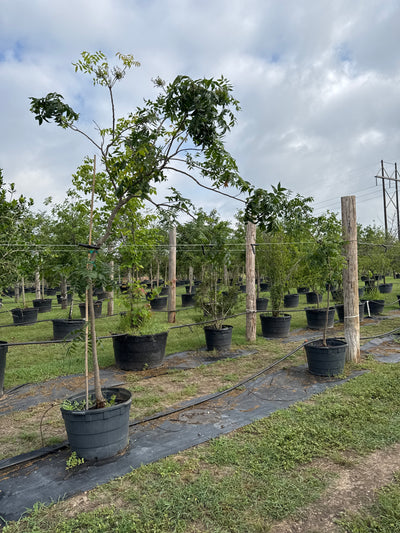

Plum Ozark Premier

Plum Ozark Premier
🌱 Planting Installation
The Ozark Premier Plum is a standout in any orchard, known for producing some of the largest fruit of any Japanese-type plum. It is a cross between the 'Burbank' and 'Methley'. Ozark Premier Plum trees typically produce medium-sized, reddish-purple fruit with yellow flesh that can be up to the size of a peach. The fruit is known for its sweet, juicy flavor. Ozark Premiers are particularly valued for their "precocity," frequently beginning to bear fruit within just a year or two of installation. The tree itself is deciduous, featuring ovate, glossy green leaves that turn yellow in the fall. In spring, it produces fragrant white flowers, adding ornamental value to the landscape.
|
Scientific Name |
Prunus salicina 'Ozark Premier' |
|
Foliage: Deciduous |
Leaves: Large, bright green, and oval-shaped with pointed tips. The foliage is notably dense, providing excellent sun-scald protection for the fruit. Flowers: Prolific clusters of fragrant, white blossoms. Because it requires more chill hours, it blooms later in the spring, often escaping late frosts. Fruit: Extremely large. The skin is a beautiful mottled red-to-bright red. The flesh is yellow, firm, and exceptionally juicy. Seeds: A single, semi-clingstone pit. The stone is relatively small compared to the massive size of the fruit. Bark: Smooth and dark reddish-brown when young; develops a textured, plated appearance with age. |
|
Mature Height |
12 – 15 feet (Naturally more compact than 'Santa Rosa'). |
|
Mature Width (Spread) |
12 – 15 feet (Spreading, rounded canopy). |
|
Growth Rate |
Moderate to Fast. Robust grower that fills out quickly. |
|
USDA Zone/Chill Hours |
Zone 5 – 9 (Excellent cold hardiness for a Japanese plum); Requires 700 – 800 hours (High chill; blooms later than Santa Rosa). |
PLANT CARE & CHARACTERISTICS
Light Requirements: Full Sun. Minimum 6–8 hours daily for maximum fruit size and sugar development.
Water Requirements: Moderate to High. Needs deep, consistent watering during the "fruit swell" (May–June).
Drought Resistance: Low to Moderate. While the tree is hardy, drought will cause the massive fruits to drop prematurely.
Soil Type: Well-Drained. Prefers fertile, sandy loams. Extremely sensitive to "wet feet" or standing water. Amending the soil with organic matter, such as compost or aged manure, can improve soil structure and fertility, promoting healthy growth and fruit production.
- Soil Drainage is Non-Negotiable: In your landscaping plans, ensure these trees are never planted at the bottom of a slope or in a "sump" area. If the soil is heavy clay, consider planting the root ball in a raised mound (3–4 inches above the surrounding grade). This ensures the "crown" stays dry and prevents the root rot that frequently kills Japanese plums in wet winters.
Deer Resistance: Low. Like most stone fruits, the sweet foliage and ripening fruit are highly attractive to deer.
Pest/Disease Resistance: Good. Known for better resistance to Bacterial Leaf Spot than many other Japanese plums.
Pollination: While the Ozark Premier is partially self-fertile, it performs significantly better when planted near another Japanese plum. Planting this alongside a Santa Rosa or Methley will ensure a massive, consistent crop every year.
Harvest: Mid-to-Late Summer. Typically ripens in late July to early August, shortly after the Santa Rosa.
3 Management Essentials for the Ozark Harvest
1. The "Color Break" Harvest: Ozark Premier plums have a "mottled" look (red streaks over a greenish-yellow background).
- The Trick: Do not wait for the plum to be 100% solid red. When the background color shifts from bright green to creamy yellow, the sugars are peaked. If you wait for deep red, the fruit may become "mealy" or over-soft on the branch.
2. Handling the "Jumbo" Weight: Because these plums are so large, they are prone to "internal breakdown" if left in the sun after picking.
- The Protocol: Harvest in the cool of the morning and get them into the shade or refrigerator immediately. The heat from a July afternoon can literally "cook" the sugars inside a large plum, shortening its shelf life to hours.
3. The "Soft-Shoulder" Test: To check for ripeness without bruising the fruit, press gently near the stem end (the "shoulders" of the plum). If there is a slight give, the fruit is ready for fresh eating.
YIELD
| Tree Age | Production Phase | Yield (Lbs) | Estimated Fruit Count |
| Year 1 | Establishment | 8 – 15 lbs | 15 – 30 jumbo plums |
| Year 2 | Expanding | 35 – 60 lbs | 70 – 120 jumbo plums |
| Year 3 | Sub-Mature | 80 – 140 lbs | 160 – 280 jumbo plums |
| Year 4 | Sub-Mature | 175 – 275 lbs | 350 – 550 jumbo plums |
| Year 5+ | Full Maturity | 350 – 500+ lbs | 700 – 1,000+ jumbo plums |
STORAGE/SHELF LIFE
| STORAGE METHOD | SHELF LIFE | NOTES |
| Countertop (Room Temp) | 2 – 3 Days | Use only to soften slightly firm fruit. Watch for bruising. |
| Refrigerator (33°F - 38°F) | 10 – 14 Days | Keeps the flesh firm. Best stored in a single layer if possible. |
| Sliced & Frozen | 12 Months | Ideal for "plum crumbles" or preserves due to high juice content. |
| Canning / Preserves | 1 – 2 Years | Excellent for jams; the skin provides a beautiful red tint. |
PRUNING
1. The "Heading Back" Technique: In the first two years after installation, the Ozark Premier tends to grow long, thin "whips."
- The Cut: Prune back the previous year’s growth by 50%.
- The Benefit: This "shocks" the branch into thickening up (increasing its diameter) rather than just getting longer. A thick, "burly" branch can support a 40-lb cluster of jumbo plums; a thin, whip-like branch will snap.
2. Widening the "Crotch Angles": The Ozark Premier can sometimes develop narrow "V" shapes where the branches meet the trunk.
- The Action: Use branch spreaders or prune to an outward-facing bud.
- The Goal: You want a wide "U" shape at the base of each branch. This is the strongest structural connection for a tree that produces "trophy-sized" fruit.
3. Maintaining the "Open Center": Like all Japanese plums, the Ozark Premier needs maximum sunlight to develop its mottled red skin color and high brix (sugar) levels.
- The Protocol: Remove any vertical "water sprouts" that grow straight up into the center of the vase.
- The Rule of Thumb: A bird should be able to fly through the center of the tree without hitting a branch. This airflow also prevents Brown Rot, which can plague large-fruited plums in humid summers.
4. Thinning for Structural Safety: This is the most critical "pruning" step for the Ozark Premier.
- The Technique: When the plums are the size of a cherry (May), remove enough fruit so that they are spaced 6 to 8 inches apart.
- The Warning: Because these plums get so large, they will literally push each other off the branch or "cluster" together, creating a perfect environment for pests and rot if not thinned aggressively.
PRUNING SUMMARY
| Pruning Phase | Timing | Primary Goal |
| Structural Training | Late Winter (Dormant) | Hard-heading to thicken the main branches. |
| Spur Management | Late Winter | Thinning the fruiting spurs to prevent overcrowding. |
| Height Control | Summer (Post-Harvest) | Topping the "whips" to keep fruit within reach. |