


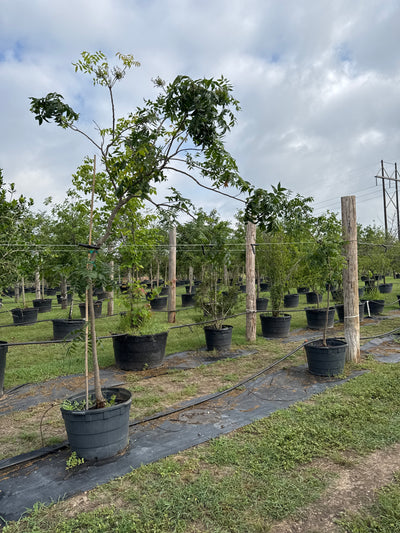

Plum Burbank


Plum Burbank
🌱 Planting Installation
The Burbank Plum is a historic Japanese-type variety developed by the legendary Luther Burbank himself. It is renowned for its reliable, heavy crops and its "spreading" growth habit, which makes it an excellent choice for home orchards where a lower, wider canopy is desired for easy harvesting. The tree features dark green, ovate leaves that turn yellow in the fall before dropping. In early spring, it produces showy white flowers that are attractive to bees and other pollinators. The fruit ripens in mid to late summer, depending on the climate, and is round to oval in shape with a dark purple skin and yellow to red flesh. The flesh is sweet, juicy, and aromatic, making it ideal for fresh eating, baking, canning, and preserves.
|
Scientific Name |
Prunus salicina 'Burbank' |
|
Foliage: Deciduous |
Leaves: Medium-sized, bright green, and lance-shaped with finely serrated margins. The foliage turns a soft yellow in the autumn. Flowers: Showy, pure white blossoms that emerge in early spring. They are highly aromatic and completely cover the dark wood. Fruit: Large, heart-shaped to round fruit with reddish-purple skin over a yellow background. The flesh is deep amber and very juicy. Seeds: A single, small clingstone pit. The stone is notably small for the size of the fruit. Bark: Dark reddish-brown and relatively smooth when young; develops rougher, horizontal lenticels and a fissured texture with age. |
|
Mature Height |
12 – 15 feet (Naturally low-growing and manageable). |
| Mature Width (Spread) | 12 – 15 feet (Often wider than it is tall). |
|
Growth Rate |
Moderate. Focuses on lateral branching over vertical height. |
|
USDA Zone/Chill Hours |
Zone 5 – 9 (Very adaptable to varied climates). Requires 400 – 500 hours (Low-to-moderate requirement). |
PLANT CARE & CHARACTERISTICS
Light Requirements: Full Sun. Minimum 6–8 hours of direct sunlight for optimal fruit size and sugar development.
Water Requirements: Average. Regular, deep watering is required, especially during the first two seasons and while fruit is developing in summer.
Drought Resistance: Moderate. Once established, it is relatively resilient, though consistent moisture is necessary to prevent fruit drop or shriveling.
Soil Type: Well-Drained Loam. Prefers slightly acidic to neutral soils (pH 6.0–7.0). Tolerates sandy or chalky soils if drainage is good. Amending the soil with organic matter such as compost or aged manure can improve soil fertility, drainage, and structure.
Deer Resistance: Low. Like most stone fruits, the new spring growth and ripening fruit are highly attractive to deer; protection is recommended.
Pest/Disease Resistance: Good. Demonstrates better resistance to common plum diseases than many older varieties; however, watch for aphids and brown rot in humid climates.
Pollination: Partially self-fertile, the Burbank performs significantly better (and often requires) a cross-pollinator. The best partners for the Burbank Plum are 'Santa Rosa', 'Methley', or 'Ozark Premier', as they bloom at the same time and exchange pollen effectively.
Harvest: Mid-to-Late Summer. Typically ripens in July or August, providing a heavy crop that may require multiple pickings. Unlike the Santa Rosa, which often ripens its entire crop in 10 days, the Burbank can be picked over a 2-to-3 week window.
YIELD
| Tree Age | Production Phase | Yield (Lbs) | Estimated Fruit Count |
| Year 1 | Establishment | 5 – 12 lbs | 20 – 50 plums |
| Year 2 | Expanding | 25 – 45 lbs | 100 – 180 plums |
| Year 3 | Sub-Mature | 60 – 100 lbs | 250 – 400 plums |
| Year 4 | Sub-Mature | 120 – 180 lbs | 500 – 750 plums |
| Year 5+ | Full Maturity | 200 – 300+ lbs | 800 – 1,200+ plums |
STORAGE/SHELF LIFE
| STORAGE METHOD | SHELF LIFE | NOTES |
| Countertop (Room Temp) | 3 – 5 Days | Let them sit until the skin loses its high-gloss sheen. |
| Refrigerator (33°F - 38°F) | 2 – 3 Weeks | Best kept in the crisper drawer; avoids "shriveling." |
| Frozen (Pitted) | 12 Months | Holds shape well for winter tarts and cobblers. |
| Preserves / Jams | 2 Years | High pectin content makes for an excellent set without extra additives. |
PRUNING
1. Counteracting the "Weeping" Habit: The Burbank often sends out long, thin branches that curve toward the ground.
- The Cut: Always prune to an upward-facing bud.
- The Logic: This forces the new growth to head toward the sky before the weight of the fruit pulls it down. If you prune to a downward bud, the branch will eventually touch the mulch, inviting pests and rot.
2. Hard Heading for Structural Strength: In the first two years after installation, do not be afraid to be aggressive.
- The Action: Cut the previous year's long growth back by 50%.
- The Result: This causes the remaining branch to "girth up" and become thick and woody. A thick branch acts as a "cantilever" that can hold heavy clusters of plums without breaking.
3. The "Light Window" Management: Because the Burbank has such dense foliage, the interior spurs often "blind" (die off) due to lack of light.
- The Protocol: Thin out the center of the vase so that dappled sunlight hits the main trunk.
- The Pro-Tip: If you see a branch growing directly toward the center of the tree, remove it entirely. You want the tree to look like a wide-rimmed bowl.
4. Managing the "Spur-Overload": After a few years, a single branch might be covered in hundreds of tiny fruiting spurs.
- The Maintenance: If the spurs become too crowded (closer than 2 inches apart), use your snips to remove every third spur.
- The Payoff: This directs the tree's energy into the remaining spurs, resulting in the "Jumbo" size fruit the Burbank is capable of producing.
PRUNING SUMMARY
| Pruning Phase | Timing | Primary Goal |
| Heading Back | Late Winter | Shortening long "weepers" to stiffen the wood. |
| Spur Preservation | Late Winter | Identifying and protecting the 2-to-4 inch fruiting spurs. |
| Thinning | Summer (Post-Harvest) | Removing vertical "water sprouts" to let light into the center. |