


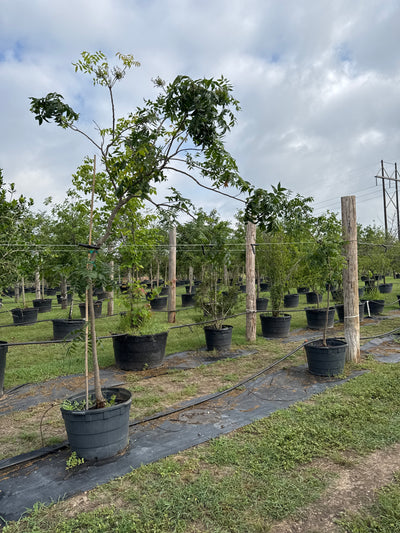

Cherry Sweet Southern

Cherry Sweet Southern
🌱 Planting Installation
The Cherry Sweet Southern (often referred to as the Minnie Royal or Royal Lee pairing, as they are the primary "Low-chill" sweet cherries) is a breakthrough for warmer climates. Unlike traditional Bing cherries that require long, cold winters, these varieties are bred specifically to produce high- quality fruit in areas with mild winters. Sweet Southern cherries are perfectly suited for Texas gardens and warm climates. This variety produces abundant yields of sweet, dark cherries ideal for fresh eating, baking, and preserving. It is known for its vigorous growth, disease resistance, and manageable height, making harvesting convenient for harvesting. It's an excellent choice for home orchardists seeking reliable production and exceptional flavor as well curb appeal with its beautiful blossoms and foliage.
|
Scientific Name |
Prunus avium (Specific low-chill cultivars like 'Minnie Royal' or 'Royal Lee') |
|
Foliage: Deciduous |
Leaves: Ovate and serrated. Deep green with a pointed tip and jagged edges. They provide a lush canopy and turn yellow or orange in late autumn. Flower: Showy white clusters. Small, five-petaled blossoms that appear in early spring. They are highly fragrant and a major draw for pollinators. Fruit: Medium-sized and firm. Typically a deep, glossy red to maroon. They have a classic sweet-tart cherry flavor and a "snappy" skin. Seeds: Single hard stone (pit). Centrally located, smooth, and light tan. The pit is relatively small compared to the amount of flesh. Bark: Smooth and reddish-brown. Features prominent horizontal slits called lenticels. As the tree ages, the bark may become slightly fissured or papery. |
|
Mature Height |
12-15 feet (semi-dwarf); 20-25 feet (standard) |
|
Mature Width (Spread) |
6-15 feet (depending on pruning and spacing) |
|
Growth Rate |
Fast-growing; can grow 1-2 feet per year under ideal conditions. |
|
USDA Zone/Chill Hours |
Zone 7-10; 200 – 300 chill hours. Exceptionally low compared to the 700–1000 hours required by traditional cherries. |
PLANT CARE & CHARACTERISTICS
Light Requirements: Full sun. Minimum of 6–8 hours of direct sunlight. Good light penetration is essential for fruit bud development and preventing fungal issues
Water Requirements: Moderate to High. Requires deep, regular watering, especially during the first 3 years. Soil should remain moist but never waterlogged. Like all cherry trees, "Sweet Southern" varieties are extremely intolerant of "wet feet." They must be planted in well-drained soil or on a slight mound to prevent root rot.
Drought Resistance: Low. Like most stone fruits, they have a relatively shallow root system. Prolonged dry spells will cause fruit drop and can lead to "sunscald" on the bark.
Soil Type: Well-drained, loam. Prefers slightly acidic to neutral soil, with an ideal pH between 6.0 and 7.0. They thrive in sandy loam or loamy soils but are adaptable, provided the soil does not stay waterlogged or overly compacted. They are extremely sensitive to "wet feet" and heavy clay; planting on a slight mound is often recommended.
- The "Mound" Method: If your soil has any drainage issues, plant your cherry tree on a mound about 12–18 inches high and 3 feet wide. This ensures the "crown" of the tree stays dry, preventing the most common cause of death: root rot.
- Mulching: A thick 3-inch layer of wood chips or straw around the base (but not touching the trunk) is vital in the South. It keeps the roots cool during 90°F+ days and maintains the consistent moisture these trees crave.
Deer Resistance: Low. Deer find the sweet, young foliage and developing fruit highly attractive. Protective fencing is usually necessary for young trees.
Pest/Disease Resistance: Moderate. Generally resistant to many common cherry issues, but can be susceptible to Aphids, Bacterial Canker, or Birds during harvest.
- Bird Protection: Because these cherries ripen so early in the season, they are a primary target for local birds. Using bird netting or reflective flash tape once the fruit starts turning red is highly effective for saving your harvest.
Pollination: Cross-Pollination Required. Most Southern varieties are not self-fertile. 'Minnie Royal' and 'Royal Lee' must be planted together to produce fruit.
Harvest: Early Season. Typically ripens in May or June. This early harvest is an advantage, as the fruit matures before the most intense mid-summer heat hits.
Harvesting Tips
Sweet Southern cherries do not continue to ripen after being picked. For the best flavor, wait until the fruit is firm but fully colored (deep red to maroon). Taste one or two first; if they are still tart, give the tree another 48 hours of sun.
The Stem Test: A fresh Sweet Southern cherry should have a bright green, flexible stem. If the stem is brown, brittle, or shriveled, the fruit is nearing the end of its shelf life.
The Skin Test: Look for a glossy, taut surface. If the skin looks dull or wrinkled, the cherry has lost its internal moisture and will likely be "mealy" rather than "snappy."
YIELD
| Tree Age | Yield Expectation | Growth Status |
| Year 1 | 0 lbs | Establishment. Focus is entirely on root development and structural branching. Remove any "scout" flowers to save the tree's energy. |
| Year 2 | 0 – 2 lbs | First Taste. You may see a handful of cherries. The tree is still building the "spurs" (short fruiting stems) that will bear future crops. |
| Year 3 | 5 – 15 lbs | Adolescence. The canopy is filling out. If pollination conditions are good (bees are active), you will see a noticeable jump in fruit count. |
| Year 4 – 5 | 20 – 40 lbs | Young Maturity. The tree is now a consistent producer. At this stage, bird protection becomes a "must" to actually harvest this volume. |
| Year 6+ | 50 – 100+ lbs | Peak Production. A fully mature, well-pruned Sweet Southern cherry tree can produce several bushels of fruit annually. |
STORAGE/SHELF LIFE
Sweet Southern cherries (like 'Minnie Royal' and 'Royal Lee') are highly perishable because they ripen during the onset of the early summer heat. Unlike some other fruits, cherries do not continue to ripen once they are picked, so their shelf life begins the moment they leave the tree.
| STORAGE METHOD | SHELF LIFE | NOTES |
| Countertop | 2 – 4 Days | Keep in a cool, dark area. Room temperature causes cherries to lose their "snap" and sweetness very quickly. |
| Refrigerator | 7 – 14 Days | Store in a plastic bag or container in the crisper drawer. Keep them as cold as possible (ideally 32°F - 36°F). |
| Freezer | 10 – 12 Months | Pit them first for easier use later. Freeze in a single layer on a tray before transferring to a freezer-safe bag. |
Critical Handling Tips for Maximum Shelf Life
1. Keep the Stems On: Always harvest or buy cherries with the stems attached. Removing the stem creates a "wound" at the top of the fruit that allows bacteria to enter and moisture to escape, cutting the shelf life in half.
2. The "Don't Wash" Rule: Never wash your cherries until right before you are ready to eat them. Moisture trapped in the stem cavity or on the skin is the primary cause of mold and "pitting" (sunken spots) in the fridge.
3. Absorb the Ethylene: Cherries are sensitive to ethylene gas produced by other fruits like ripening bananas or apples. Keep them in their own drawer to prevent them from softening prematurely.
4. Check for "Leakers": Before putting a harvest in the fridge, quickly sort through them. One crushed or "leaking" cherry can cause a fungal chain reaction that spoils the entire batch within 48 hours.
PRUNING
Pruning a Sweet Southern Cherry (such as 'Minnie Royal' or 'Royal Lee') is essential for maintaining tree health and ensuring high fruit yields. Unlike some fruit trees that require heavy annual thinning, sweet cherries are pruned to balance light penetration with the protection of their sensitive, thin bark.
| Type of Pruning | Timing | Purpose |
| Formative | Late Winter (Dormant) | To establish a strong "Central Leader" or "Open Vase" shape during the first 3 years of growth. |
| Maintenance | Summer (Post-Harvest) | Removing the "3 Ds" (Dead, Damaged, Diseased) and thinning the canopy to allow light to reach the inner fruiting spurs. |
| Size Control | Late Summer | Reducing the height of the tree to keep the harvest reachable and to prevent the tree from becoming "top-heavy." |
Key Strategies for Success
1. The "Open Center" vs. "Central Leader"
- Open Center (Vase): Most common for home orchards. By removing the central trunk and encouraging 3–5 main scaffold branches, you allow maximum sunlight into the middle of the tree. This is vital for ripening cherries and preventing fungal diseases.
- Central Leader: Best for smaller spaces. The tree grows like a Christmas tree with one main trunk. This requires more careful management of horizontal "fruiting" branches.
2. Protecting the Fruiting Spurs: Sweet Southern cherries produce most of their fruit on spurs—short, stubby woody growths that look like "clusters" of buds.
- The 5-Year Rule: These spurs can produce fruit for 5 years or more. When pruning, be careful not to "strip" the branches clean, or you will remove several years of potential harvests.
- Renewal: Every year, aim to remove about 10–15% of the oldest, least productive wood to encourage the tree to grow fresh, vigorous new spurs.
3. Summer Pruning in the South: In warmer climates, many growers prefer summer pruning (immediately after the May/June harvest).
- Disease Prevention: Pruning in dry summer weather reduces the risk of Bacterial Canker, a common cherry disease that enters through fresh cuts during wet winter months.
- Growth Suppression: Cutting in the summer slows the tree down, making it easier to keep the tree at a manageable 12–15 foot height.
4. Critical Precautions
- Sunscald Awareness: Since the bark of Southern cherries is thin, heavy pruning that suddenly exposes the main trunk to intense summer sun can cause the bark to crack. If you prune heavily, consider "whitewashing" the trunk with a 50/50 mix of white interior latex paint and water.
- Sharp, Clean Tools: Always use bypass pruners (not anvil style) to ensure clean cuts that heal quickly. Sanitize your blades with rubbing alcohol between trees to prevent the spread of pathogens.
- Heading Back: If a branch grows longer than 3 feet in a single season, "head it back" by 25%. This forces the branch to stiffen up so it won't snap under the weight of a heavy cherry crop.
5. Fruit Thinning: Unlike peaches, cherries generally do not require heavy thinning. However, if the tree is over-loaded in Year 3, removing some small green fruit can prevent branch breakage and ensure the remaining cherries reach a larger size.