


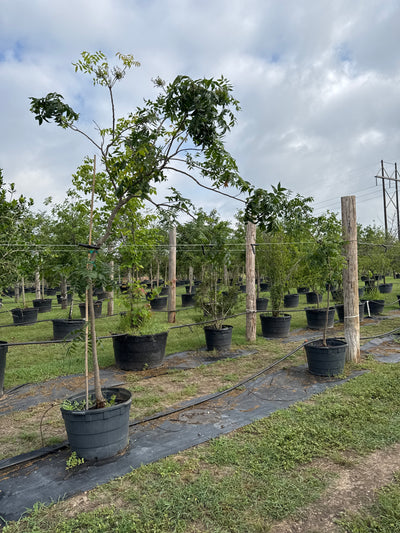

Cactus Cholla


Cactus Cholla
🌱 Planting Installation
The Cholla Cactus (genus Cylindropuntia) is an intensely spiny, desert-dwelling plant native to the arid American Southwest and northern Mexico. Known for its incredible toughness, it is a definitive symbol of the rugged desert landscape. Unlike flat-padded prickly pears, Chollas are made up of cylindrical, jointed segments that branch out aggressively. Depending on the species, they can grow as low, sprawling ground covers (2 to 3 feet tall) or mature into impressive, tree-like structures reaching 8 to 15 feet tall with a thick, woody central trunk. The entire plant is heavily armored in silver or golden spines covered in microscopic, backward-facing barbs. The joints detach so easily when brushed by a passing animal or hiker that the cactus is famously rumored to "jump." The Cactus Cholla reveals brilliant cup-shaped flowers at the tips of the stems in late spring, displaying vivid colors ranging from neon magenta and pink to bright yellow and bronze. When a Cholla eventually dies and decomposes, its flesh rots away to reveal a highly prized, hollow woody skeleton featuring an intricate, geometric lattice pattern. In short, the Cholla is a fascinating, low-maintenance desert icon—uniquely beautiful when in full spring bloom, structurally striking in a rock garden, and armed with one of the most formidable natural defense systems in the plant kingdom.
| Scientific Name | Cylindropuntia spp. (e.g., C. imbricata or C. bigelovii) |
|
Foliage: Evergreen |
Leaves/Spines: True leaves are tiny, fleshy, and cone-shaped, appearing briefly only on very young, new green growth segments before quickly dropping off. The permanent "foliage" consists of heavy clusters of sharp, stiff spines covered in a papery, removable sheath. At the base of these spines are glochids—nearly invisible, fuzzy, barbed hairs that effortlessly "latch on" to skin or fur with the slightest touch, making it feel like the segment "jumped" onto you. Flowers: Showy, cup-shaped flowers (1 to 2 inches wide) emerge at the very tips of the jointed stems from mid-spring to early summer. Depending on the specific species, flower colors range from brilliant magenta, pink, and red to yellow-green or pale bronze. Fruit: Forms a fleshy, egg-shaped, or cylindrical berry that can be smooth or heavily armed with small spines. As they mature, they turn a bright yellow or yellow-green. On many species (like the Chain-Link Cholla), new flowers grow directly out of the previous year's fruit, forming long, hanging chains of fruit that can persist for years. Seeds: Inside the mature fruit are numerous flat, pale tan to cream-colored seeds. However, Chollas rarely rely on seeds to spread; they primarily reproduce vegatatively—their joints snap off easily when brushed by an animal and take root wherever they land on the desert floor. Bark/Skeleton: As the cactus ages, its lower base thickens into a solid, woody, tree-like trunk. The outer layer becomes a rough, gray-brown, weathered bark. When a Cholla dies and decomposes, it leaves behind a striking, hollow "wood skeleton" characterized by an intricate, geometric lattice pattern of open holes. |
| Lifespan: Perennial | Long-lived desert survivors; typically lives for 30 to 70+ years. |
| Mature Height | Varies dramatically by species. Low-growing types stay around 2 to 3 feet tall, while arborescent (tree-like) species can reach 8 to 15 feet tall. |
| Mature Width (Spread) | 3 – 6 feet (Often spreads horizontally into formidable, impenetrable thickets as detached joints root next to the parent plant). |
| Growth Rate | Slow to Moderate; Usually grows 2 to 5 inches per year in terms of joint elongation, though growth slows down significantly during extended drought periods. |
| USDA Zone | Zone 5 – 11 (Highly species-dependent. The Cane Cholla is exceptionally cold-hardy down to Zone 5 (-20°F / -29°C), while the Teddy Bear Cholla is tender and restricted to the hot deserts of Zones 9 through 11). |
PLANT CARE & CHARACTERISTICS
Light Requirements: Full Sun. They require 6–10 hours of direct sunlight. They thrive in intense, baking heat reflection against south-facing walls or rocky slopes. Without intense light, they will become "leggy," weak, and fail to bloom.
Water Requirements: Extremely Low. Once established, they rarely need supplemental water unless there is an extreme, multi-month drought. In residential landscapes, they only need a light watering once every 2 to 4 weeks during the peak heat of summer if there is zero rain. They should never be watered during their winter dormancy period. Over-watering is the most common cause of death (root rot).
Drought Resistance: Extreme. These are desert survivors. They store water in their succulent stems and can survive months without natural rainfall in arid climates.
Soil Type: Sandy/Gravelly & Fast-Draining. They must have sharp drainage. They thrive in rocky, poor soils. If planting in a garden, you may need to amend the soil with 50% grit or pumice.
Deer Resistance: Extreme. Deer, rabbits, and most other livestock will not touch Cholla due to the dense, painful spines.
Pest/Disease Resistance: High Resistance (With Climate Exceptions). Occasionally prone to cochineal insects (which manifest as cottony white fluff on the stems). These can be easily washed away with a strong jet of water or treated with insecticidal soap. Virtually disease-free in arid climates. However, its primary weakness is bacterial and fungal root rot caused by high ambient humidity, heavy winter rainfall, or stagnant, overwatered soil.
⚠️ The "Jumping" Cactus Warning: You will often hear locals warn you about "Jumping Chollas." The cactus doesn't actually jump! Instead, the woody joints are so delicately attached to each other, and the barbs on the spines are so sharp, that the slightest brush creates enough static pressure or physical pull to instantly detach the joint before you even realize you made physical contact. Because the joints disconnect so easily, you should never plant these near walkways, sidewalks, or areas where pets and children play. Always give these plants a wide berth when hiking or landscaping! To remove a "hitched" segment, never use your hands—always use a comb to flick the segment away.
POLLINATION
1. Primary Vectors: Native Solitary Bees (specifically Cactus Bees like Diadasia spp., Leafcutter Bees, and Sweat Bees). While honeybees will visit, native desert bees are the most effective pollinators.
2. Flowers Mechanics: The large, cup-shaped flowers are loaded with hundreds of bright yellow stamens (the male pollen-producers) surrounding a single, central stigma (the female receiver). The flowers open wide during the morning sun and close tightly at night.
3. Thigmotropic Stamens (The Pollen Trap): Highly Sensitive to Touch. Cholla flowers feature a fascinating trait called thigmotropism. When a bee crawls into the flower and touches the base of the stamens, the filaments instantly curl inward and collapse around the insect. This structural movement physically traps or blankets the bee in fresh pollen, ensuring it carries a heavy load to the next flower.
4. Pollinator Reward: Abundant Pollen and Nectar. Because water is scarce in the desert, Cholla blossoms are highly prized desert oases. Native cactus bees rely so heavily on this resource that many species are oligolectic—meaning they gather pollen exclusively from cacti to feed their young.
5. Self-Fertility: Variable by Species. Some Cholla species are fully self-fertile, while others require cross-pollination from a neighboring cactus to produce viable seeds. Because large colonies of Cholla are often genetic clones of each other (spread by dropped joints), pollen flying between different patches ensures vital genetic diversity.
6. Fruit & Seed Results: Once successfully pollinated, the flower drops away and the base swells into a fleshy, yellow, or greenish-yellow berry containing hard, flat seeds. While birds and desert mammals eat the fruit and spread the seeds, vegetative cloning remains the Cholla's preferred way to spread across the desert floor.
PRUNING
1. Size Control & Clearance (Managing Sprawling Joints)
- When? Late Spring / Early Summer (Right after the spring blooming cycle finishes. This gives the fresh wounds plenty of hot, dry summer days to heal).
- Where to Cut? Never saw through the middle of a woody segment if you can avoid it. Instead, target the narrow joints where the individual cylindrical segments connect.
- The Technique: Use long-handled loppers to snip cleanly through the joint. If the segment is small, a quick, sharp twist with a pair of long-reach tongs will snap the joint cleanly away from the parent plant without needing a blade at all.
2. Removing Winter Damage (Cleaning Up Freeze or Rot)
- When? Late Spring (Wait until all danger of frost has passed and new growth appears, so you can clearly tell what is dead).
- How? Identify segments that have turned black, mushy, or completely shriveled and dry from winter freezes or excess moisture.
- Why? Cut back into healthy, firm, green tissue. Removing soggy, rotted segments prevents opportunistic bacterial or fungal infections from traveling down into the main woody trunk and killing the entire root system.
3. The Ultimate Cholla Pruning Armor Guide: Standard gardening gloves are completely useless against a Cholla; the spines will pierce straight through canvas, leather, and rubber like butter. To prune this plant without a trip to the urgent care clinic, prepare your tools like a professional desert landscaper:
- The Tongs Method: Keep your hands nowhere near the plant. Use long, heavy-duty metal kitchen tongs or fireplace logs tongs to grip the segment you want to remove before you cut or snap it.
- Heavy Leather + Foam: If you must handle a section, use thick, professional-grade leather welding sleeves, or use a thick piece of discarded Styrofoam or folded cardboard to sandwich and grip the spiny segment.
- The Bucket Drop: Position a heavy plastic bucket or wheelbarrow directly beneath the branch before you cut. Let the severed joint fall straight into the container. Never let them fall onto the ground, or you will accidentally step on them weeks later.
4. 🩹 First Aid Pro-Tip: If a Cholla joint attaches to your skin or clothing during pruning, do not try to pull it off with your bare fingers, or it will instantly transfer to your other hand. Use a pocket comb to slide between your skin and the cactus joint, then flick it away cleanly. For the tiny, microscopic fuzzy hairs (glochids) left behind, smooth a piece of duct tape over the area and pull it off sharply to strip them out of your skin.