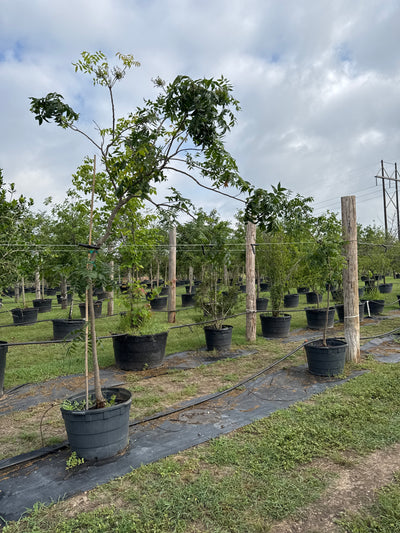
The Bradford Cleveland Pear (a cultivar of Pyrus calleryana) is an improved, narrower version of the Bradford pear, designed to address the Bradford's significant weakness: poor branch structure prone to splitting, especially in storms. While both offer showy white spring flowers and vibrant fall color, Cleveland Select has better branch angles and a more columnar shape, making it more storm-resistant, though it still shares the Callery pear's tendency to be invasive and produce smelly snow-white flowers.
|
Scientific Name
|
Pyrus calleryana 'Chanticleer' / 'Cleveland Select' |
|
Foliage: Deciduous
|
Leaves: Glossy, dark green, and heart-shaped with wavy edges. In the fall, the leaves turn a brilliant red, purple, and orange, often late in the season.
Flowers: Both produce masses of white, somewhat pungent (odoriferous) flowers in spring.
|
|
Mature Height
|
25 – 35 feet |
|
Mature Width (Spread)
|
15 – 18 feet (Narrower and more upright than the Bradford) |
|
Growth Rate
|
Very Fast |
|
USDA Zone
|
5-9 |
Plant Care & Characteristics
Light Requirements: Full Sun. It requires at least 6–8 hours of direct sun to produce its signature heavy spring blooms.
Water Requirements: Moderate. Once established, it is quite self-sufficient. It prefers regular watering but can handle the "wet-dry" cycles of suburban lawns very well.
Drought Resistance: High. One reason for its popularity is its ability to survive heat, drought, and poor urban air quality.
Soil Type: Highly Adaptable. It will grow in almost anything: heavy clay, alkaline soil, or sandy loam. It is very tolerant of urban pollution and salt.
Deer Resistance: High. Deer rarely bother the leathery foliage or the hard, tiny fruit.
The "Invasive" Warning: Many states now discourage or have even banned the sale of Callery Pears. While they were originally thought to be sterile, they cross-breed to create "wild" pear thickets with 2-inch thorns that choke out native plants.