


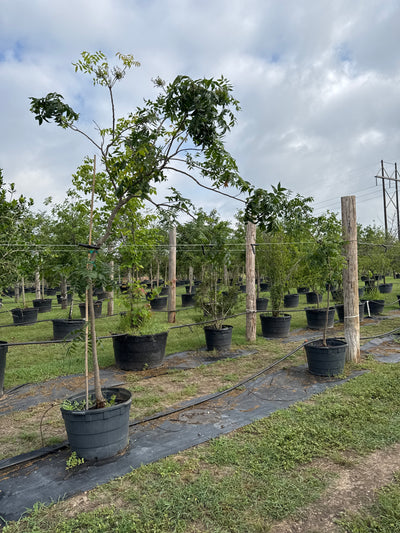

Blackberry Apache


Blackberry Apache
🌱 Planting Installation
The 'Apache' Blackberry is a premier, erect thornless blackberry variety developed by the world-renowned fruit breeding program at the University of Arkansas. Released to the public for its exceptional fruit size, upright growth habit, and heavy yields, it is widely considered one of the finest thornless varieties available for backyard orchards, market gardens, and home fruit production. The Apache Blackberry produces massive, glossy-black, elongated conical berries. The fruit is celebrated for its outstanding, rich flavor profile—balancing high sugar content with a mild, low-acid finish. Unlike many commercial varieties, 'Apache' berries maintain excellent firmness when fully ripe, reducing bruising and extending shelf life. One unique feature is the plant is "erect" producing incredibly sturdy, thick, completely smooth canes that grow straight up. While a simple trellis helps manage a heavy crop, its woody canes are robust enough to stand completely on their own without collapsing under the weight of the fruit. This variety is highly sought after because the canes are 100% thornless from the crown to the tips. Harvesting the fruit is a completely pain-free experience. You can reach deep into the canopy without worrying about scratches or torn clothing.
| Scientific Name | Rubus fruticosus 'Apache' |
|
Foliage: Deciduous |
Leaves: Palmately compound. Usually composed of 3 to 5 leaflets with serrated (jagged) edges. They are deep green with a slightly textured, veiny surface. Flowers: White to pale pink. They typically have five petals and appear in clusters during late spring. They are highly attractive to pollinators like bees. Fruit: Extra-large and glossy black. The drupelets are tightly packed. Apache is known for being very sweet with a firm texture, making them hold up better after picking than other varieties. Seeds: Small to medium. While blackberries always have seeds, the Apache variety is bred to have seeds that are less "noticeable" or crunchy compared to wild species. Canes: Thornless and erect. Unlike trailing varieties, Apache grows upright and sturdy. Primocanes (first-year) are green, while floricanes (second-year) turn woody and brown. |
| Lifespan: Perennial | An Apache Blackberry has an average productive lifespan of 15 to 20 years when grown in optimal conditions and given proper care. |
| Mature Height | 5-8 feet |
| Mature Width (Spread) | 4-8 feet |
| Growth Rate | Fast growing |
| USDA Zone/Chill Hours | Zones 5-9; 800 chill hours (below 45°F). If a winter is particularly warm, the bud break will be uneven, leading to a lower overall yield for that season. |
PLANT CARE & CHARACTERISTICS
Light Requirements: Full sun. At least 6–8 hours of direct sunlight daily. While it can survive in partial shade, fruit production will be significantly lower and the berries won't be as sweet.
Water Requirements: Moderate; needs ~1 inch of water per week, especially during fruiting. If you live in an area with very dry winters, it is a good idea to give the base of the plant a deep soak once a month so the roots don't completely dehydrate before spring.
Drought Resistance: Low to Moderate. Once established, it can handle short dry spells, but prolonged drought will cause the fruit to shrivel or the canes to become stunted.
Soil Type: Well-drained, sandy loam. It prefers slightly acidic soil with a pH of 5.5-6.5. It is highly sensitive to "wet feet" (root Rot), so drainage is critical. If you lack an area with sufficient drainage, plan on growing blackberry bushes in a raised bed.
Deer Resistance: Moderate. While deer generally prefer other plants, they will graze on the tender green primocanes in early spring. Since it is thornless, it is easier for them to eat than wild thorny varieties.
Pest/Disease Resistance: High. Apache is notably resistant to Orange Rust, a common blackberry fungus. However, it can still be susceptible to Anthracnose or pests like Spotted Wing Drosophila.
Pollination: Self-Fertile. You only need one plant to produce fruit. However, having more plants and encouraging local bee activity will generally result in larger, more uniform berries.
Harvest: Mid-to-Late Summer. Depending on your climate, picking usually begins in late June or early July and can last for about 4–5 weeks.
Tips for Maximizing Your Harvest
1. Dull Black vs. Shiny Black: For the sweetest flavor, wait until the berry turns from shiny black to a slightly duller black. If it’s still shiny, it may be tart.
2. The "Morning Pick": Always harvest your blackberries in the early morning before the heat of the sun hits them. This keeps the fruit "field cool" and significantly extends the shelf life in your fridge.
3. Avoid the "Stack": Try not to stack Apache berries more than two or three layers deep in your picking container. Even though they are firm, the weight of the top berries can bruise the ones on the bottom, causing them to leak juice and spoil faster.
4. Water Consistency: Blackberries are mostly water. If the plant is thirsty during the "berry swell" stage (right before they turn black), the yield weight can drop by 30% or more as the berries stay small and seedy.
YIELD
The yield of an Apache Blackberry increases significantly as the root system establishes itself and the number of floricanes (fruiting canes) grows. Since this is an upright, thornless variety, proper pruning in the early years is the biggest factor in hitting these peak numbers.
|
PLANT AGE |
YIELD | NOTES |
| Year 1 | 0 – 0.5 lbs | Establishment Phase: Most energy goes into root growth and "primocanes." You may see a few "scout" berries, but it's often best to pinch flowers to favor plant strength. |
| Year 2 | 2 – 4 lbs | First True Harvest: The floricanes produced in Year 1 will bear fruit. The plant is still small, so the crop is light but the berries are usually very large. |
| Year 3 | 5 – 8 lbs | Nearing Maturity: The root system is now deep enough to support multiple fruiting canes. You will notice a much longer harvest window (4–5 weeks). |
| Year 4 & 5 | 10 – 15+ lbs | Peak Production: Under ideal conditions (full sun and consistent water), a mature Apache bush is a heavy producer. 15 lbs is common for well-maintained plants. |
| Year 6+ | 10 – 12 lbs | Maintenance Phase: Yield remains steady if the old canes are pruned out annually. Without pruning, yield drops as the center of the bush becomes choked. |
STORAGE/SHELF LIFE
| STORAGE METHOD | SHELF LIFE | NOTES |
| Countertop | 12 – 24 Hours | Only keep them at room temperature if you plan to eat or process them immediately. Keep them out of direct sunlight and in a single layer. |
| Refrigerator | 3 – 7 Days | Store in a breathable container (like the vented clamshells they come in). Keep them in the main part of the fridge, not the high-humidity crisper drawer. |
| Freezer | 8 – 12 Months | Flash-freeze them in a single layer on a baking sheet first so they don't clump. Once frozen solid, transfer them to a heavy-duty freezer bag. |
*Commercial Potential: High. Because the skin is tougher than "soft" varieties, Apache handles transport and short-term refrigeration better than most home-grown berries.
Three Rules for Longevity
1. The "No-Wash" Policy: Never wash your blackberries until the exact moment you are ready to eat them. Moisture is the primary trigger for mold (botrytis), and washing them before refrigeration can cut their shelf life in half.
2. The Vinegar Rinse (Optional): If you must wash them ahead of time, use a solution of 3 parts water to 1 part white vinegar. This kills mold spores. Dry them completely on paper towels before putting them in the fridge.
3. Temperature Shock: If harvesting your own, try to get them into the shade or a cool indoor environment immediately. A berry sitting in the sun for an hour after being picked will degrade much faster than one kept cool.
PRUNING
Since the Apache Blackberry is an erect, thornless, floricane-fruiting variety, its pruning needs are specific. Unlike trailing blackberries that need to be tied to wires, Apache is bred to stand on its own, but it requires "tipping" to maximize its yield. Pruning is generally broken down into two phases: Summer Tipping and Winter Maintenance.
1. The "3-Foot Rule": Don't wait until the canes are 6 feet tall to tip them. If you cut a 6-foot cane down to 3 feet, the wound is larger and more prone to disease. Tip them exactly when they hit that 3-to-4-foot mark. This forces the plant to grow lateral branches, which is where the majority of the fruit is produced.
2. Sanitize Your Tools: Before you start, wipe your shears with rubbing alcohol. This is especially important for Apache to prevent the spread of fungi like Anthracnose.
3. Identify the Cane Type
Primocanes: Green, succulent, no flowers. The cane emerges from the ground, grows vigorously, and develops leaves, but does not produce flowers or fruit. (Keep these!)
Floricanes: Woody, brown, have flowers/fruit. The exact same cane wakes up the second spring, produces white flowers, yields those large, sweet Apache berries, and then naturally dies completely to the ground by winter. (Remove these only after they finish fruiting.)
- Because Apache is a floricane-fruiting variety, it produces fruit on the wood that grew the previous year. To maintain high disease resistance, it is best to prune out and dispose of the "spent" canes immediately after they finish fruiting in the summer to improve airflow for the new growth.
4.Visualizing the Shape: After a full year of proper pruning, your Apache plant should look like a sturdy miniature tree rather than a tangled vine. This "hedgerow" style makes harvesting significantly easier since the fruit will be concentrated on the lateral branches at waist height.
PRUNING SUMMARY
| TIMING | ACTION | PURPOSE |
| Early Summer (June/July) | Tip the Primocanes. Cut the tops of new green canes when they reach 3–4 feet tall. | This stops vertical growth and forces the cane to grow "laterals" (side branches). Most fruit grows on these side branches. |
| Late Summer (After Harvest) | Remove Spent Floricanes. Cut the canes that just finished fruiting all the way to the ground. | These canes will never fruit again. Removing them improves airflow and prevents disease from spreading to new growth. |
| Late Winter (Feb/March) | Prune Laterals. Shorten the side branches (laterals) created by summer tipping to about 12–18 inches. | This prevents the branches from becoming too heavy with fruit and breaking, while also resulting in larger, higher-quality berries. |
| Late Winter (Feb/March) | Thin the Crown. If the base is crowded, remove thin or weak canes, leaving 4–6 strongest canes per foot. | Prevents over-crowding and ensures each cane gets enough sunlight and nutrients. |