


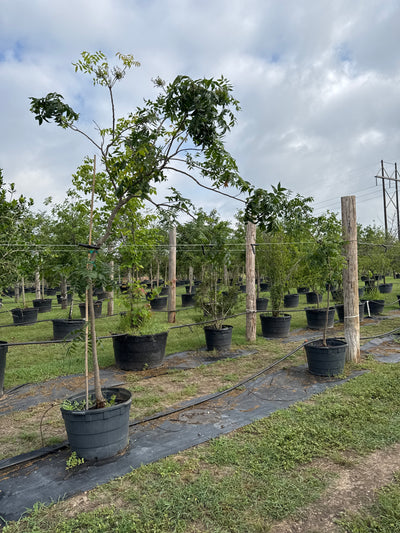


Apple Honeycrisp


Apple Honeycrisp
🌱 Planting Installation
The Honeycrisp Apple is a modern favorite specifically engineered for its unique texture and refreshing flavor profile. Developed at the University of Minnesota and released in 1991, it has become one of the most commercially successful apple varieties in North America. Because it was developed in Minnesota, the tree is incredibly cold-hardy, capable of surviving temperatures as low as -30°F. The Honeycrisp Apple tree is a deciduous tree with a rounded form and features fragrant white flowers in spring followed by showy red apples in early fall. Unlike older apple varieties that have a "mealy" or "dense" flesh, the Honeycrisp has exceptionally large cells. When you bite into it, these cells rupture rather than shearing, creating a signature "explosive" crunch and a massive release of juice. The fruit offers a complex, well-balanced sweet-tart flavor with subtle hints of honey. It is less acidic than a 'Granny Smith' but significantly more "bright" than a 'Red Delicious'. The appearance of the fruit are typically large with a "bi-color" skin—a light green or creamy yellow background covered in a mottled red-to-pink blush. The skin is thin, and the flesh is a pale cream color. It is widely considered the gold standard for a snacking apple due to its flesh being slow to brown (oxidize) compared to other varieties, making it an excellent choice for sliced displays or fruit salads.
| Scientific Name | Malus domestica 'Honeycrisp' |
|
Foliage: Deciduous |
Leaves: Simple, ovate to oval with serrated margins. The upper surface is typically a dark, matte green, while the underside is paler and slightly fuzzy (tomentose). Flowers: Showy, five-petaled blossoms that emerge in clusters. They are typically white with delicate pink highlights and are highly fragrant. Fruit: Large, round-oblong fruit with a characteristic bi-color skin consisting of a yellow-green background covered in a red or pinkish-red blush. The flesh is cream-colored and notably juicy. Seeds: Small, teardrop-shaped, and dark brown to black when mature. Like most apples, they contain small amounts of amygdalin. Bark: Smooth and grayish-brown when young, developing a scaly, fissured texture as the tree matures. |
| Lifespan: Perennial |
Dwarf: 15 to 20 years Semi-Dwarf: 20 to 35 years Standard (Full Size): 35 to 50 years |
| Mature Height |
Dwarf: 8 to 10 feet Semi-Dwarf: 11 to 14 feet Standard (Full Size): 18 to 22 feet |
| Mature Width (Spread) | Generally equal to the height (8–22 feet depending on rootstock). |
| Growth Rate | Moderate (typically 12–24 inches per year). |
|
USDA Zone/Chill Hours |
Zone 3-7 (Extremely cold-hardy); Requires 800-1,000 chill hours (below 45°F / 7°C). |
PLANT CARE & CHARACTERISTICS
Light Requirements: Full Sun. Requires at least 6–8 hours of direct sunlight daily for fruit production and sugar development.
Water Requirements: Moderate to High. Needs consistent moisture, especially during the first few years of establishment and during fruit swell. Approximately 1 inch of water per week is ideal.
Drought Resistance: Low. Honeycrisp trees have a relatively shallow root system and do not tolerate prolonged dry spells well; drought stress can lead to fruit drop.
Soil Type: Loamy & Well-Drained. Prefers rich, organic soil with a pH between 6.0 and 7.0. Avoid heavy clay or sites with standing water. Applying a thick layer of organic mulch (like wood chips or straw) around the base—avoiding the trunk—helps maintain the consistent soil moisture this variety craves.
Deer Resistance: Low. Apple trees are highly attractive to deer, who will graze on the leaves, young buds, and fallen fruit. Fencing or deterrents are often necessary.
Pest/Disease Resistance: Moderate to Low. Notable resistance to Apple Scab. However, it is highly susceptible to Fire Blight, Powdery Mildew, and physiological disorders like Bitter Pit. Ensure the tree is pruned to an "open center" or "central leader" shape to allow maximum airflow through the canopy to help fight these diseases.
Pollination: Cross-Pollination Required. Not self-fertile. Needs a compatible variety (e.g., 'Gala', 'Fuji', 'Pink Lady', or 'White Flowering Crabapple') blooming at the same time.
Harvest: Mid-to-Late September. Fruit should be picked when the background skin color changes from green to creamy yellow and the red blush is prominent.
YIELD
| Tree Size | Yield in Bushels | Yield in Pounds | Approx. # of Apples |
| Dwarf: Can begin bearing fruit in 2-3 years after planting. | 1–3 bushels | 40–125 lbs | 125–375 |
| Semi-Dwarf: Typically begin bearing fruit in 4-5 years. | 4–6 bushels | 170–250 lbs | 500–750 |
| Standard: May take 6-10 years to produce their first significant crop | 6–10+ bushels | 250–420+ lbs | 750–1,250+ |
Note: One bushel of Honeycrisp apples weighs approximately 42 lbs and contains about 125 medium-sized apples.
STORAGE/SHELF LIFE
| STORAGE METHOD | SHELF LIFE | NOTES |
| Countertop (Room Temp) | 1–2 weeks | Keep out of direct sunlight and away from heat sources. |
| Refrigerator (Crisper Drawer) | 4–6 months | Keep at 33°F–38°F with high humidity. |
| Root Cellar / Cold Storage | 3–5 months | Must be kept dark, cool, and well-ventilated. |
Critical Storage Factors
1. Temperature Management: Honeycrisp is sensitive to soggy breakdown (a chilling injury) if stored immediately at near-freezing temperatures.
- The "Conditioning" Secret: Commercial growers often "condition" Honeycrisp by holding them at 50°F–60°F for 5 to 7 days before moving them into long-term cold storage. This helps prevent the flesh from browning internally.
2. Humidity and Airflow
- Humidity: These apples prefer high humidity (around 90%) to stay juicy. If your refrigerator is very dry, placing them in a perforated plastic bag helps retain moisture without trapping excess gases.
- Ethylene Sensitivity: Apples emit ethylene gas, which speeds up ripening in other produce. Store them away from leafy greens, carrots, or broccoli, as the gas will cause those vegetables to spoil quickly.
3. Selection for Long-Term Storage
- The "Perfect" Apple: Only store apples that are unblemished. A single apple with a bruise or a small insect hole will produce excess ethylene and mold, potentially ruining the entire batch ("One bad apple spoils the bunch" is scientifically accurate here).
- Size Matters: Medium-sized apples typically store better and longer than oversized ones, which are more prone to internal breakdown.
4. Signs of Quality Loss
- Bitter Pit: You may notice small, sunken brown spots on the skin. This is a calcium imbalance rather than rot; while the spots taste bitter, the rest of the apple is technically edible, though the texture may begin to suffer.
- Shriveling: If the skin becomes wrinkled, the apple has lost too much moisture. It is still safe for baking or applesauce but will lack that signature "snap" when eaten fresh.
PRUNING
1. The "Three D’s": Start by removing any branches that are Dead, Damaged, or Diseased. If you see "shepherd’s crook" tips (a sign of fire blight), cut them back at least 8–12 inches into healthy wood.
- Crucial: Dip your shears in a 10% bleach solution or 70% alcohol between every cut to avoid spreading infection.
2. Maintain the Central Leader: Honeycrisp performs best when trained to a pyramid shape. Ensure the top of the tree (the leader) is the highest point. Remove any "competing" vertical branches that are trying to grow as high as the main trunk.
3. Manage the "Scaffold" Branches
- Angle: Look for branches growing at a 45° to 60° angle from the trunk. These are the strongest. Remove "V" shaped crotches (narrow angles), as they are prone to splitting under the weight of Honeycrisp’s heavy fruit.
- Spacing: Ensure there is enough vertical space between branches so sunlight can reach the center of the tree. If the canopy is too thick, the inner fruit won't develop its signature red blush.
4. Thinning the Fruit Spurs: Honeycrisp often produces too many flower buds. If the tree looks "cluttered" with short, stubby fruiting spurs, thin some out. This reduces the number of apples the tree attempts to grow, which prevents the tree from becoming exhausted and skipping the following year's harvest.
PRUNING SCHEDULE
1. Late Winter (Best Time): This is when you do your heavy structural pruning. Since the tree is dormant, you can clearly see the "skeleton" of the branches, and the tree will respond with vigorous growth in the spring.
2. Early Summer: This is the time for fruit thinning. Once the apples are about the size of a nickel, remove enough so there is only one apple every 6 inches. This is the single most important "pruning" task for Honeycrisp to ensure high-quality fruit and annual production.
3. Late Summer: Only do very light pruning now to remove "water sprouts" (thin, vertical shoots that suck energy from the tree). Avoid heavy cuts late in the season, as this can stimulate new growth that won't harden off before winter.
PRUNING SUMMARY
| Goal | Method | Timing |
| Structure | Central Leader: One main vertical trunk with horizontal "scaffold" branches. | Late Winter (Dormancy) |
| Airflow | Thinning Cuts: Removing entire branches back to the main trunk to reduce canopy density. | Late Winter |
| Growth Control | Heading Cuts: Cutting back the tips of branches to encourage side-branching. | Late Winter |
| Disease Control | Sanitation: Removing dead, damaged, or diseased wood (especially Fire Blight). | Anytime |


