


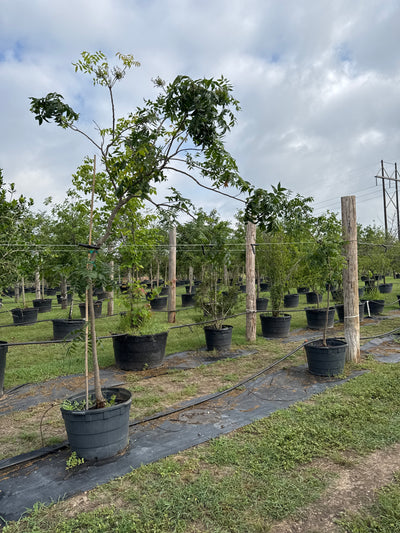


Plum Santa Rosa


Plum Santa Rosa
Location on Farm:
🌱 Planting Installation
The Santa Rosa Plum is arguably the most famous Japanese plum in the world, developed by horticulturalist Luther Burbank. Because it is a "Japanese-type" plum, it tends to be juicier and more heat-tolerant than European varieties, making it a staple for Southern and Western landscapes. This tree produce medium to large-sized fruit with a reddish-purple skin and firm, sweet, yellow flesh. The fruit is renowned for its excellent flavor and juiciness, making it ideal for fresh eating, canning, and baking. The tree itself is deciduous, featuring ovate to lanceolate green leaves that turn yellow in the fall. In spring, it bears showy, fragrant white flowers, adding ornamental value to the landscape.
|
Scientific Name |
Prunus salicina 'Santa Rosa' |
|
Foliage: Deciduous |
Leaves: Medium-sized, vibrant green, and lance-shaped with finely serrated edges. They provide a dense, cooling shade in summer. Flowers: Showy, snow-white blossoms that appear in early spring. They are highly fragrant and completely cover the branches before leaves emerge. Fruit: Large, round-to-oval fruit with a beautiful purple-crimson skin covered in a light, waxy "bloom." The flesh is amber-yellow with a red blush near the skin. Seeds: A single, clingstone pit in the center. It is medium-sized and firm. Bark: Smooth and reddish-brown when young, developing horizontal lenticels (breathing pores) and a rougher, grey-brown texture as it matures. |
|
Mature Height |
15 – 20 feet (Standard); can be kept to 12 feet with pruning. |
|
Mature Width (Spread) |
15 – 20 feet (Spreading, vase-like canopy). |
|
Growth Rate |
Fast. Can grow 3+ feet per year when young. |
|
USDA Zone/Chill Hours |
Zone 5 – 9 (Extremely adaptable to heat and moderate cold); Requires 300 – 500 chill hours (Low to moderate requirement). |
PLANT CARE & CHARACTERISTICS
Light Requirements: Full Sun. Minimum 6–8 hours. Proper sunlight is critical to develop the deep purple skin color and high sugar content.
Water Requirements: Moderate. Needs deep, weekly watering during the first two years. Mature trees require extra water during "fruit swell" in May/June.
Drought Resistance: Moderate. Better than many stone fruits once established, but prolonged drought will cause fruit to drop or shrivel.
Soil Type: Well-Drained. Prefers fertile, sandy loams with a pH of 6.0–7.0. Does not tolerate "wet feet" (standing water). Amending the soil with organic matter, such as compost or aged manure, can improve soil structure and fertility, promoting healthy growth and fruit production.
- Pro-Tip: When performing the installation, ensure the root flare (where the trunk meets the roots) is slightly above the soil line. If buried too deep, plums are susceptible to "crown rot." Also, because the wood is relatively flexible when young, consider a double-staking method for the first year to protect against wind-lean.
Deer Resistance: Low. Deer highly favor the tender new spring growth and the ripening fruit. Protection is often necessary.
Pest/Disease Resistance: Moderate. Susceptible to "Brown Rot" in humid climates and "Japanese Beetles." It is also sensitive to Bacterial Canker.
- Sanitation Tip: Always dip your pruning shears in a 10% bleach solution or alcohol between trees in the nursery.
- Weather Tip: Never prune your plums during a rainstorm or when the wood is wet. This is when fungal spores are most active and can enter the fresh cuts.
Pollination: Santa Rosa is self-fertile, meaning you only need one tree to get fruit. However, it is also a prolific producer of pollen. If you have another Japanese plum (like a 'Methley' or 'Satsuma') that isn't producing well, planting a Santa Rosa nearby will usually double the other tree's yield.
Harvest: Mid-Summer. Typically ripens in late June to mid-July, depending on your local heat units.
- The "Color vs. Softness" Test: Santa Rosa plums turn a beautiful purple-red about a week before they are actually sweet. Do not pick based on color alone. Pick them when they give slightly to gentle thumb pressure. If it feels like a "soft-boiled egg" it is ready.
- The "Pre-Ripen" Strategy: If you have a massive crop and are worried about birds or squirrels getting to the fruit, you can harvest them slightly firm. After harvesting, place the firm plums in a brown paper bag at room temperature for 48 hours. This concentrates the ethylene gas and softens the flesh without losing the "snap" of the skin.
- The "Early Spring" Risk: Because the Santa Rosa blooms early, the blossoms are vulnerable to "late spring frosts." In your landscaping plans, avoid planting these in "frost pockets" at the bottom of a hill. They prefer mid-slope locations where cold air can drain away.
YIELD
| Tree Age | Production Phase | Yield (Lbs) | Estimated Fruit Count |
| Year 1 | Establishment | 5 – 10 lbs | 20 – 40 plums |
| Year 2 | Expanding | 25 – 50 lbs | 100 – 200 plums |
| Year 3 | Sub-Mature | 75 – 125 lbs | 300 – 500 plums |
| Year 4 | Sub-Mature | 150 – 250 lbs | 600 – 1,000 plums |
| Year 5+ | Full Maturity | 300 – 500+ lbs | 1,200 – 2,000+ plums |
STORAGE/SHELF LIFE
| STORAGE METHOD | SHELF LIFE | NOTES |
| Countertop (Room Temp) | 2 – 4 Days | Use only for "finishing" the ripening of slightly firm fruit. |
| Refrigerator (33°F - 38°F) | 2 – 3 Weeks | Slows the softening process. Keep in a perforated bag. |
| Sliced & Frozen | 12 Months | Excellent for smoothies, baking, or "plum sauce" later. |
| Dehydrated / Dried | 6 – 12 Months | Creates a chewy, tart-sweet snack (though not a true prune). |
*Pro-Tip: You may notice a "dusty" or waxy white coating on the skin of the plums. This is called the "epicuticular wax" or "bloom". It is the tree's natural defense against moisture loss and rot. Do not wash plums until right before you are going to eat them. Removing the bloom prematurely will cut the shelf life in half!
PRUNING
1. Establishing the "Primary Scaffolds": From the trunk, you want to identify 3 to 4 main branches that grow outward in different directions (like the ribs of an umbrella).
- The Angle: Look for branches that come off the trunk at a 45-degree to 60-degree angle.
- The "Crotch" Warning: Avoid narrow "V" angles (less than 30 degrees). These are weak and will likely split when the tree is loaded with 200 lbs of plums in July.
2. The "Open Center" (Vase Shape) Rule: Unlike a Pine tree, a Santa Rosa should not have a central trunk going straight up through the middle.
- The Action: Cut out the "Central Leader" (the main vertical trunk) just above your 3 or 4 scaffold branches.
- The Logic: This allows sunlight to hit the interior spurs. If the center is shaded, the inner branches will die, and you will only have fruit on the very tips of the highest branches.
3. Managing "Water Sprouts": Because the Santa Rosa is so vigorous, it will send up perfectly straight, 6-foot-tall vertical shoots called "Water Sprouts" in the summer.
- The Protocol: These suckers produce almost no fruit and steal energy. For a professional look, prune these off flush in late June right after the harvest is finished. This keeps the tree’s energy focused on next year’s fruit buds.
4. The "Two-Finger" Fruit Thinning: This is the most important "pruning" for yield quality. The Santa Rosa is a victim of its own success. It often sets so much fruit that the branches will physically snap under the weight by June.
- The Technique: When the plums are the size of a marble (late April), remove enough fruit so that there is at least 4–6 inches (about two hand-widths) between each plum.
- The Payoff: Instead of 1,000 tiny, sour plums, the client will get 300 massive, honey-sweet Santa Rosas that look like they came from a gourmet market.
PRUNING SUMMARY
| Pruning Phase | Timing | Primary Goal |
| Dormant Pruning | Late Winter (Jan/Feb) | Structural thinning; removing 1/3 of new growth. |
| Summer Pruning | Late June (Post-Harvest) | Controlling height; removing "Water Sprouts." |
| Thinning | Late April / May | Removing excess fruit to prevent branch snap. |