


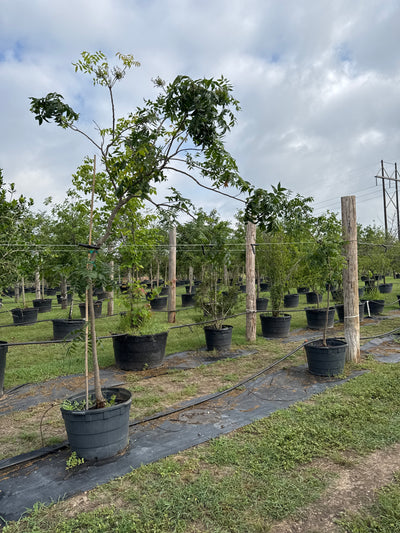


Lime Kaffir Kieffer


Lime Kaffir Kieffer
Location on Farm:
🌱 Planting Installation
The Kaffir Lime (also known as the Makrut or Kieffer Lime) is a small evergreen tree native to Southeast Asia revered for its culinary and medicinal properties. Unlike traditional limes grown for juice, this tree is an essential "spice tree," prized by chefs and home cooks for its incomparable aromatic oils found in its unique foliage and bumpy rind. Its most striking feature is its "winged" or hourglass-shaped leaves. These dark, glossy evergreen leaves are the primary harvest, providing the signature citrusy-herbal base for Southeast Asian curries, soups, and stir-fries. The fruit is distinctive for its deeply warted, lime-green skin. While the interior is dry and acidic with very little juice, the rind is packed with intense essential oils, making it a premier choice for zesting. The Kaffir Lime is the ultimate "Chef's Garden" recommendation. It is the ideal choice for clients who want a functional, high-fragrance plant that doubles as a sophisticated ornamental for a sunny porch or a sheltered garden nook.
| Scientific Name | Citrus hystrix |
|
Foliage: Evergreen |
Leaves: "Double-Leaf" look; unique hourglass shape where two leaf blades appear joined. Highly aromatic with an intense lime scent. Flowers: Small, waxy white with a slight purple tint. Very fragrant and usually appear in clusters. Fruit: Warted and bumpy dark green skin. Round to pear-shaped with very little juice but highly fragrant rind. Seeds: Small, cream-colored, and found within the dry, acidic pulp. Bark: Greenish-brown and relatively smooth. Younger branches feature sharp, prominent thorns. |
| Mature Height | 6 – 10 feet (Easily kept smaller in containers). |
| Mature Width (Spread) | 4 – 8 feet (Generally upright and compact). |
| Growth Rate | Slow to Moderate. |
| USDA Zone/Chill Hours | Zone 9 – 11 (Very cold-sensitive; must be protected below 32°F); Tropical citrus do not require chill hours to fruit. |
PLANT CARE & CHARACTERISTICS
Light Requirements: Full Sun. Prefers 6–8 hours. In extreme Zone 10/11 heat, it can tolerate filtered afternoon light.
Water Requirements: Moderate & Consistent. Likes to stay moist but never "soggy." Sensitive to "wet feet."
Drought Resistance: Low. Unlike olives, if a Kaffir Lime dries out completely, it will drop its valuable leaves rapidly.
Soil Type: Well-Drained / Acidic. Prefers a pH of 6.0–6.5. Use a sandy-loam or a specific Citrus potting mix. Use a high-nitrogen organic fertilizer specifically labeled for citrus three times a year (late winter, early summer, and late summer). This helps prevent the "double-leaves" from turning pale yellow.
Deer Resistance: Low to Moderate. The thorns act as a deterrent, but the aromatic leaves are still a target for curious browsers.
Pest/Disease Resistance: Fair. Susceptible to Citrus Leaf Miner (which curls the leaves) and Scale. Watch for Greasy Spot.
Pollination: Self-Fertile. Does not require a second tree for the fruit to develop.
Harvest: Year-Round (Leaves). Fruit is usually harvested in late fall/winter once the rind is bumpy and dark green.
-
Harvesting the "New vs. Old": The age of the leaf changes the flavor profile.
- For garnish or salads (where the leaf is sliced thin and eaten raw), harvest the young, light-green leaves—they are more tender.
-
For soups and stews (where the leaf is simmered and removed), use the dark-green, mature leaves—they have a higher oil concentration and stand up to long cooking times
- The "double-leaf" is actually a leaf and a phyllode (a flattened petiole). Both parts are equally flavorful and should be used together in recipes like Curries or Tom Yum soup.
-
The Rind vs. The Juice: The fruit of the Kieffer Lime is famous for being "juiceless."
-
Do not expect a "Limeade" fruit. The fruit is used for its zest and its juice is traditionally used as a cleaning agent or in shampoo in Southeast Asia due to its high acidity and fragrance.
-
YIELD
Because you are harvesting foliage, the "production" begins as soon as the tree is established. Unlike fruit-heavy trees, you don't have to wait for a specific ripening season to enjoy the harvest.
| Tree Age | Production Phase | Estimated Leaf Yield | Culinary Impact |
| Year 1 | Establishment | 20 – 50 leaves | Enough for occasional weekend curries. |
| Year 2 | Expanding | 100 – 200 leaves | Weekly use; enough to share with neighbors. |
| Year 3 | Sub-Mature | 500+ leaves | Constant supply; enough for drying/freezing. |
| Year 5+ | Full Maturity | Thousands | High-volume production; can support heavy preserving. |
STORAGE/SHELF LIFE
| STORAGE METHOD | SHELF LIFE | NOTES |
| Fresh (Counter) | 2 – 3 Days | Best used immediately for maximum fragrance. |
| Refrigerated (Bagged) | 2 – 3 Weeks | Keep in a sealed bag with a damp paper towel. |
| Frozen (Whole) | 6 – 12 Months | Top Choice: They retain nearly 100% of their flavor when frozen. |
| Dried (Air-Dried) | 1 – 2 Years | Good for tea or simmering; loses some "bright" citrus notes. |
| Zested (Rind) | 6 Months (Frozen) | The bumpy rind is intensely flavorful; freeze zest in ice cubes. |
PRUNING
1. The "Pinch for Plenty" Technique: If left alone, a Kaffir Lime can become "leggy," with long, thin branches that have leaves only at the ends.
- The Action: Every time a branch grows 6–8 inches, snip off the very tip.
- The Result: This signals the tree to wake up dormant buds further down the stem. Instead of one long branch, you get three or four shorter, leaf-heavy branches.
2. Managing the "Thorny Shield": The thorns on a Kaffir Lime can become massive if the tree is stressed or left unpruned.
- The Technique: It is best to place this tree in a low-traffic area or the back of a garden bed during installation. If you cannot, it is important to identify any branches that are growing inward or across a walkway during maintenance.
- The Maintenance: Prune these back to the main trunk.
- Because the thorns are so sharp, always use a "grab-and-snip" tool or long-handled needle-nose pruners to avoid getting your hands deep into the canopy.
3. Airflow vs. Density: While you want a bushy tree for more leaves, you still need enough airflow to prevent Scale and Mealybugs, which love the tight crevices of citrus.
- The Strategy: If the interior of the tree becomes a "solid wall" of green, thin out some of the older, inner leaves.
- The Benefit: This allows your organic sprays (like Neem oil) to actually reach the center of the tree where pests like to hide.
4. The "Pot-Culture" Pruning
- The Action: Keep the canopy roughly the same width as the pot.
- The Reason: This keeps the tree "balanced" so it doesn't tip over in a high wind and ensures the root system can actually support the amount of foliage above ground.
PRUNING SUMMARY
| Pruning Type | Timing | Primary Goal |
| Tip Pruning | Spring & Summer | Snipping the growing tips to force "lateral" (sideways) branching. |
| Sucker Removal | Year-Round | Removing straight, thorny shoots that grow from the base/rootstock. |
| Size Control | Late Winter | Bringing the height down to keep it manageable for patio or indoor life. |