


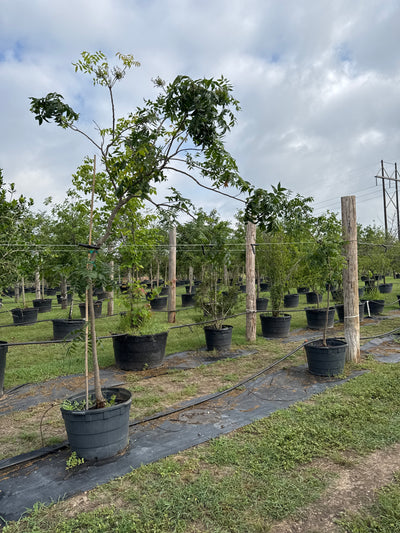


Plum Methley


Plum Methley
Location on Farm:
🌱 Planting Installation
The Methley Plum is widely considered the "perfect beginner's plum." It is a Japanese variety prized for its heavy crops, delicious flavor, and beautiful spring floral display. It is one of the most popular plums for home orchards because it is remarkably low-maintenance and highly adaptable to various climates.
|
Scientific Name |
Prunus salicina 'Methley' |
|
Foliage: Deciduous |
Leaves: Lush, glossy, bright green leaves that are ovate to elliptic in shape with fine, serrated (toothy) margins. They provide a dense, lush canopy throughout the summer. Flowers: Spectacular, fragrant white blooms that emerge in early early spring and turn shades of yellow during the fall before dormancy. Fruit: Small-to-medium, round plums with a deep reddish-purple skin and sweet, juicy red flesh. Seeds: A single, medium-sized hard pit at the center. It is a "clingstone" variety, meaning the pit stays attached to the flesh. Bark: Smooth and dark reddish-brown when young, developing a more textured, grey-brown appearance with age. |
|
Mature Height |
10-20 feet (Standard); 8-10 feet (Dwarf) |
|
Mature Width (Spread) |
10-20 feet (Spreading canopy) |
|
Growth Rate |
Fast-growing (Expect 24+ inches of growth per year). |
|
USDA Zone/ Chill Hours |
Zone 4-9; Low chill hours 150-250 hours (Very low chill requirement, making it one of the few plums that thrives int eh deep South/Florida/Texas, while remaining cold-hardy for the North). |
PLANT CARE & CHARACTERISTICS
Light Requirements: Full Sun; (6-8 hours per day).
Water Requirements: Moderate. Requires consistent moisture for healthy growth and fruit production. Ensure the soil is moist several inches down, but allowed to dry slightly between waterings. Do not waterlog.
- Because the Methley produces so much fruit, the sugar content can drop if the tree is over-watered during the final 2 weeks of ripening. Aim to "taper off" the watering about 10 days before harvest. This concentrates the sugars and results in that famous "honey-sweet" Methley flavor.
Drought Resistance: Moderate. Methley plum trees are highly drought-tolerant and heat-resistant once established.
Soil Type: Adaptable and Well-Drained. Prefer a slightly acidic to neutral pH soil. They can tolerate various soil types, including loamy, sandy, or clay soil, as long as it's well-drained and fertile. Amending the soil with organic matter, such as compost or aged manure, can improve soil structure and fertility, promoting healthy growth and fruit production.
Deer Resistance: Low. They are highly attractive to deer, which eat both the fruit and foliage. While the trees are hardy and disease-resistant, young trees require protection, such as fencing or tree tubes, to prevent significant browse damage.
Pest/Disease Resistance: High; High resistance to Bacterial Spot and generally very rugged. However, like most plums, it is susceptible to the Plum Curculio and Brown Rot if the air circulation is poor.
- Sanitation is Key: Because the Methley is so juicy, any punctured fruit will attract wasps and "Green June Beetles." Prune away any "mummies" (shriveled, dried fruit from last year) during your winter pruning, as these carry fungal spores.
Pollination: Self-pollinating. It does not require a second tree to produce fruit but yields increase if planted with another Japanese variety like 'Santa Rosa' or 'Allred'.
Harvest: Very early, typically from late May to early July. It is one of the first plums to ripen each season. One of the best traits of the Methley is its long hang time. Unlike other plums that must be picked the moment they turn color, Methley plums can stay on the tree for 2 to 3 weeks, getting sweeter as they hang. Unlike some pears that skip a year (biennial), the Methley is a consistent annual producer. It will bloom through almost anything, though a very late hard freeze can occasionally thin the crop.
How to Know your Methley Plum is Ready to Harvest
1. The Color Shift: The skin will move from a reddish-green to a solid, deep reddish-purple. The flesh inside should be a vibrant, translucent red (not amber or green).
2. The "Dusky Bloom": Look for a natural, waxy white powder (called "bloom") to develop on the skin. This is a sign of a mature plum.
3. The Squeeze Test: Give the fruit a gentle press. A ripe Methley will feel soft and "springy" near the blossom end (the bottom of the fruit). If it feels like a soft marshmallow, it is at its peak sugar content. If it feels like a rubber ball, it needs 2 more days on the tree.
4. The Snap Test: Like most stone fruits, a ripe Methley will detach with a simple upward tilt and a light pull. If you have to tug, it’s not ready.
5. Watch the "Fruit Drop": Unlike your pears, which stay attached to the tree quite well, a ripe Methley will drop to the ground the moment it hits peak maturity.
Critical Harvest Warning: The "Plum Explosion":The Methley is a prolific bearer. It produces so much fruit that it often grows in dense, heavy clusters.
- Thinning: If you don't thin the fruit to one plum every 4 inches in early spring, the tree will produce hundreds of tiny, golf-ball-sized plums that are mostly pit and skin.
- Branch Support: Because the fruit is heavy and the tree is a fast grower, branches can snap in June. If your tree is heavily laden, you may need to prop up the lower branches with 2x4s as the harvest approaches.
- The "One-Pass" vs. "Multi-Pass": Because of the long hang time, you don't have to harvest the whole tree at once. You can pick the sun-ripened fruit from the top/outside and leave the inner fruit to ripen for another week.
YIELD
| Tree Age | Production Phase | Yield (Bushels) | Yield (lbs) |
| Year 1 | Early Harvest | 0.5 – 1 Bushel | 25 – 50 lbs |
| Year 2 | Vigorous Producer | 2 – 3 Bushels | 100 – 150 lbs |
| Year 3 | High Output | 4 – 5 Bushels | 200 – 250 lbs |
| Year 4 | Sub-Mature | 6 – 8 Bushels | 300 – 400 lbs |
| Year 5+ | Full Maturity | 8 – 12+ Bushels | 400 – 600+ lbs |
STORAGE/SHELF LIFE
| STORAGE METHOD | SHELF LIFE | NOTES |
| Countertop (Room Temp) | 1 – 3 Days | Methleys "melt" quickly at room temp. Eat or process immediately. |
| Refrigerator (35°F - 40°F) | 1 – 2 Weeks | Best for fresh eating. Keep in a single layer to prevent crushing. |
| Cold Storage (32°F) | 2 – 3 Weeks | Quality begins to drop after 14 days as the flesh can become mealy. |
| Frozen / Jam | 12+ Months | Superior. Its deep red juice makes the best-looking plum jelly. Methleys are perfect for "smoothie packs." Just wash them, pop them into a freezer bag whole, and the skins will slip right off when you defrost them later for sauces or smoothies. |
PRUNING
1. The "Open Center" (Vase) System: Like the Allred, the Methley performs best when pruned into a bowl shape.
- The Logic: Methley plums are prone to "brown rot" fungus. By removing the central leader and keeping the middle of the tree empty, you allow wind to dry the fruit quickly after a rain, preventing the crop from rotting on the branch.
- The Cut: On your 15-Gallon stock, identify the 3 or 4 strongest "scaffold" branches growing outward. Remove anything growing straight up the middle.
2. Aggressive "Heading Back": Because Methley branches grow so long and thin, they act like fishing rods—they bend until they snap.
- The 50% Rule: For every long "whip" that grew last summer, cut it back by half.
- The Result: This forces the branch to put its energy into "girth" (thickness). A thick branch can hold 40 lbs of plums; a thin one will break with 10 lbs. Always cut to an outward-facing bud to keep the tree spreading wide rather than tall.
3. The "Two-Finger" Thinning Rule: This is technically "fruit pruning," and for a Methley, it is mandatory.
- The Cluster Problem: Methley is famous for setting fruit in tight clusters of 6 to 10 plums. If you do not thin these to one plum every 4 inches, the individual fruits will stay small (the size of a large cherry) and the branches of your tree may snap. If the plums are touching, they trap moisture and rot.
- The Technique: In May, when the plums are the size of a nickel, thin them so that there are two finger-widths of space between each fruit.
- The Payoff: This reduces the total weight on the branch by 60%, ensuring the tree survives the season, and it doubles the size of the remaining plums.
PRUNING SUMMARY
| Pruning Phase | Timing | Primary Goal |
| Dormant Pruning | Late Jan / Feb | Thinning. Removing 30% of last year's growth to stiffen the branches. |
| Vase Training | Early Years | Light. Creating a hollow center so the interior plums ripen properly. |
| Summer Pruning | Late June (Post-Harvest) | Vigor Control. Cutting back the "sky-shooters" that grew since spring. |