


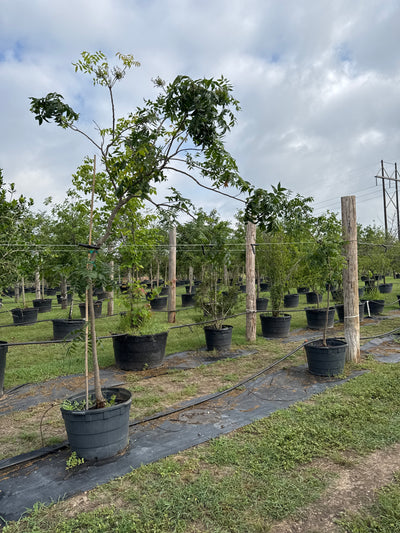

Blueberry Tifblue


Blueberry Tifblue
🌱 Planting Installation
The 'Tifblue' Blueberry is arguably the most famous and widely planted Rabbiteye blueberry in history. Released by the University of Georgia in 1955, it became the industry standard due to its vigorous growth, massive yields, and cold hardiness compared to other Southern varieties. The 'Tifblue' Blueberry is a deciduous shrub that typically features dark green foliage that turns shades of red and orange in the fall, providing attractive autumn color. It produces clusters of white or pink flowers in spring, followed by medium to large-sized berries that ripen to a deep blue color in summer. The berries are known for their sweet flavor, making them excellent for fresh eating, baking, or preserving.
|
Scientific Name |
Vaccinium ashei 'Tifblue' |
|
Foliage: Deciduous |
Leaves: During the summer, the foliage is a distinct sage-green or grayish-green with a matte finish. In the autumn, the Tifblue is a landscape standout, turning a brilliant, fiery red that often lasts late into the season. Flowers: The plant produces masses of small, waxy, white, bell-shaped flowers. They bloom slightly later than the Austin or Climax, which often helps them avoid late spring frosts. Fruit: Medium-to-large, very firm, and a beautiful light blue color. It is famous for its sweet-tart balance. Because the skin is firm, it is widely considered the best variety for baking, as it holds its shape well in muffins and pies. Seeds: Tiny and soft. Like other top-tier Rabbiteyes, the seeds are completely unobtrusive when eating the fruit fresh. Canes: Extremely vigorous and upright. It naturally forms a vase-like habit and can easily reach 10–12 feet if not pruned. The older canes develop a shredded, papery bark in shades of tan and grey. |
|
Mature Height |
8-12 feet |
|
Mature Width (Spread) |
6-10 feet |
|
Growth Rate |
Fast and Vigorous |
|
USDA Zone/Chill Hours |
Zone 7-9; Requires approximately 600–700 chill hours. This is higher than many other Rabbiteyes, making it safer for areas prone to late spring frosts. |
PLANT CARE & CHARACTERISTICS
Light Requirements: Full Sun. Requires at least 6–8 hours of direct sunlight. While it can tolerate very light afternoon shade, the heaviest fruit sets occur in maximum sun.
Water Requirements: Moderate to High. Like all blueberries, 'Tifblue' has a shallow root system. It needs consistent moisture (1–2 inches per week), particularly when the berries are sizing up in mid-summer. Regular watering is important, especially during the growing season, to keep the soil consistently moist but not waterlogged.
Drought Resistance: Moderate. It is considered one of the most drought-resistant Rabbiteye varieties once established, but it will still drop its fruit or produce small, "seedy" berries if left bone-dry during the summer. The Tifblue has a deeper, more robust root system than many other varieties, making it more likely to survive a dry spell.
Soil Type: Highly Acidic & Well-Drained. Requires a pH of 4.5 to 5.5. It is slightly more tolerant of varying soil types than other blueberries but still requires high organic matter (peat moss/pine bark) and excellent drainage. Mulching around the base of the plant can help retain soil moisture and suppress weeds. Amending the soil with organic matter, such as peat moss or compost, can improve soil acidity and fertility, promoting healthy growth and fruit production. Fertilizing with a balanced fertilizer formulated for acid-loving plants in spring can provide additional nutrients to support healthy growth and fruit production.
Deer Resistance: Low. Deer find the new shoots and ripening berries irresistible. Netting or fencing is usually necessary.
Pest/Disease Resistance: The Tifblue earned its "gold standard" title not just for its fruit, but because it is one of the most rugged and resilient blueberry bushes ever developed. It is specifically prized for its ability to bounce back from environmental stress.
| PEST/DISEASE | RESISTANCE | NOTES |
| Anthracnose (Fruit Rot) | High | Tifblue is notably more resistant to the fungi that cause fruit to rot on the branch compared to Highbush varieties. This is a major plus in humid climates. |
| Root Rot (Phytophthora) | High | Like the Austin, the Tifblue is a "workhorse" in the soil. It can handle a wider range of soil types and is much more forgiving of temporary drainage issues than almost any other blueberry. |
| Mummy Berry | Moderate | While not completely immune, its slightly later bloom time often helps it avoid the peak spore-release window in early spring. |
| Leaf Spot/Rust | High | It tends to keep its sage-green leaves healthy and functional all the way through the hot summer until the fall color change. |
| Spotted Wing Drosophila (SWD) | Lower "Escape" Potential | Because Tifblue is a mid-to-late season variety (harvesting in July), its fruit is ripening exactly when SWD populations are at their peak. Keeping the bush pruned and the harvest clean (not leaving overripe fruit on the branches) is key for Tifblue. |
| Birds | Low | Because it is a "heavy setter" (producing masses of light-blue fruit), it acts like a beacon for birds. Since the bush can grow to 12 feet, netting can be a challenge—most growers prune it to a manageable 6–7 feet specifically so they can net it. |
| Blueberry Maggot | Moderate | The fruit is quite firm, which offers some natural protection against egg-laying pests. |
Pollination: It is not self-fertile. It requires a pollination partner that blooms at the same time. The best partners are 'Brightwell,' 'Powderblue,' or 'Premier'.
Harvest: Mid-to-Late Season. Unlike 'Austin' or 'Climax' (which ripen early), 'Tifblue' usually ripens in late June through July.
-
Harvesting Tips
- The Color Wait: Tifblue berries turn blue before they are actually sweet. If you pick them the moment they change color, they will be tart. Wait about 5 days after they turn fully blue for the best sugar-to-acid balance.
- Firmness: Tifblue is one of the firmest berries available. They have a "pop" when you bite into them, which makes them the top choice for commercial shipping and long-term storage.
-
Maximizing Your Tifblue Harvest- Since Tifblue ripens in the heat of July, the "Field Heat" is your biggest enemy.
- The Morning Pick: Try to harvest Tifblues before 10:00 AM. If you pick them at 2:00 PM, the berries are physically hot. Putting a hot berry in a cold fridge creates condensation, which leads to immediate mold.
- The "Bloom" Protection: Tifblue often has a very heavy, visible "bloom" (the waxy white powder). This is a natural antifungal. The more you handle the berries, the more of this coating you rub off. Handle them gently by the stems if possible.
- Breathability: Do not store Tifblues in airtight plastic bags in the fridge. They need airflow. Use a mesh container or a ceramic bowl with a paper towel at the bottom to absorb any stray moisture
YIELD TIMELINE
| Plant Age | Expected Annual Yield |
| Years 1–2 | Zero. Remove flowers to allow the plant to establish its massive root system. |
| Years 3–5 | 5–10 lbs. Tifblue is a fast grower and will begin producing significantly by year 4. |
| Year 8+ (Maturity) | 15–25 lbs. A fully mature, well-maintained Tifblue bush can produce over 20 pounds of fruit per year—roughly enough to fill 15 to 20 grocery store clamshells. |
Factors That Boost Your Yield
- Cross-Pollination: While Tifblue is more self-fertile than some, you will see a massive jump in berry size and total weight if you plant it near Brightwell or Powderblue.
- Strategic Pruning: Because it is so vigorous, an unpruned Tifblue will produce thousands of tiny berries. To get the large, "gold standard" fruit, you must prune to limit the number of fruiting sites so the plant can put more energy into each individual berry.
- Late-Season Water: Since Tifblue fruits in the heat of July, it needs more water than early-season varieties. Ensure it gets a deep soak (2 inches per week) during the harvest weeks to prevent the berries from shriveling.
STORAGE/SHELF LIFE
| STORAGE METHOD | SHELF LIFE | NOTES |
| Countertop | 2–3 Days | More resilient than the Austin; it holds its shape well even in summer heat, though flavor is best when cool. |
| Refrigerator | 14–21 Days |
This is where Tifblue shines. Its firm texture allows it to stay "snappy" for up to three weeks if kept dry. Even after 10 days in the fridge, a Tifblue berry should still have a distinct "snap" when you bite into it. |
| Freezer | 12+ Months | Known as the "Baking King." The berries stay individual and don't clump, making them perfect for frozen measured portions. |
Freezing Tip for Large Batches- Since Tifblue is a "heavy setter" (yielding up to 25 lbs), you will likely be freezing in bulk.
- Vacuum Sealing: Because Tifblues are so firm, they are one of the few varieties that can handle a vacuum sealer without being crushed into a paste. Just make sure to "flash freeze" them on a tray first for 4 hours so they are hard before you start the vacuum process.
PRUNING
Because the Tifblue is the most vigorous of the Rabbiteye varieties, its pruning is less about "encouraging" growth and more about disciplining it. Left unpruned, it will quickly turn into a 15-foot-tall, tangled mess of spindly wood that produces small, tart fruit. To get those legendary 20-pound yields of large berries, you need to be more aggressive with your shears than you would be with the Premier or Austin.
1. The Early Years (Structure Building)
- The "Knee-High" Cut: If you are planting a young Tifblue, it is common practice to cut the canes back by about one-third at planting. This prevents the plant from becoming "leggy" too quickly and forces it to branch out near the base.
- Flower Removal: As with your other varieties, strip the blossoms for the first two years to ensure the energy goes into the "engine" (the roots).
2. The Dormant Pruning (Late Winter)- In January or February, follow these three steps to keep the bush productive:
- Step 1: Open the "Vase": Tifblue produces a lot of internal "twiggy" growth. Reach into the center of the bush and remove any branches that are thinner than a pencil or crossing each other. This allows sunlight to reach the middle, which is critical for the berries to develop their sugar in July.
- Step 2: Base Management: Tifblue is a "sucker machine." It will try to send up 20+ new shoots from the ground. Cut all but the 3 strongest new shoots each year.
- Step 3: Thinning the Fruiting Wood: If a branch has too many flower buds, the berries will be tiny. Thin out some of the small, fruiting lateral branches to focus the plant's energy on fewer, larger berries.
3. Controlling the "Giant" (Topping)- The Tifblue can easily hit 12–15 feet, which is impossible to net or harvest.
- Height Limit: Every winter, cut the tallest canes back to a manageable 6 or 7 feet.
- The "Shoulder Height" Rule: Aim to have your tallest fruiting wood at shoulder height. This makes it easy to drape bird netting over the top and reach every berry without a ladder.
4. The Renewal Strategy (The 1-in-6 Rule)- Because Tifblue is so long-lived, its canes can become very thick and "woody," which reduces fruit quality.
- Out with the Old: Identify the thickest, greyest cane that has the most shaggy, peeling bark. Cut it off at ground level.
- In with the New: Allow one of those vigorous new suckers you saved in Step 2 to take its place. This keeps the bush in a state of constant youth.
PRUNING CHECKLIST
| PART OF THE PLANT | ACTION | WHY? |
| Main Canes | Keep 6–10 total | Prevents over-crowding |
| Oldest Cane | Cut to ground | Stimulates high-energy growth |
| Center Wood | Remove "twiggy" bits | Increases berry size and airflow |
| Vertical Tips | Cut to 6 feet | Keeps harvest reachable |


