


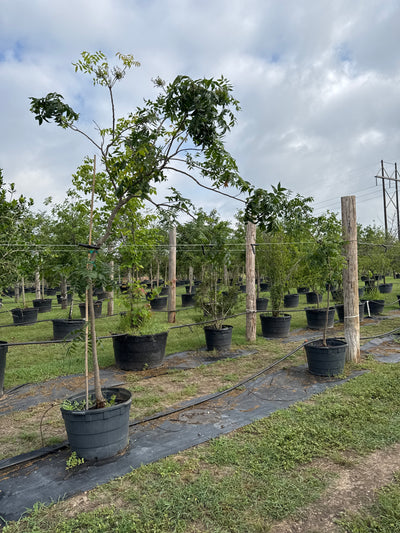

Blueberry Climax


Blueberry Climax
🌱 Planting Installation
The Blueberry 'Climax' is one of the most reliable and widely planted "Rabbiteye" blueberries in the world. It is highly valued for its upright growth habit and its ability to produce a large, concentrated harvest early in the season. The Climax blueberry produces large, firm, and sweet berries that are dark blue to black when fully ripe. The berries have a rich flavor and are excellent for fresh eating, baking, or processing into jams and preserves. The plant itself is a deciduous shrub with attractive foliage that turns red in the fall, adding ornamental value to the landscape. In spring, it produces small, white, bell-shaped flowers that are attractive to bees and other pollinators. It is an early-season variety, typically ready for harvest in late May to early June in the Southern United States. Home gardeners and commercial growers choose Climax because it "kicks off" the blueberry season. Its ability to produce a heavy, uniform crop early in the year allows growers to enjoy or sell fruit before many other varieties have even begun to turn blue.
|
Scientific Name |
Vaccinium ashei 'Climax' |
|
Foliage: Deciduous |
Leaves: Dark green, leathery, and elliptical during the summer. They are typically slightly smaller and more robust than those of the 'Austin'. In the fall, they transition into a striking orange-red display. Flowers: Small, waxy, bell-shaped clusters. They are predominantly white, appearing in early spring. These blooms are slightly more frost-resistant than some other early Rabbiteyes. Fruit: Dark blue to black and are typically fully ripe around May to June. Seeds: Tiny and soft; they are barely perceptible when eating. As with all blueberries, the seeds are dispersed throughout the pulp Canes: The plant has an upright, vigorous growth habit. Young canes are smooth and reddish-brown, while older canes develop a shredded, fibrous grey bark that peels in long strips. |
|
Mature Height |
6-10 feet |
|
Mature Width (Spread) |
6-8 feet |
|
Growth Rate |
Moderate |
|
USDA Zone/Chill Hours |
Zone 7-9 ; Requires about 450-500 chill hours |
PLANT CARE & CHARACTERISTICS
Light Requirements: Full Sun. Needs at least 6–8 hours of direct sunlight. While it can tolerate a little afternoon shade in scorching Zone 9 climates, maximum fruit production and sweetness require plenty of sun.
Water Requirements: Moderate to High. Like its partner 'Austin', Climax has a shallow root system. It requires consistent moisture, especially from flowering through harvest. It should never be allowed to dry out completely.
Drought Resistance: Low. It is sensitive to water stress. Without a thick layer of mulch (pine bark is best) and regular irrigation, the plant will wilt and fruit will shrivel. Water regularly, especially during dry periods, and mulch around the base of the plant to conserve moisture and suppress weeds.
Soil Type: Highly Acidic & Well-Drained. Requires a pH of 4.5 to 5.5. It thrives in soil high in organic matter (like peat moss). It is very sensitive to soil compaction and poor drainage.Amend the soil with organic matter such as compost or peat moss to improve fertility and drainage.
Deer Resistance: Low. Deer find the new growth and the berries very tasty. Fencing or bird netting (which often deters deer too) is recommended.
PEST/DISEASE RESISTANCE
| PEST/DISEASE | RESISTANCE | NOTES |
| Stem Canker & Dieback | High | Climax is noted for its ability to resist the stem diseases that can plague other blueberries. This makes it a very "long-lived" bush that can remain productive for decades. |
| Root Rot (Phytophthora) | Moderate to High | While it still requires well-drained soil, it is much more tolerant of heavier soils and "wet feet" than more sensitive varieties. |
| Mummy Berry | Moderate | Like most Rabbiteyes, Climax has a thicker skin and leaf structure that helps shield it from the fungal spores of Mummy Berry, though it is not entirely immune. |
| Leaf Spot | High | It tends to keep its foliage clean and green throughout the humid summer months, which is vital for the plant to store enough energy for the following year's crop. |
| Spotted Winig Drosophila (SWD) | High "Escape" Potential | Because Climax ripens its fruit in a very concentrated window in early June, it often finishes its harvest before the populations of this invasive fruit fly reach their destructive peak in mid-to-late summer. |
| Birds | Low | This is the Climax's biggest challenge. Because the fruit is so sweet and ripens all at once, birds will flock to it. Netting is strongly recommended as soon as you see the first hint of blue. |
| Blueberry Maggot | Moderate | The firm skin of the Climax fruit makes it slightly less attractive to egg-laying insects than softer-fruited varieties. |
Pollination: Climax is partially self-fertile. It is highly recommended to be planted near another Rabbiteye variety that blooms at the same time. Cross-pollination with other blueberry varieties can lead to larger berries and better overall production. Consider planting compatible varieties such as 'Austin', 'Premier', 'Brightwell', or 'Powderblue' nearby for optimal pollination.
Harvest: Climax blueberries typically ripen in mid to late season, usually around late May to early June in the southeastern United States.The Climax blueberry is a favorite for growers who want an efficient harvest. While other varieties might require you to pick fruit every few days for a month, the Climax is known for its concentrated ripening, meaning the majority of the berries are ready for harvest at the same time. The Climax often allows you to harvest 60–80% of its total crop in just two picking sessions.
- "Early Bloom" Risk: Climax has a relatively low chill requirement, it can sometimes be "fooled" by a warm spell in February and begin blooming too early. If a late freeze is predicted after the flowers have opened, you should cover the bushes with a frost blanket to save your fruit crop for the year.
- Water Management: During the final "swell" (the two weeks before harvest), the plant needs consistent water. If the soil dries out during this window, the berries will be small and tart rather than large and sweet.
YIELD TIMELINE
| Plant Age | Expected Annual Yield |
| Years 1–2 | Zero. Remove all flowers to ensure the plant doesn't "stunt" itself by trying to fruit too early. |
| Years 3–5 | 3–8 lbs. The bush will begin to produce a significant amount of fruit as it reaches 4–5 feet in height. |
| Year 8+ (Maturity) | 10–18 lbs. A fully mature Climax bush (8–10 feet tall) is a powerhouse, often yielding more than the Austin under the same conditions. |
STORAGE & SHELF LIFE
Since the Climax blueberry ripens almost all at once, you’ll find yourself with a "berry mountain" in early June. Because it is a firm-fruited Rabbiteye, it handles storage slightly better than softer varieties, but the sheer volume means you need a plan.
The "Climax" Processing Tip- Because you will be harvesting so many at once, cooling them quickly is the most important factor. If you pick them in the heat of a June afternoon, their internal temperature is high, which speeds up spoilage.
- The "Field Heat" Rule: Get the berries into the shade or AC immediately after picking.
- Dryness is Safety: Never wash the "bloom" (the dusty white coating) off until the moment you eat them. That coating is the berry’s natural preservative.
| STORAGE METHOD | SHELF LIFE | NOTES |
| Countertop | 1–2 Days | Keep them in a single layer if possible; piling them deep causes the bottom ones to crush and ferment. |
| Refrigerator | 10–14 Days | Use shallow, breathable containers. The Climax's firm skin helps it resist "weeping" in the fridge. |
| Freezer | 12 Months | This is the best route for a concentrated harvest. Wash, dry thoroughly, and freeze in a single layer before bagging. |
PRUNING
Because the Climax blueberry has a very upright and vigorous growth habit, pruning is essential to prevent it from becoming "leggy." Without regular pruning, the fruit will only grow at the very top of the 10-foot canes, making it impossible to reach without a ladder. Pruning a Climax is about controlling height and encouraging "renewal" growth from the base.
1. The First Two Years: Building the Frame
- The Flower Sacrifce: Even though the Climax wants to fruit early, you should strip away all flower buds in the first and second years.
- The Goal: You want the plant to put 100% of its energy into developing those thick, woody canes that will support 15+ lbs of fruit later.
2. Annual Dormant Pruning (Late Winter)- The best time to prune is January or February, just before the buds begin to swell.
- The "3 Ds": Always start by removing Dead, Damaged, or Diseased wood.
- Base Thinning: Climax tends to send up many new shoots (suckers) from the crown. If you have more than 10 main canes, the bush will be too crowded. Select the 6–8 strongest, most upright canes and remove the rest at ground level.
- Twiggy Growth: Remove the "matchstick" thin wood from the lower 12 inches of the canes. This fruit is usually poor quality and attracts pests.
3. The "One-In-Six" Renewal Rule- Blueberry canes are most productive between 3 and 6 years of age. After 6 years, the bark becomes thick and grey, and fruit production drops.
- The Method: Every year, identify the oldest, most "shredded-looking" cane and cut it off at the ground.
- The Result: This stimulates the plant to grow a brand-new, vigorous cane from the base. By doing this annually, you completely "renew" the entire bush every six years.
4. Controlling Height (Tipping)- Since Climax can easily reach 10 feet, you may need to "tip" the canes.
- When: Late winter.
- Action: Cut the tallest canes back to a height you can easily reach (usually 5–6 feet). This encourages the cane to branch out horizontally, which increases the surface area for fruit.
5. Summer "Light" Pruning- Because Climax has such a concentrated harvest in June, it can look quite ragged after the berries are gone.
- Post-Harvest: You can do a light thinning in July to remove any branches that were broken by the weight of the fruit or by birds/netting. Do not do heavy pruning now, as you might accidentally remove the buds for next year.
PRUNING CHECKLIST
| PART OF THE PLANT | ACTION | WHY? |
| New Suckers | Keep only the best 2–3 | Prevents overcrowding |
| Old Grey Canes | Remove 1 per year | Keeps the bush young |
| Center of Bush | Thin out crossing branches | Improves airflow/sunlight |
| Tallest Tips | Cut back to 5-6 feet | Easier harvesting |


