


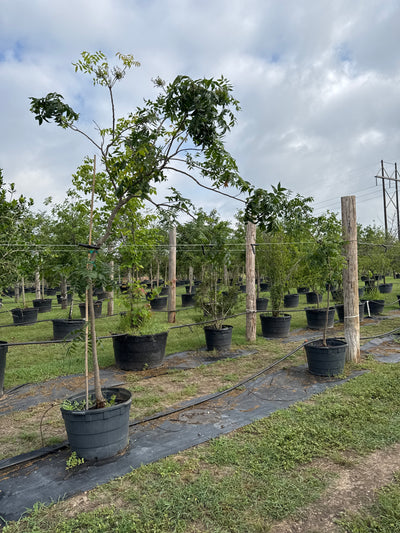

Blueberry Austin


Blueberry Austin
🌱 Planting Installation
The Austin Blueberry is a "Rabbiteye" variety, a type of blueberry specifically bred to thrive in the heat and humidity of the Southern United States. It is prized for being one of the earliest-ripening Rabbiteyes, providing large, sweet berries as early as late May or June. If you look closely at the berries before they are fully ripe, they turn a distinct pinkish-red that resembles the eye color of a white rabbit—this is how the "Rabbiteye" family got its name. In early spring, the bush is covered in thousands of tiny, delicate, bell-shaped white flowers that hang in clusters. These are a favorite for bumblebees. The Austin variety is known for a classic, sweet blueberry flavor with very little acidity. Because the berries are firm, they have a satisfying "pop" when you bite into them.
|
Scientific Name |
Vaccinium ashei 'Austin' |
|
Foliage: Deciduous |
Leaves: The leaves are relatively small, oval, and have a unique blue-green or "glaucous" tint during the summer, which makes the plant stand out against typical bright green garden foliage. In the autumn, the leaves put on a spectacular show, turning a deep, fiery burgundy or wine-red. Flowers: White or pink bell-shaped flowers in spring, followed by clusters of berries that ripen from green to shades of blue or purple. Fruit: Large, firm, and a beautiful dusty blue (due to a natural waxy coating called "bloom"). They grow in heavy, drooping clusters that are easy to spot against the foliage. They are noted for being exceptionally sweet and ripen early—typically in late May to June. Seeds: Tiny, soft, and brownish. Like all blueberries, the seeds are located inside the flesh and are so small they are barely noticeable when eating the fruit fresh. Canes: The plant grows as a multi-stemmed shrub with an upright, vase-like habit. Young canes are greenish-red and supple, while older, mature canes develop a shredded, papery grey-brown bark. |
|
Mature Height |
6 – 10 feet |
|
Mature Width (Spread) |
6 – 8 feet |
|
Growth Rate |
Moderate to Vigorous |
|
USDA Zone/Chill Hours |
Zone 7-9; Requires approximately 450–500 chill hours. It is popular because it blooms late enough to usually avoid late spring frosts but ripens its fruit very early in the season. |
PLANT CARE & CHARACTERISTICS
Light Requirements: Full Sun. At least 6–8 hours of direct sunlight is necessary for maximum fruit production. In extremely hot climates (Zone 9), it can benefit from some light afternoon shade, but too much shade will result in fewer berries.
Water Requirements: Moderate to High. Blueberries have shallow, fibrous root systems that dry out quickly. They need consistent moisture, especially during fruit development. Aim for 1–2 inches of water per week during the fruiting season.
- The "Alkaline Water" Warning: Blueberries are "calcifuges," meaning they cannot tolerate lime or alkaline water. If your tap water is "hard" (common in Austin/Central Texas), the high pH can eventually kill the plant even if the soil is acidic. Using rainwater or adding a splash of vinegar to your watering can helps maintain the necessary acidity.
Drought Resistance: Low. Blueberries are not drought-tolerant. If the soil dries out completely, the plant will drop its fruit and may suffer permanent root damage. Heavy mulching (4–6 inches) with pine bark or pine needles is essential to retain moisture.
Soil Type: Highly Acidic & Well-Drained. This is the most critical factor. They require an acidic soil pH between 4.5 and 5.5. In most areas (especially Central Texas), this requires growing them in large containers or heavily amended raised beds using peat moss and pine bark. Proper watering, mulching, and fertilization are important for healthy growth and fruit production.
Deer Resistance: Low. Deer find blueberry foliage and tender young stems very attractive. If you have deer in your area, fencing or netting is almost always required to protect your harvest and the plant's structure.
Pest/Disease Resistance: High resistance to Root Rot because it is more tolerant of heavy or wet soils than Southern Highbush types. Moderate susceptibility to Mummy Berry, the most common fungal issue for the Austin. Mulching with pine bark can bury the fungal "mummies" and prevent them from releasing spores in the spring. Austin also has a high resistance to Stem Blight and Canker. The primary "pest" for the Austin Blueberry are birds. Reflective tape or bird netting is almost always required once the berries start to turn blue.
Pollination: Austin is not self-fertile. This means it requires another Rabbiteye variety nearby to produce fruit. The best partner recommendations are 'Climax' or 'Premier' because their bloom times overlap perfectly with Austin. Planting along other early season Rabbiteyes can increase your total yield by 20% or more and result in larger berries.
Harvest & Yield: Early season (Late May/June). The harvest window for a single Austin bush usually lasts about 3-4 weeks. The Austin is a vigorous producer, though its yield increases significantly as the plant matures.
| Plant Age | Expected Annual Yield |
| Years 1–2 | Minimal. It is best to remove flowers during the first two years to focus the plant's energy on root development. |
| Years 3–4 | 2–5 lbs. You will begin to see a usable crop as the bush reaches about 3–4 feet in height. |
| Year 6+ (Maturity) | Up to 15 lbs. A fully mature Austin bush (6–10 feet tall) can produce between 10 and 15 pounds of fruit annually. |
The "Tickle" Test: Don't pick berries as soon as they turn blue. Wait 2–3 days after they color up to allow the sugars to fully develop. A ripe berry should fall into your hand with a very gentle "tickle" or touch.
STORAGE & SHELF LIFE
| STORAGE METHOD | SHELF LIFE | NOTES |
| Countertop (Room Temp) | 1-2 days | Keep in a cool, shaded area. best if you plan to eat them immediately. |
| Refrigerator | 10-14 days | Store in the original clamshell or a breathable container. Do not wash until right before eating to help the berries stay firm and sweet in the refrigerator. |
| Freezer | 10-12 months | These berries freeze exceptionally well. Spread them in a single layer on a baking sheet to freeze before moving them to a bag; this prevents them from clumping together. |
The Golden Rule: Keep them dry! Blueberries have a natural waxy coating called the "bloom" that protects them from rotting.
- Wash only before eating! If you wash them and then put them in the fridge, the extra moisture will trigger mold growth within 48 hours.
- Remove the "leakers": When you get your harvest inside, sift through and remove any berries that are crushed or leaking juice. One crushed berry can cause an entire bowl to spoil.
PRUNING
Pruning is essential for Rabbiteyes like the Austin because they are so vigorous. Without it, the bush becomes a dense thicket of weak, spindly canes that produce small fruit.
1. The First Two Years
- The "Sacrifice" Cut: Remove all flower buds during the first two years. This is painful for the gardener, but it forces the plant to build the strong root system it needs to support 15-pound harvests later.
2. Annual Maintenance (Late Winter): Prune when the plant is dormant (January or February).
- The "3 Ds": Remove anything Dead, Damaged, or Diseased.
- Base Thinning: Rabbiteyes send up many "suckers" from the base. Keep the 6–8 strongest, thickest canes and cut the rest at ground level to maintain a "vase" shape.
- Heading Back: If the Austin reaches its 10-ft limit, you can "top" the canes to a height that is easy for you to reach for harvesting.
3. The Renewal Strategy (For Older Bushes): Blueberry canes are most productive when they are between 3 and 6 years old.
- The "One-In-Six" Rule: Every year, identify the oldest, greyest, most "barky" cane and cut it down to the ground. This encourages the plant to send up a brand-new, vigorous cane to take its place. This keeps the bush perpetually "young."
4. Light and Airflow: Prune out the "twiggy" growth in the center of the bush. Sunlight must be able to reach the middle of the plant to ripen the fruit and prevent fungal issues.


