


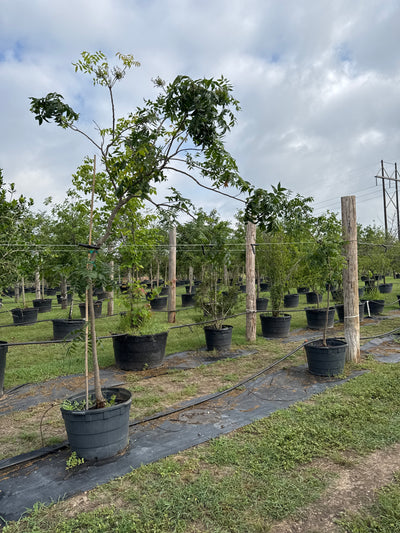


Agarita


Agarita
Location on Farm:
🌱 Planting Installation
The Agarita, also known as Algerita, Agritos, Currant-of-Texas, Wild Currant, and Chaparral Berry is a tough, iconic Texas native shrub.It is most famous for its dual identity: a formidable "security plant" due to its prickly leaves and a source of highly prized wild berries. The Agarita features leaves are bluish-gray and trifoliate (divided into three leaflets), resembling holly. They are stiff and tipped with sharp, needle-like spines that make the shrub virtually deer-proof. Because the foliage is painfully sharp, it is recommended to avoid planting Agarita near high-traffic areas such as sidewalks, or child play zones. It works best as a "security hedge" where its spines won't be an issue for passersby. In late winter (February to March), it produces clusters of tiny, brilliant yellow flowers that are exceptionally fragrant, smelling much like honey or orange blossoms. By late spring, the flowers transform into bright red, translucent berries. These "desert gems" are tart and delicious, widely considered one of the best wild fruits for making jelly, wine, and syrup. It is a true "survivor" plant—thriving in intense heat, poor limestone soil, and extreme drought once established. This shrub makes an excellent low-maintenance addition for Texas native landscapes, xeriscapes, and wildlife gardens.
| Scientific Name | Mahonia trifoliolata (syn. Berberis trifoliolata) |
|
Foliage: Evergreen |
Leaves: Gray-green to bluish-gray, evergreen, and trifoliate (occurring in groups of three). They are stiff, leathery, and resemble holly with sharp, needle-like spines at the tips. It does not go dormant or lose its leaves in the winter. Flowers: Small, fragrant, bright yellow clusters that bloom in late winter to early spring (February to April). They have a distinct sweet scent. Fruit: Bright red, edible berries form in the early summer. These are popular for making "Agarita Jelly". Stems: Rigid, multi-branched, and gray. The inner wood and roots are a distinctive, vibrant yellow color. |
| Life Span: Perennial | As a native shrub, it is extremely long-lived. Once established, an Agarita can live for several decades (often 30–50 years or more) in the right conditions. |
| Mature Height | 3-6 feet (occasionally up to 8-10 feet) |
| Mature Width (Spread) | 3-6 feet |
| Growth Rate | Slow to Moderate |
| USDA Zone/Chill Hours | Zone 6-9 (Cold hardy to approx. 0F to 15F); Low-chill variety that requires 150-300 chill hours (temperatures between 32°F and 45°F) |
PLANT CARE & CHARACTERISTICS
Light Requirements: Full Sun to Partial Shade. It produces the most growth and berries in full sun but handles filtered shade well.
Water Requirements: Very Low. Needs occasional deep watering during its first year. Once established, it survives on natural rainfall. Over-watering or poor drainage is one of the few ways to kill this plant.
Drought Resistance: High. It is drought-tolerant and heat hardy, making it a great plant for xeriscaping.
Soil Type: Well drained. It thrives in rocky, gravelly, or sandy soils. It is highly tolerant of alkaline (limestone) soils and poor nutrient levels. It struggles in clay.
Deer Resistance: High. The stiff, needle-sharp leaves make it unappealing to deer.
Pest/Disease Resistance: High. Very few known pests. Occasionally prone to fungal leaf spots if kept in overly humid or poorly drained conditions. Agarita berries are a favorite of mockingbirds, cedar waxwings, and quail. Once the berries turn bright red, they can be stripped from the bush within days. Bird netting might be necessary if you plant on using the berries for preserves.
Pollination: Insect-pollinated. The fragrant yellow blooms are a vital early-season nectar source for honeybees and native bees.
Harvest: May to June. Berries appear in late spring. Harvest as soon as the majority of the berries are red and slightly soft. They are tart and typically used for jellies, jams, or wine.
Harvest Tip: "The Sheet Method"
Because the leaves are incredibly sharp, picking Agarita berries by hand can be a painful task. Traditional harvesters use a more efficient method:
1. Preparation: Lay a clean tarp or bedsheet on the ground beneath the shrub.
2. The Strike: Use a broomstick or sturdy branch to gently beat the limbs.
3. Collection: The ripe berries will drop onto the sheet. You can then pour them into a bucket and use a fan or the wind to "winnow" away any fallen leaves or debris.
YIELD
| Plant Age/Size | Estimated Berry Yield (Volume) | Typical Use |
| Young (1–3 years) | Minimal to none | Establishing root system and foliage. |
| Established (4–6 years) | 1 to 3 cups | Small batch of syrup or flavoring. |
| Mature (6+ years / 4-5ft) | 2 to 6 quarts | Enough for several jars of jelly. |
| Large/Old Growth (6ft+) | 8+ quarts | Large-scale jelly production or wine making. |
Note: Agarita berries are quite small (about the size of a pea), so while a gallon of berries sounds like a lot, keep in mind they have relatively large seeds. After juicing or processing for jelly, a 4-quart harvest typically yields about 4 to 6 cups of clear juice.
STORAGE/SHELF LIFE
| Form | Storage Method | Shelf Life |
| Fresh Berries | Refrigerator (unwashed) | 2–3 Days |
| Frozen Berries | Airtight Freezer Bag | 6–12 Months |
| Canned Jelly | Cool, Dark Pantry | 1–2 Years |
| Dried Berries | Airtight Container | 6 Months (become very hard) |
Signs of Spoilage
1. Fermentation: If the berries start to smell like alcohol or vinegar, they are past their prime.
2. Mold: Any fuzzy white or grey growth indicates they should be discarded.
3. Softness: If the berries become "leaking" or mushy in the fridge, they should be processed into juice immediately or tossed.
PRUNING
1. Timing: The "Post-Harvest" Rule
- When to prune?: Late June or July, immediately after the berry harvest.
- Why?: Agarita sets its flower buds for the following year in the late summer and fall. If you prune in the winter, you will cut off the yellow flowers and lose your spring berry crop.
2. Maintenance Pruning (Annual): Because it is slow-growing, you generally only need to do "spot" pruning.
- Deadwood: Remove any dead or brittle branches at the base. Because of the thorns, use long-handled loppers to reach into the center of the bush.
- Airflow: If the shrub becomes too dense, thin out a few of the oldest stems at ground level. This improves sunlight penetration to the interior, which can help with more even berry ripening.
3. Structural Shaping (Size Control)- If the Agarita is encroaching on a walkway or outgrowing its space:
- Directional Snips: Cut individual branches back to a lateral branch or a bud facing the direction you want the plant to grow.
- Avoid Shearing: Do not use hedge trimmers to "box" an Agarita. Shearing causes the plant to develop a thick "shell" of foliage on the outside while the interior becomes leafless and woody. It also destroys the natural beauty of the trifoliate leaves.
4. Rejuvenation Pruning (For Old, Leggy Plants)- If you have an old Agarita that has become very thin at the bottom and woody at the top:
- The 1/3 Rule: Remove one-third of the oldest, thickest stems at ground level each year for three years.
- Result: This encourages new, vibrant shoots to emerge from the root crown, eventually replacing the old plant with fresh, productive growth without the shock of cutting the whole thing down at once.
5. Pruning Safety & Tools: Agarita leaves are exceptionally sharp. The spines can easily pierce standard gardening gloves.
- Gloves: Use heavy-duty leather or goatskin gauntlet gloves that cover your forearms.
- Tools: Use long-handled loppers for most tasks to keep your body away from the thorns. For smaller tips, use sharp bypass pruners.
- Cleanup: Do not leave Agarita clippings on the ground where people or pets walk; the dried leaves remain sharp and painful for a long time.
PRUNING SUMMARY
| Goal | Best Time | Method |
| Max Berries | July (After Harvest) | Light thinning of old stems; avoid winter pruning. |
| Size Control | Summer | Selective heading cuts to lateral branches. |
| Health | Any Time | Remove dead, diseased, or damaged wood. |
| Rejuvenation | Late Winter | Remove 1/3 of oldest stems at the base (sacrifices some fruit). |