


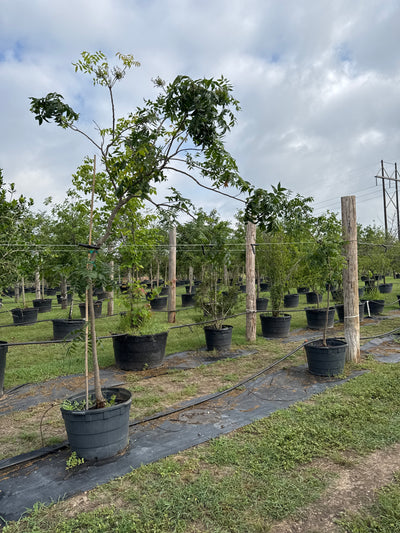


Acanthus Flame


Acanthus Flame
Location on Farm:
🌱 Planting Installation
The Flame Acanthus, also known as the Hummingbird Bush or Wright's Desert Honeysuckle, is a Texas native shrub. It is found throughout the Southwestern United States and Northern Mexico. This resilient plant is cherished for its striking tubular flowers, which range in color from fiery red and orange to vibrant coral, creating a spectacle that attracts hummingbirds, butterflies, and other pollinators. One of the standout features of Flame Acanthus is its long blooming period, which typically lasts from late spring through fall. During this time, the plant produces an abundance of flowers that emerge from slender stems and arching branches, creating a cascade of color that adds warmth and vibrancy to any landscape. Its slender, upright growth habit makes it an ideal choice for planting along borders, pathways, or in mixed perennial beds, where it can provide vertical interest and attract pollinators with its colorful blooms.
| Scientific Name | Anisacanthus quadrifidus var. wrightii |
| Foliage: Deciduous |
Leaves: Small, lanceolate (spear-shaped), and light green. They are smooth-edged and provide a delicate, airy texture to the shrub. In the winter, it loses its leaves revealing an attractive, exfoliating (peeling) bark. Flowers: Brilliant red-orange, slender, tubular blossoms (about 1.5–2 inches long) that resemble honeysuckle or tiny flames. This plant has a long blooming season typically late spring to fall. Stems: Slender, brittle, and multi-branched with distinctive exfoliating (peeling) bark as they age. |
| Life Span: Perennial | It is a surprisingly long-lived native shrub. Under ideal conditions, you can expect it to live for approximately 30 years. It often behaves as a true woody shrub, losing its leaves in winter but leafing out again from the existing branches in the spring. |
| Mature Height | 3-5 feet (can reach 6 feet in ideal conditions) |
| Mature Width (Spread) | 3-4 feet |
| Growth Rate | Fast |
| USDA Zone | Zone 7-10 (Root hardy to zone 7; stems hardy to zone 8) |
PLANT CARE & CHARACTERISTICS
Light Requirements: Full Sun to Partial Shade. It produces the most blooms in full sun but it is quite adaptable to light shade.
Water Requirements: Low. Once established, it has very low water needs. However, during intense summer heat a small amount of supplemental water is beneficial and can trigger a massive flush of flowers.
Drought Resistance: High. This plant is very drought-tolerant. It is a staple for xeriscape gardens.
Soil Type: Highly Adaptable. It thrives in well-drained sandy, rocky, or limestone soils. It can also tolerate heavy clay if it doesn't stay water logged. It is very tolerant of alkaline (high pH) soils.
Deer Resistance: High. It is very deer-resistant. Deer rarely bother it, making it safe for open landscapes.
Pest/Disease Resistance: Excellent. It is virtually free of major pest or disease issues.
Pollination: Pollinator Magnet. Primarily pollinated by hummingbirds and butterflies (such as the Janais Patch and Texan Crescentspot) attracted to its nectar-rich tubular flowers.
PRUNING
Pruning the Flame Acanthus is relatively straightforward because the plant is incredibly resilient and blooms on new wood (the growth produced in the current season). Regular pruning is the best way to keep this shrub from becoming "leggy" or sparse.
1. The Hard Annual Prune (Late Winter/Early Spring): This is the most important pruning session. Since the plant flowers on new growth, cutting it back significantly in late February or early March (before new buds appear) ensures a dense, bloom-heavy shrub.
- Height Reduction: Cut the entire plant back by one-third to one-half of its height.
- Rejuvenation: If the plant has become very woody or unruly over several years, you can cut it back to about 6–12 inches from the ground. It will grow back rapidly once the weather warms.
- Cold Climate Care: In USDA Zone 7 or 8, the stems often die back naturally during a freeze. If they appear brittle and grey with no green tissue inside, prune them down to the ground. The roots will send up fresh shoots in the spring.
2. Summer "Haircuts" (Maintenance): If your Flame Acanthus is growing vigorously, it can sometimes lean over or look messy by mid-summer.
- Light Shaping: You can lightly shear the tips of the branches in early summer to encourage a more compact, rounded shape.
- The Second Bloom: Lightly pruning after a heavy bloom cycle can sometimes encourage a fresh "flush" of new flowers for the late summer and autumn.
3. Cleaning and Thinning: Because the stems are somewhat brittle and the bark peels naturally, the interior of the shrub can collect dead wood.
- Airflow: Periodically remove any dead, crossing, or damaged branches from the center of the plant to improve airflow.
- Bark: Note that the exfoliating (peeling) bark is a natural characteristic of older stems and not a sign of disease; you do not need to prune these stems unless they are dead.