


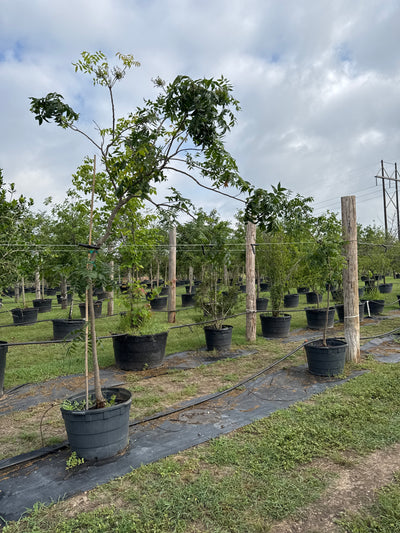


Pomegranate Angel

Pomegranate Angel
Location on Farm:
🌱 Planting Installation
The 'Angel Red' Pomegranate (botanical name Punica granatum 'Smith', Plant Patent #16,578) is highly regarded as an exceptional modern cultivar. Discovered as a unique branch sport, it is widely considered a significant improvement over the traditional industry standard, 'Wonderful'. Pomegranate Angel naturally forms as an elegant, compact, multi-trunked large shrub or small orchard tree that grows to a manageable 10 feet tall and wide. It has glossy, narrow green leaves that transition to a brilliant golden-yellow in autumn, and it showcases stunning, ruffled orange-red blossoms in late spring. It produces large, heavy, vivid red pomegranates packed with deep crimson arils (juice sacs). 'Angel Red' is uniquely celebrated for its exceptionally soft, easily chewable seeds, making fresh eating highly enjoyable without any woody residue. The fruit develops far less internal, bitter white pith than other varieties, resulting in a remarkably thin membrane wall. This allows for clean, easy seed extraction and a juice yield that is up to 50% higher by volume. Pomegranate Angel is a highly prolific and self-fertile bearer that begins producing fruit within 1 to 2 years. It is exceptionally well-suited for warm climates (requiring only 150 to 200 chill hours) and stands out by ripening very early—typically late August to early September—allowing for a harvest well before late-season rains or frost risks.
| Scientific Name | Punica granatum 'Smith' (Marketed under the registered trademark Angel Red®) |
| Foliage: Deciduous |
Leaves: Deciduous, narrow, oblong-to-lanceolate leaves with a smooth, glossy texture. They emerge a bright, vibrant green in the spring, mature to a deep dark green in summer, and turn a uniform bright butter-yellow in the autumn before dropping. Flowers: Highly ornamental and striking. The tree produces large, crinkled, ruffled vivid orange-red to bright red blooms shaped like trumpets or bells. They appear in late spring through summer on fountain-like, arching branches and are incredibly attractive to hummingbirds. Fruit: Bears large, spherical, brilliant vivid red fruit with thick, leathery rinds measuring 3 to 5 inches in diameter. Each fruit typically holds around 600 arils tightly packed inside. It ripens exceptionally early (late August to early September). 'Angel Red' stands out because it produces vastly less internal white pulp and waste material than other pomegranates, yielding a much higher percentage of pure, antioxidant-rich juice. Seeds: The arils (juice sacs) are deep crimson. The actual seeds are notably soft, meaning they can be chewed and eaten fresh with almost no woody residue left behind, making them highly desirable for fresh eating, salads, and gourmet dishes. Bark: Smooth, grayish-brown on young branches, maturing into a rugged, slightly furrowed, dark gray bark on old wood. Branches have an elegant, semi-weeping habit but do feature occasional, naturally occurring spines or thorns. |
| Life Span: Perennial | Can easily live and remain highly productive for 50 to 100+ years when grown in well-drained soil. |
| Mature Height | 10 feet tall at maturity (can easily be pruned and maintained as a smaller 7-to-8-foot bush or orchard tree). |
| Mature Width (Spread) | 10 feet wide, naturally exhibiting a rounded, bushy, and fountain-like canopy. |
| Growth Rate | Moderate. It establishes easily and typically begins bearing its first crops of fruit within 1 to 3 years of planting. |
| USDA Zone | Zones 7 through 11. It is highly heat-tolerant and thrives in desert or Mediterranean climates, but can withstand cold temperatures down to approximately 10°F to 12°F when fully dormant. |
| Chill Hours | Requires 150 to 200 chill hours (hours spent between 32°F and 45°F). This exceptionally low chilling requirement makes it one of the absolute best pomegranate varieties for warm-winter regions, while still performing perfectly in traditional fruit-growing zones. |
PLANT CARE & CHARACTERISTICS
Light Requirements: Full Sun. Demands a minimum of 6 to 8 hours of direct, unfiltered sunlight daily. Maximizing sun exposure is critical not only for robust flower production but also for developing the intense, uniform crimson skin color on the fruit.
Water Requirements: Low to Medium. While highly resilient, it needs regular, deep watering during its first 1 to 2 years to establish a deep root system. Once established, it requires minimal supplemental water. However, for an optimal fruit harvest with plump, juicy arils, give it a deep watering every 7 to 10 days during the peak summer fruiting season.
Drought Resistance: High. 'Angel Red' is native to arid regions and is exceptionally drought-tolerant once established. It can easily survive long dry spells, though extreme, prolonged water stress may cause it to drop its flowers or abort developing fruit.
Soil Type: Highly adaptable to a wide range of soils, including poor, rocky, sandy, or alkaline limestone soils. It performs best in a rich, fertile, loamy soil with a neutral to slightly alkaline pH (6.5 to 8.0). The absolute non-negotiable requirement is excellent drainage; it will suffer from root rot in heavy, waterlogged clay.
Deer Resistance: High. Deer and rabbits rarely bother pomegranate trees. The leathery texture of the mature leaves, the slightly bitter taste of the foliage, and the occasional sharp spines hidden along the woody branches make it a highly unappealing target for grazing wildlife.
Pest/Disease Resistance: High. It is incredibly tough and largely trouble-free. It has a distinct advantage over other varieties because its early ripening window (late August) allows you to harvest the fruit before late-season fungal diseases or heavy pest pressures take hold. It can occasionally face minor pressure from aphids, whiteflies, or leaf-footed bugs, and may develop minor fungal leaf spot or fruit spot during unusually wet, humid summers.
POLLINATION
1. Pollination Requirement: Self-Fertile (Self-Pollinating). You only need to plant one tree to get a full, heavy harvest of fruit. The pollen from an 'Angel Red' blossom can successfully fertilize itself or any other flower on the same tree.
- Even though 'Angel Red' is 100% self-fertile, planting a different pomegranate variety nearby (such as 'Wonderful', 'Parfianka', or 'Desertnyi') creates a cross-pollination bonus. When bees move pollen between two distinct varieties, it triggers a biological boost that typically results in:
- A significantly higher overall yield (more flowers successfully turn into fruit).
- Larger, heavier fruit with maximum aril and juice development.
2. Primary Pollinators: Honeybees, Native Bees (such as Leafcutter and Bumblebees), and Hummingbirds. The large, bright orange-red, trumpet-shaped flowers are highly attractive visual targets for these pollinators.
3. Pollination Mechanism: Insect-Assisted & Wind-Assisted. While the flowers can self-pollinate when wind moves the branches, active visits from foraging bees significantly increase the fruit set percentage and lead to larger, more uniform pomegranates.
4. Flower Types: Pomegranates produce two types of flowers on the same tree.
- Vase-Shaped (Perfect) Flowers: These have both male (stamens) and female (pistil) organs. These are the only flowers that will turn into fruit.
- Bell-Shaped (Male) Flowers: These produce pollen but lack a functional female anatomy. They naturally drop off the tree after opening. Do not panic when you see flowers falling early in summer; these are just the male blooms doing their job!
HARVEST
When? Late August to Early September. This exceptionally early ripening window is a major advantage, allowing you to harvest the fruit before late-season heavy autumn rains cause the rinds to split open, or early frost risks damage.
How to Tell When 'Angel Red' is Ripe
Pomegranates do not continue to ripen or sweeten once cut from the tree, so pulling them at the exact right time is critical. Look for these four visual and physical cues:
1. The Shape Shift: As the internal arils swell with juice, they press against the leathery outer rind. The fruit will lose its perfectly round, smooth basketball shape and develop distinctly flattened, slightly angular, or squared-off sides.
2. Skin Texture: The skin will shift from a high-gloss, shiny finish to a slightly dull, matte texture. If you press a fingernail gently against the rind, a ripe fruit will feel slightly softer and less rock-hard than an underripe one.
3. The Crown: Look closely at the calyx (the little crown-shaped appendage at the bottom of the fruit). When the fruit is fully ripe, the lobes of the crown will naturally dry out, turn slightly brown, and curve inward.
4. The Tap Test: Gently tap the fruit with your knuckles. An underripe fruit sounds solid and dull, while a juice-heavy, fully ripe pomegranate produces a distinct, slightly metallic or hollow sound.
Best Practices for a Clean Harvest
1. Clip, Don't Pull: Never twist or yank the fruit off the branch. Pomegranate skin is sensitive, and pulling can tear the wood or break the fruit's crown, inviting fungal rot. Always use clean, sharp hand pruners to cut the stem as close to the top of the fruit as possible.
2. The Watering Trick: In the 1 to 2 weeks leading up to your expected late-August harvest, keep your irrigation completely steady and uniform. A sudden surge of heavy water or rain after a dry spell will cause the rapidly expanding arils to burst the tough outer skin, ruining your storage window. If a fruit does split on the tree, harvest and consume it immediately.
YIELD
| Timeline | Yield |
| 1 to 2 Years | It is a highly precocious cultivar that will often set a handful of trial fruits almost immediately, though it is best to remove them the first year to allow the roots to anchor. |
| 5 to 7 Years | Maximum canopy production. 60 to 100+ lbs (approx. 60-90 large pomegranates) of fruit per tree per year under optimal full-sun conditions and regular summer watering. |
Factors That Maximize Your Yield
To ensure your 'Angel Red' hits the upper limit of its 100-pound yield potential, keep these three management practices in mind:
1. Fruit Thinning in Early Summer: 'Angel Red' can sometimes set too much fruit on its arching, fountain-like branches. In June, if you notice clusters of 3 or 4 pomegranates growing together, thin them down to a single strong fruit. This prevents the heavy weight from snapping the branches and ensures the remaining fruits grow to their maximum size.
2. Consistent Summer Irrigation: While the tree is highly drought-tolerant and won't die without water, its yield volume is entirely water-dependent. Deep, consistent watering every 7 to 10 days during the peak heat of June, July, and August prevents the tree from dropping its developing fruit and ensures the arils fill to maximum juice capacity.
3. Pruning for Strong Scaffolds: Pomegranates fruit primarily on the tips of new growth and short lateral spurs. Annual late-winter pruning to maintain a strong 3-to-5-trunk structure (or an open vase shape) allows light to reach all parts of the canopy, maximizing the number of fruiting spurs that develop.
STORAGE/SHELF LIFE
| Storage Method | Expected Shelf Life | Optimal Conditions |
| Countertop (Whole Fruit) | 2 to 3 Weeks | Keep in a cool, dry room out of direct sunlight. Ensure good airflow around the fruit; do not pile them on top of each other in a deep bowl. |
| Cool Cellar / Pantry (Whole) | 1 to 2 Months | Temperature between 45°F and 55°F. Individually wrap the fruits in paper towels or newspaper to prevent any potential mold from spreading from one fruit to another. |
| Refrigerator (Whole Fruit) | 3 to 4 Months | Temperature between 32°F and 40°F. Place them inside a perforated plastic bag in your refrigerator's crisper drawer to maintain low humidity. |
| Refrigerator (Extracted Arils) | 5 to 7 Days | Keep the loose seeds in an airtight glass or plastic container. Consume quickly, as exposed arils will begin to ferment over time. |
| Freezer (Extracted Arils) | 1 Year+ | Flash-freeze the loose arils in a single layer on a baking sheet first, then transfer them into a heavy-duty freezer bag. |
| Freezer (Fresh Pressed Juice) | 1 Year | Pour your pressed 'Angel Red' juice into freezer-safe containers, leaving an inch of headspace at the top for liquid expansion. |
Critical Storage Rules
Because 'Angel Red' ripens early in the season (late August), your storage success depends on how you handle the fruit during the transition from late summer heat to cold storage.
1. The Post-Harvest Cure: Before packing the fruit away into long-term refrigeration, let the whole pomegranates sit out on a counter or table in a cool, shaded room for 2 to 3 days. This allows the skin to slightly dry out and "cure," creating a much tougher, leathery barrier that naturally locks in the juice and wards off fungal pathogens.
2. Keep Them Dry: Never wash whole pomegranates before putting them into storage. Moisture on the rind, especially near the bottom crown (calyx) or the stem cut, is an absolute magnet for mold and rot. If there is orchard dirt on the skin, simply wipe it clean with a dry microfiber cloth.
3. Watch for "Internal Breakdown": If you keep whole pomegranates in the fridge for several months, check on them every couple of weeks. If a fruit starts to feel unusually light, develops soft, squishy spots, or the skin turns a dull, brownish-red, it means the rind is beginning to fail. Harvest the arils from that fruit immediately.
PRUNING
Pruning the 'Angel Red' Pomegranate is highly rewarding because it naturally has an elegant, arching, semi-weeping habit. Because pomegranates produce fruit on the tips of new spring growth and short lateral spurs formed on older wood, your primary goal is to maximize sunlight penetration and maintain structural strength to support its heavy, 100-pound crop potential. Fortunately, 'Angel Red' is a naturally compact cultivar (maturing around 10 feet), making it much easier to manage than wild or standard varieties.
1. Major Structural Pruning: Perform this in late winter (January to February) while the tree is fully deciduous and dormant. Pruning during dormancy triggers a powerful flush of vegetative growth in the spring, which means more fruiting wood.
2. Suckering & Maintenance: Ongoing throughout the summer.
3. Choose Your Growth Habit: Before making your first cut, you must decide whether you want to grow 'Angel Red' as a multi-trunk shrub or a single-trunk tree.
- The Multi-Trunk Shrub (Highly Recommended): Pomegranates naturally want to be multi-stemmed. Selecting 3 to 5 strong, well-spaced main trunks is the best strategy. If a severe winter freeze damages one trunk, you can simply cut it away and let a new sucker replace it without losing the entire tree.
- The Single-Trunk Tree: Elegant and clean, but highly vulnerable. If a freeze, boring insect, or mechanical damage hits that single trunk, the entire top of the tree dies.
4. The Annual Dormant Pruning Routine: Once your main structural trunks are established, follow this checklist every late winter.
- Clear out the Suckers and Water Sprouts: Pomegranates are aggressive sucker producers. Cut away any rapid, vertical shoots emerging directly out of the ground at the base of the tree, as well as straight vertical "water sprouts" shooting up from the main branches. These steal energy from fruit production.
- Remove the "Three D's": Cut out any wood that is Dead, Damaged, or Diseased. Pomegranates can have short, thorny lateral twigs that naturally die back after fruiting; clip these back to clean wood.
- Open up the Canopy (The Light Test): Remove crossing branches that are rubbing against each other. Thin out dense clusters of interior twigs to ensure sunlight can penetrate right into the center of the tree. If sunlight cannot reach the interior, those inner spurs will stop flowering and die back.
- Head Back the Tips (Size Control): If a branch has grown too long and is weeping completely to the ground, shorten it by cutting it back to an upward-facing lateral branch. Lightly tipping the outer branches by 12 to 18 inches encourages the branch to branch out lower down, creating sturdier wood that won't snap under the weight of heavy pomegranates.
5. Summer Maintenance (Thinning the Fruit): Because 'Angel Red' is a highly prolific bearer, it often sets too many fruits in clusters of 2, 3, or 4 at the very tips of its slender branches. In early summer (June), look over the tree. If a branch is bending severely under the weight of tiny, golf-ball-sized pomegranates, thin the cluster down to one single, strong fruit. This prevents the branch from snapping later in August and redirects all of the branch's energy into making that one remaining pomegranate massive and incredibly juicy.